
2026 tariff amendments in China: A comprehensive overview
Date of publication: January 14, 2026
Introduction
China has announced significant amendments to its tariff structure for 2026 as per the Notification No. 11 published by Ministry of Finance of People’s Republic of China on December 26, 2025. These changes, effective from January 1, 2026, aim to enhance the import of high-quality goods, support technological innovation, and promote sustainable development.
Key changes in the 2026 tariff plan
1. Provisional import tariff rates
- China will implementprovisional import tariff rateson a wide range of commodities, lower than MFN rates, to reduce costs for domestic industries.
- Focus areas:
- Advanced manufacturing: Reduced tariffs on high-tech components and raw materials for electronics and automotive sectors.
- Healthcare: Lower tariffs on critical pharmaceutical ingredients and medical devices.
- Green development: Tariff reductions on recycled materials, renewable energy components, and low-carbon technologies.
- Tariff rates will be applied to 935 categories of goods, excluding those subject to tariff quota management.
2. Tariff adjustments
- Certain commodities will see increased tariffs to protect domestic industries, including selected agricultural products and chemicals.
- Optimization of tariff item descriptions and creation of new domestic subheadings for emerging products.
- Tariff quota management will remain in place for 8 types of imported goods including wheat with existing tariff rates unchanged.
- Export duties will continue to be levied on 107 categories of goods including ferrochrome with provisional export tariff rates applicable to 68 of these items.
3. Preferential tariff treatment
- Continued zero-tariff treatment for 43 Least Developed Countries (LDCs).
- Updates to Free Trade Agreements (FTAs) to expand preferential access for partner countries.
4. Support for sustainability
- Tariff reductions on green energy inputs and environment-friendly materials.
- Measures to encourage circular economy practices through lower duties on recycled metals and plastics.
5. Export licensing
- There are nearly 302 HS codes impacted under Export licensing falling under Chapter 72 (Iron and Steel) and 73 (Articles of Iron and Steel) with a few from related chapters.
- A limited number of downstream or special‑use products
- China deliberately applied export licensing across the entire steel value chain, not just raw materials:
- Comprehensive monitoring of steel exports.
- Control of record high steel exports: 100 million tons of steel in 2025 creating trade pressure and friction.
- Quality and industry upgrading
Key pillars and strategic focus areas of China’s 2026 tariff amendments
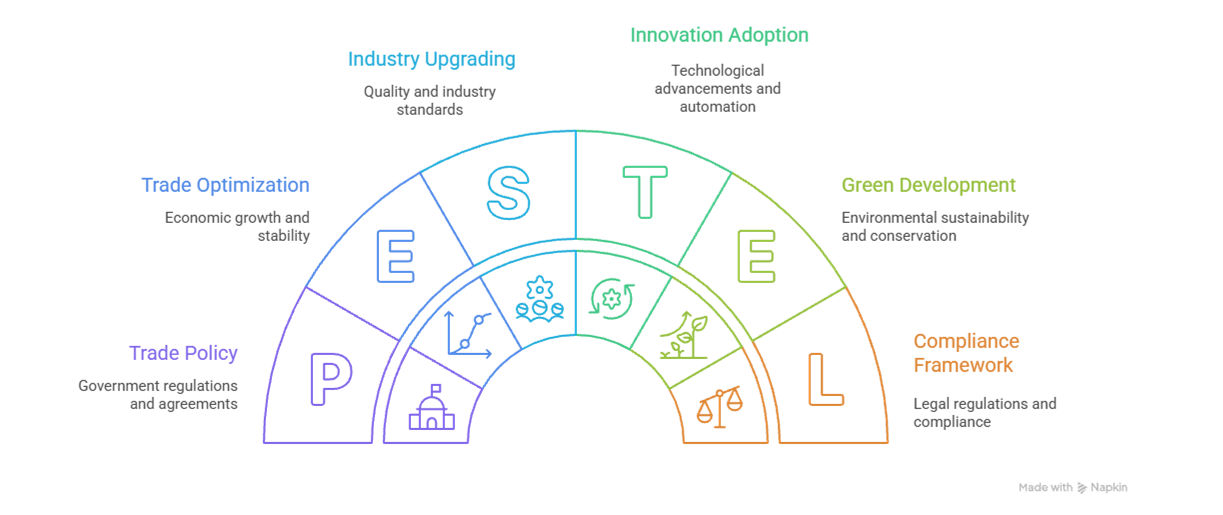
- Trade policy: Government regulations and agreements
- Trade optimization: Economic growth and stability
- Industry upgrading: Quality and industry standards
- Innovation adoption: Technological advancements and automation
- Green development: Environmental sustainability and conservation
- Compliance framework: Legal regulations and compliance
HS codes 2026 adjustments industry wise
The following table summarizes the number of HS codes added and deleted by industry:
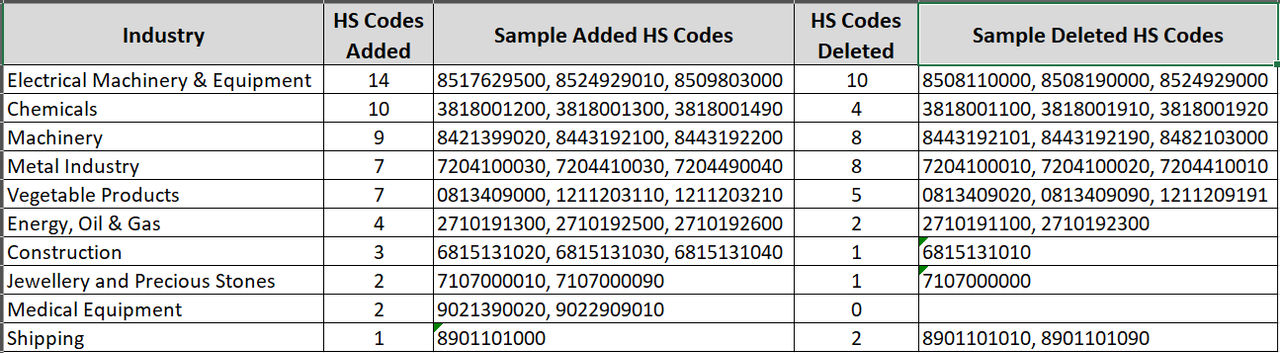
Industry wise HS codes added versus deleted
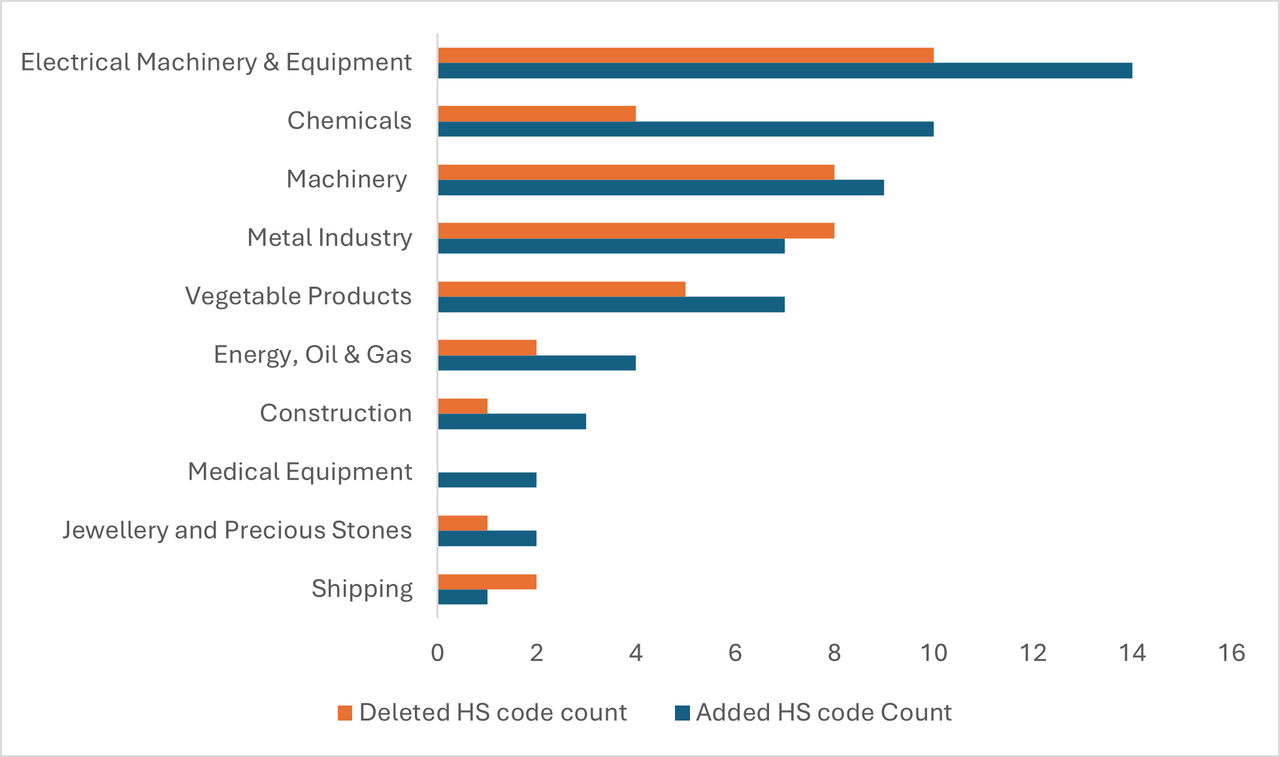
This chart illustrates the industry-wise impact of China’s 2026 tariff amendments. In total, 59 new HS codes were added, and 41 HS codes were deleted. Electrical Machinery & Equipment and Chemicals experienced the most significant changes, while Shipping and Jewellery saw minimal adjustments.
Impact on businesses
- Importers: Benefit from lower costs for high-tech and green products but should review HS code changes to ensure compliance.
- Exporters: May experience changes in competitiveness due to adjustments in tariff schedules across various sectors.
Conclusion
China's 2026 tariff amendments reflect a strategic approach to enhancing trade policies, supporting technological advancement, and promoting sustainable development. These changes are expected to benefit domestic industries, consumers, and international trade partners, contributing to a more dynamic and resilient global economy.
Recognizing the importance of these updates for our clients, we have already made them available on OneSource Global Trade Content. Clients can check new tariff lines, amended duty rates, SDE and CIQ under the product “Customs Import and Export Tariff of China”.
For more information on how ONESOURCE Global Trade solutions can assist you in managing supply chain risk and regulatory compliance as we move into 2026, contact your Account Manager or Client Success Manager.