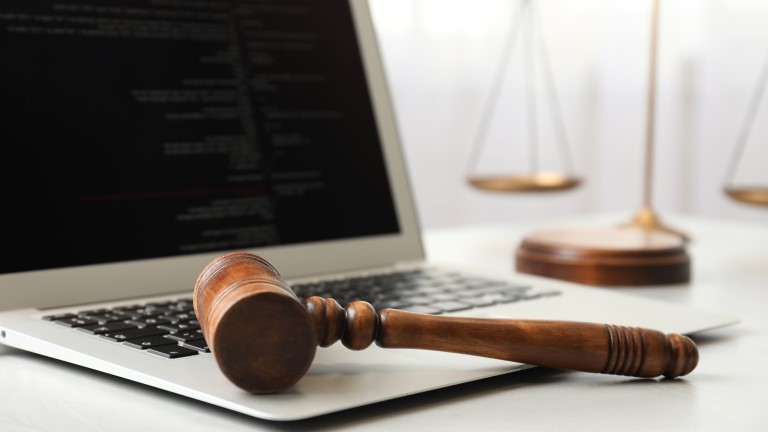
In courthouses that are adapting to AI, a quiet role reversal is underway. New clerks are teaching judges technology, while judges teach the judgment needed to use it wisely
Key insights:
- Knowledge flows both ways — The AI era has introduced a new dynamic in courthouses with knowledge flowing in more than one direction.
- Both sides bring irreplaceable expertise — Clerks bring AI fluency; and judges bring the legal instinct to know when something is wrong. Neither works without the other.
- Informal learning must become institutional practice — Courts that formalize this exchange, rather than leaving it to chance, will be better positioned for the wave of AI change ahead.
Picture a seasoned federal judge, with decades of experience on the bench and thousands of cases behind them, leaning in to watch a first-year law clerk navigate an AI research tool. The clerk is the one doing the teaching.
This scene, quietly playing out in courthouses across the country, may be one of the most under-reported shifts in how the judiciary is adapting to a rapidly changing technological landscape. On the latest episode of Beyond the Bench, Kaitlyn Frank, who leads courts-focused market intelligence for Thomson Reuters, described exactly this phenomenon and what it signals for the future of judicial work.
From skeptics to early adopters — in 18 months
The pace of change has been striking. Courts and judges were among the least willing professional groups to adopt AI tools just 12 to 18 months ago. Today, research from the Sedona Conference Journal indicates that more than 60% of federal judges are using at least one AI tool in their work. That is not a gradual drift — it’s a shift.
What drove it? Judges recognized that the question was never really whether AI would enter the courthouse, but how well-prepared the institution would be when it arrived. Courts continue to experience significant staffing shortages — last year more than two-thirds (68%) of courts were facing staffing challenges, with nearly half of court professionals saying they lacked the time to complete their work, according to the TRI/NCSC AI Policy Consortium for Law & Courts. Yet, many court professionals say they have found particular value in tools that can assist with research, document summarization, and administrative workflows. This makes the clear point that AI, used well, does not replace the people doing this work, rather, it gives them room to do it better.
A symbiotic relationship at the heart of adoption
The traditional judge-clerk relationship is one of the most distinctive in the legal profession. Judges impart legal reasoning, institutional knowledge, and decades of pattern recognition. Clerks bring fresh legal training, intellectual rigor, and an outsider’s perspective. It has always been a two-way exchange, even when it was rarely described that way.
AI has made that dynamic more explicit and expanded it. Clerks arriving from law schools where AI literacy is increasingly woven into the curriculum bring a technological fluency that many sitting judges have not had the opportunity to develop. Judges, in turn, bring something AI cannot replicate: The hard-earned ability to sense when a legal argument is wrong before they can fully articulate why. One without the other creates risk; yet together, they form a genuinely effective check on AI output.
This symbiosis extends beyond individual courtrooms. Courts strengthen their institutional resilience when experienced staff and new clerks learn from each other, sharing knowledge about AI tools and their limitations. When the next generation of AI capabilities arrives — and it will — those courts will adapt from a position of strength rather than scrambling from a standing start.
Building the institutional foundation
AI in courts is developing rapidly, and that pace is largely a good thing. Legal research that once consumed hours can be completed in minutes; voluminous case files can be summarized with accuracy; and unfamiliar bodies of law can be mapped quickly, giving judicial staff a workable orientation before they dive deeper. These are meaningful gains for institutions that work under real resource pressure.
Those courts that are making the most of AI are not simply those with the most technologically curious judges or the most skilled clerks. They are the ones treating AI adoption as an institutional decision rather than an individual one. That means creating written policies that define appropriate use, establishing risk tiers that help staff calibrate how much oversight different tasks require, and developing training that evolves as the tools themselves evolve.
Some courts currently have no official AI policy in place, creating a risk that staff may use AI inappropriately. And without a shared framework, every individual is left to make judgment calls that should be made collectively — and the knowledge being built through experimentation stays siloed rather than becoming a shared institutional asset.
Courts that invest in policy infrastructure now are not slowing themselves down. They are building the foundation on which broader, more confident AI adoption becomes possible.
A new kind of judicial wisdom
The best judges have always learned from the people and experiences around them — through difficult cases, insightful clerks, and fellow judges. A willingness to keep learning throughout their careers is itself a mark of judicial wisdom.
AI does not change that instinct; rather it expands the range of what there is to learn from, and who is doing the teaching.
For courts navigating this moment, the reverse mentorship dynamic offers more than a practical model for AI adoption. It offers a reminder that the judiciary has always adapted by drawing on the full range of knowledge within its walls. The same should be true now, because even though the tools are newer, the principle is not.
For more on this download a full copy of the Thomson Reuters Institute’s report, Responsible AI use for courts, here
Follow us on social
Topics
Have questions?