
Brazil's tax system is undergoing its most significant transformation in decades, yet only 4% of tax & accounting professionals have calculated what it will cost their firm. This report exposes the widening gap between awareness and action.
Executive Summary
The transformation has officially begun.
On January 1, Brazil began implementing its eight-year transition to an entirely new tax system, replacing the country’s cumbersome five-tier tax system with a simpler dual Value-Added Tax (VAT) model. And yes, simplifying Brazil’s tax processes may be the ultimate goal, but not for tax & accounting professionals, who are likely to face work over the next few years that will be more complex and time-consuming.
Brazil’s tax reform transition timeline runs from 2026 to 2033, and it will be rolled out in five separate phases. During the phase-in period, taxes from the old and new system will co-exist (meaning companies and advisory firms will have to calculate them both) and rates will shift every year. Old taxes will be gradually reduced while new taxes are added, first at lower rates then at progressively higher rates up to the final rate.
Many companies that conduct business in Brazil also are lagging in their tax reform preparation, and that may soon create a perfect storm of urgency for both firms and their clients.
While these rates are being phased in, administrative and structural changes to the tax system will also be occurring, which means businesses in Brazil will not only face different tax and pricing frameworks every year, but fluctuating compliance obligations, credit mechanisms, and other rules. Further, tax rates for individual companies will be different depending on the company’s business sector, supply chain structure, product destinations, and other relevant factors.
Adapting to the new system
The duration and complexity of this transition mean that tax & accounting professionals will be responsible for helping their clients navigate and understand the new system, including how these changes will impact their clients’ businesses. These responsibilities will include devising new tax strategies, revising processes, avoiding penalties, identifying new opportunities, and modeling the short- and long-term consequences of today’s decisions down the road. Indeed, many tax professionals surveyed said they believed demand for certain accounting services would increase and about half of those surveyed said the increase would be significant.
Yet, for tax firms themselves, this transition will bring a dramatic structural change to Brazil’s tax system that will impact how firms operate, how client business is conducted, how work is billed, and how much revenue comes through the door. Adapting to the new system will also involve costs — for technology, software, and training — that many firms have yet to calculate or budget for.
Urgency and action are in short supply
Given the immediacy and importance of these changes, one might assume that Brazil’s tax & accounting firms have made adaptation strategies a top priority. However, this annual year’s report, its third year, suggests that only a small fraction of firms have taken the steps necessary to fully prepare for the transition.
For example, fewer than 10% of the tax & accounting professionals in Brazil surveyed say their firm has developed a complete plan for the transition. Meanwhile, more than half of respondents (52.9%) say their firm is in the beginning stages of planning, and only 23.4% say they are in the process of developing a plan. Keep in mind: Phase One of the tax reform transition has already begun, and important changes are arriving as early as next year.
Our survey also suggests that while awareness of these issues is growing and some progress toward active preparation has been made, it is not nearly at the pace that is needed. Indeed, a majority of firms have yet to take concrete action to meet the many challenges ahead, respondents say. Further, many companies that conduct business in Brazil also are lagging in their tax reform preparation, and that may soon create a perfect storm of urgency for both firms and their clients.
As the pace of reform accelerates, the pressure and risks continue to escalate as well. Firms that continue to avoid developing and executing an action plan may soon find that it is too late. Unforeseen costs will arise, more prepared competitors will outpace them, and catching up will become increasingly difficult, if not impossible.
Waiting is no longer an option.
Key takeaways
- Reform preparations are lagging — Although the first phase of tax reform is already underway, a majority of firms are still in the beginning stages of preparation, according to survey respondents. In fact, crucial steps for planning, investment, and execution have been neglected, despite the mounting necessity to act.
- Financial impact still underestimated — It’s estimated that tax reform could cost firms up to 2% of their annual income, yet only a small percentage of respondents (8%) say their firm has bothered to calculate the financial impact reforms will have. Most say their firm intends to calculate the cost at some point, but almost one-quarter (23%) say they won’t — possibly because they believe their clients won’t be affected.
- Technology’s role is growing — Tax & accounting firms are facing technology gaps even beyond the upgrades needed to comply with the new requirements. More sophisticated scenario-modeling software is at the top of many firms’ wish list, and firms may be leaning heavily on AI as a cost-effective answer to their tech challenges.
- Opportunities abound — Despite the current lack of readiness, most firms recognize that tax reform represents a rare business opportunity. Almost three-quarters of tax professionals surveyed said they believed demand for specialized accounting services would increase as a result of tax reform, with 49% saying that the increase would be significant.
- Obstacles in the way — Familiar hurdles — such as competing priorities, lack of time, and uncertainty about the details of the new tax regime — are still preventing many firms from pursuing actions they should take, respondents say.
Preparation and obstacles: Are we ready?
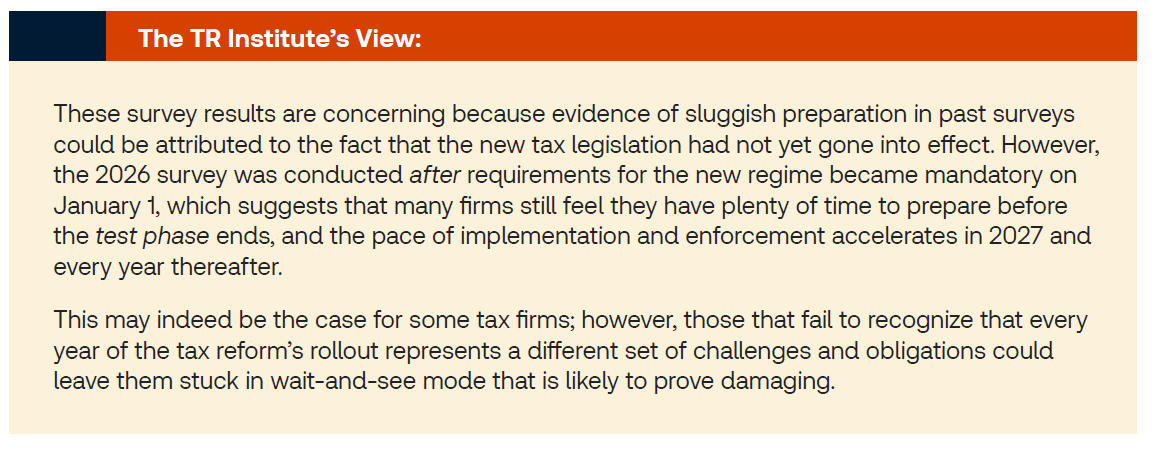
Although Brazil’s tax reforms will be phased in over eight years, that is not an invitation for firms or their clients to be complacent. Adapting to the new regime cannot be accomplished with a few adjustments here and there. Rather, the transition needs to be viewed as an eight-year process with different challenges and obligations at each stage. Firms that plan well and understand the impact of reforms on every aspect of their operations are likely to navigate the transition relatively smoothly. Those that get stuck in wait-and-see mode are likely to end up with fewer ways to maneuver.
Structure of the new tax regime
Brazil’s tax reforms will eventually replace most of the current system of five taxes — tax on the Circulation of Goods and Services (ICMS), Service Tax (ISS), tax on Industrialized Products (IPI), Program of Social Integration (PIS), and Contribution for the Financing Social Security (COFINS) — with a dual-VAT system comprised of three new schemes: the CBS (federal tax) and the IBS (state and municipal tax), which are the dual-VAT taxes; and the IS (Selective Tax), which is a separate single-stage tax that applies to goods and services deemed harmful to health or the environment, such as alcohol, tobacco, and various carbon-emitting vehicles and business activities. (Note: While the IPI is not fully eliminated, its rates drop to zero for most products starting in 2027; however, it does remain in place on a residual basis for goods that compete with products manufactured in the Manaus Free Trade Zone to preserve that region’s tax incentives.)
The phased timeline of reform is intended to give companies, tax professionals, and the government time to test certain assumptions and rules of the new regime and minimize disruption. As changes will be happening every year until 2033, tax & accounting professionals need to be engaged with the process from the beginning.
For example, the new CBS and IBS rates are being introduced in 2026 at 0.9% and 0.1%, respectively, as part of the initial test phase. By 2033, however, the full CBS rate will be approximately 9% to 10% and the IBS rate will be approximately 19% to 22%. This will result in a combined dual-VAT target rate of approximately 29% to 30%, but that rate is not yet fixed and now is simply a reference rate for planning purposes.
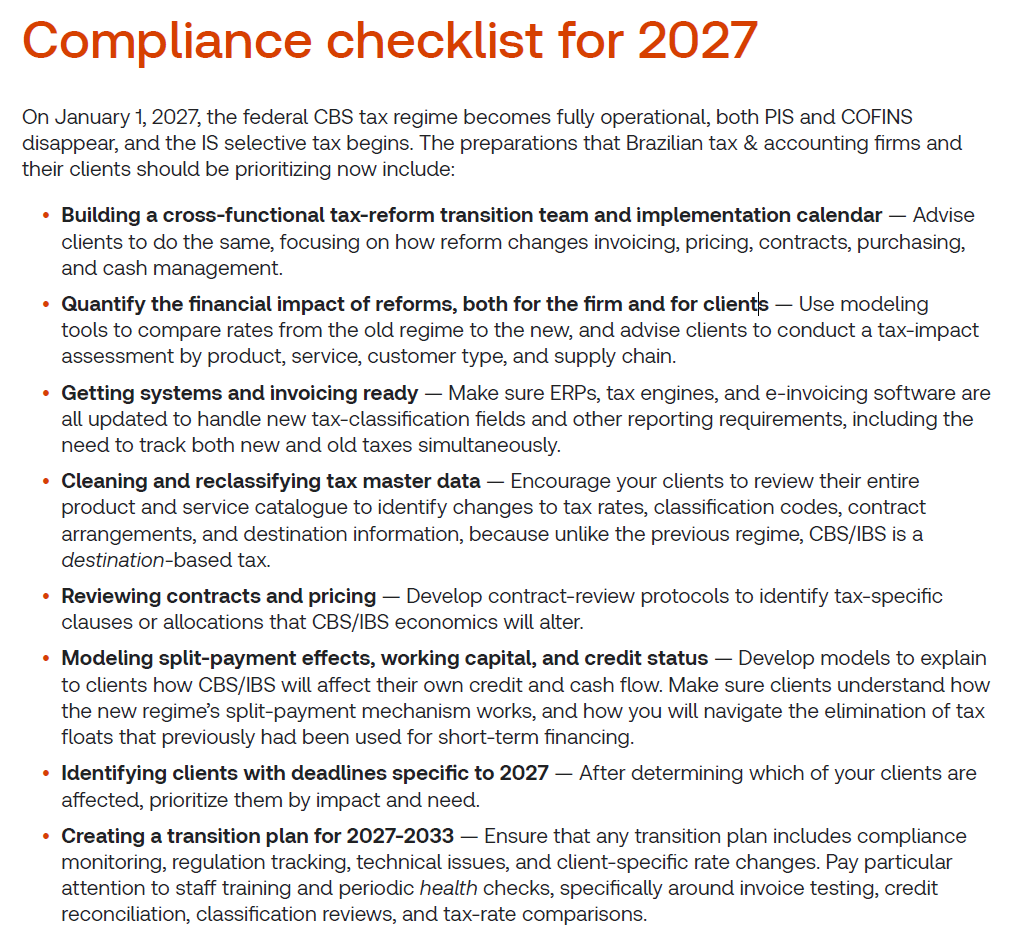
For tax & accounting professionals, however, things will begin to get real as soon as next year. In 2027, the federal CBS side of the new VAT will be almost fully implemented and PIS/COFINS taxes abolished. (The state/municipal IBS side of the VAT will remain at the test-phase rate of 0.1% until 2029, after which it will gradually increase.) Also, the new IS selective tax on harmful products goes into effect in 2027 as well.
Current stage of firm preparation
Next year, obviously, is not far away, so planning is key. And yet, all too many tax & accounting firms appear to be slow walking their way toward concrete decisions and actions. More than half of respondents (52.9%) say their firm is still in the beginning stages of preparation, in which they are gathering information and following updates but have not yet begun the planning process. Meanwhile, less than a quarter (23.4%, up from 19.5% in 2025’s report) say their firm is in the process of developing a plan, but fewer than 10% say they have active plans in place.
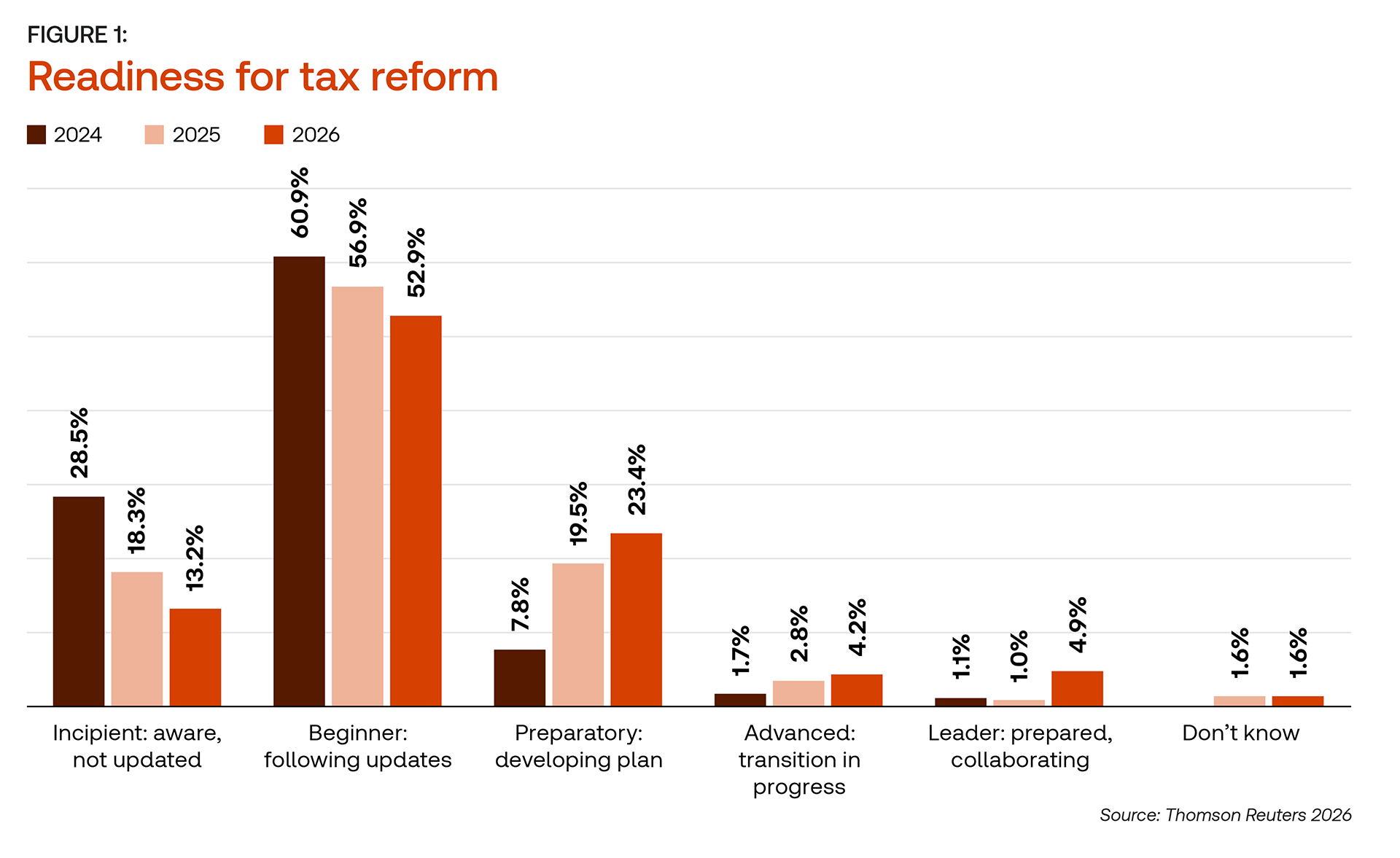
While a majority of survey respondents are from firms with fewer than 10 people, these statistics have not changed more than four or five percentage points since last year’s report, indicating that fast, decisive action on a broad scale is really not happening.
Obstacles slowing progress
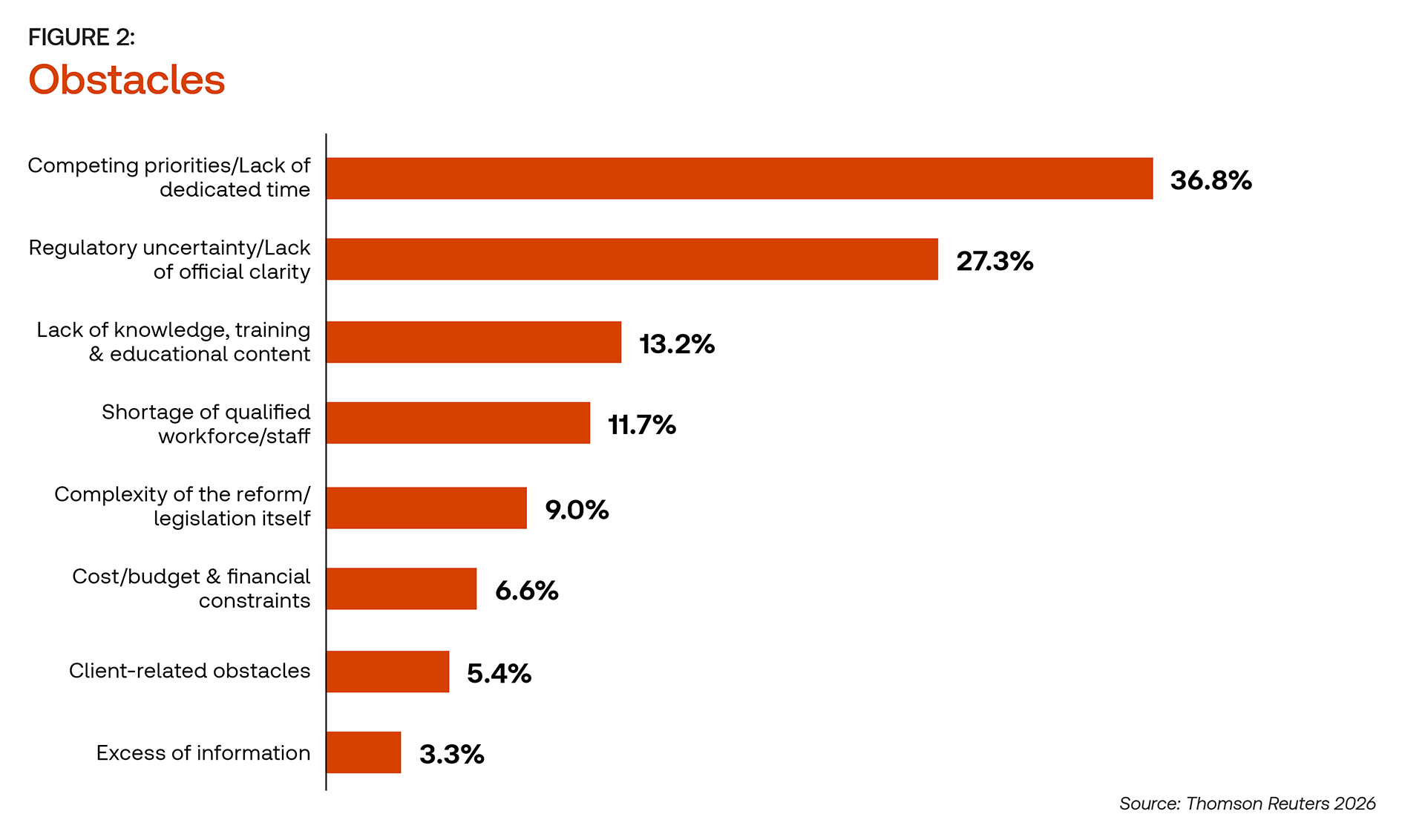
Survey respondents who say their firm is still in the beginning stages of preparation cite several reasons for this slow progress. Almost two-thirds blame either competing priorities and lack of dedicated time or regulatory uncertainty and lack of official clarity, indicating that time and a lack of guidance were the biggest dampers on reform preparation.
While it’s true that some guidance on the new legislation has yet to be codified, some of that flexibility is by design. During the test phase that runs through next year, for example, officials are monitoring the process to ensure that the legislation is working as intended.
Given that, there is little excuse for firms to avoid dedicating the time needed to prepare themselves for reform. And this year’s long rollout strategy should not be an excuse to avoid fully engaging in the new process.
Advice from more advanced firms
Separately, respondents that placed themselves in the advanced or leader category were asked what advice they would give to organizations that were behind in their preparation regarding next steps. The results are telling.
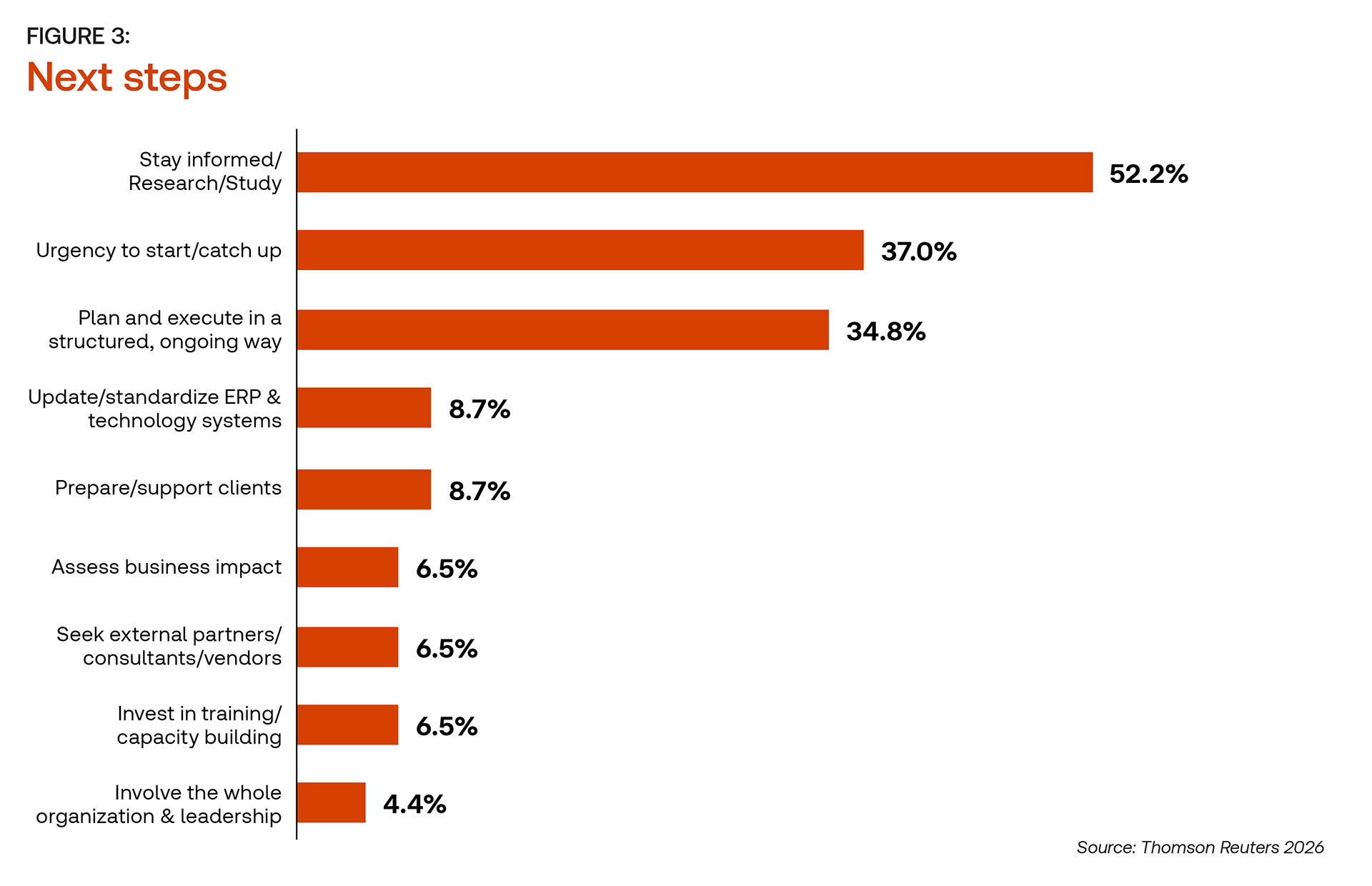
More than half (52.2%) of these more advanced respondents say that continuing to stay informed and studying the firm’s own business landscape should be a top priority. That advice was followed closely by a nudge to ratchet up the firm’s sense of urgency — and then using that to catch up, develop a plan, and start executing it.
The survey results suggest, however, that far too many firms have yet to take even the first basic steps toward preparation. Three-quarters (74%) of respondents say their firm has not formed an internal working group or committee to study the impact of tax reform on their business, and 70% have yet to calculate the cost of adapting to the new regime.
Planning and cost gaps
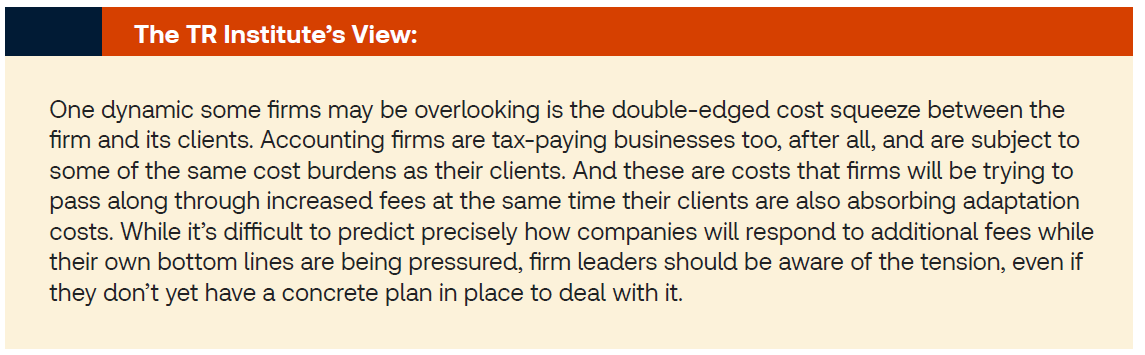
Indeed, the cost issue is particularly concerning, because it’s estimated that the cost to adapt to the new tax regime could be as high as 2% of an organization’s annual income. Failing to anticipate or plan for this potential hit to the bottom line could leave some firms vulnerable, especially if preparation in other areas is lacking and problems cascade in the rush to catch up.
Fortunately, the portion of respondents who say their firm has started calculating the costs of adaptation doubled in the past year, but still that reaches just 8%. And almost half (46%) say their firm plans to estimate costs but haven’t, while the portion of respondents who say their firm does not plan to do any cost estimates actually rose slightly this year, to 23%, up from 19% last year.
Incremental progress toward readiness
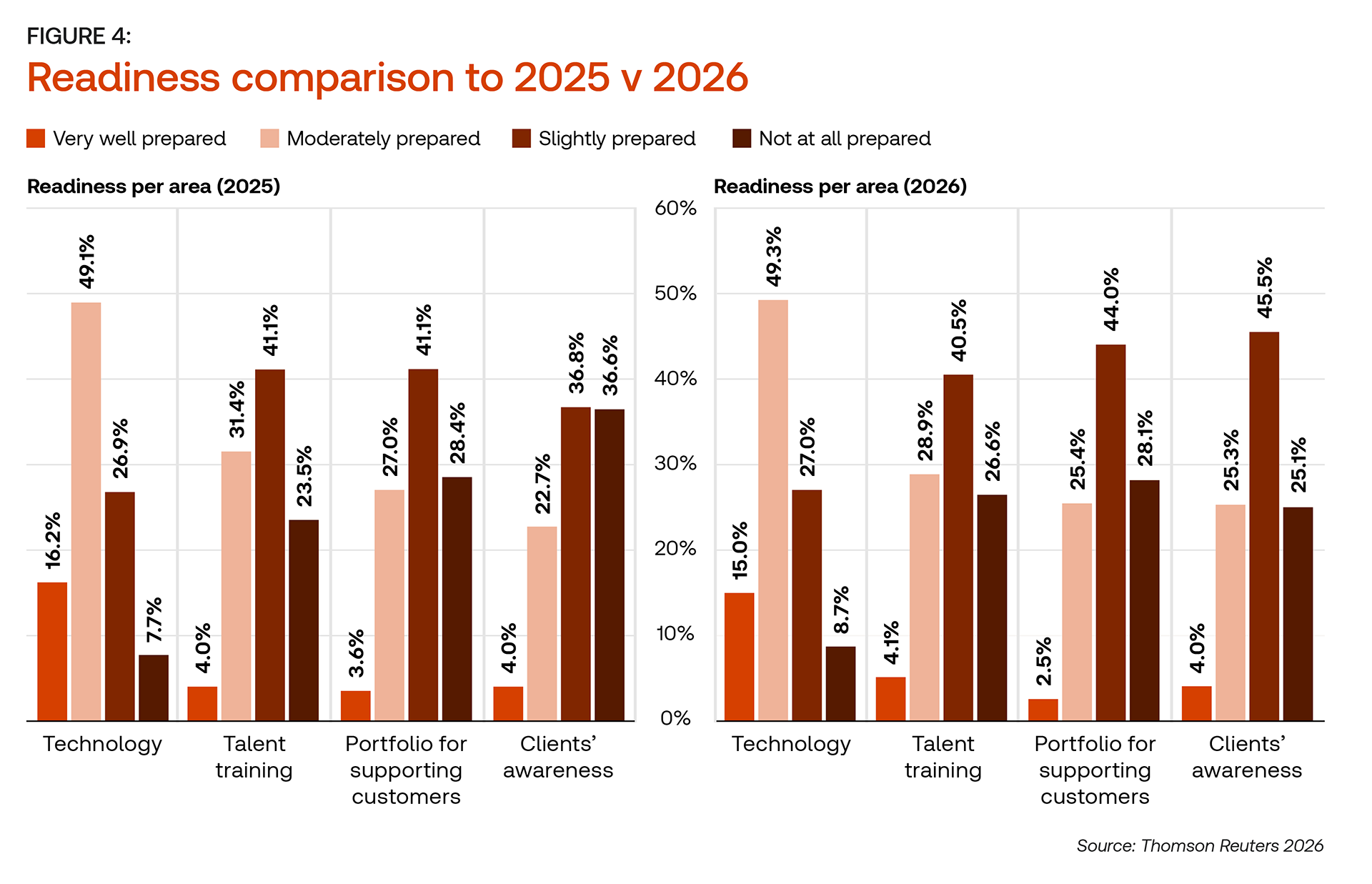
In general, this year’s survey results indicate a slow but steady acceptance of the challenges involved, but only incremental advancements in various key areas of preparation.
For example, in regard to technology investment and aptitude, the percentage of respondents who categorize their firms as moderately prepared barely budged from last year, continuing to hover around 49%. And the percentage of respondents who say that their firms are technologically very well prepared actually dropped slightly to 15%.
Likewise, the percentage of respondents who say their portfolio for supporting customers was in good shape rose less than two percentage points; while client awareness of the coming changes and challenges shifted somewhat as fewer respondents say their clients were ill-prepared. Yet the percentage of respondents that say their clients were very well prepared remained steady at an anemic 4%.
Impacts and expectations: What is coming?
In general, tax professionals are aware that tax reform will change how taxes are calculated, how prices are set, and how certain client services will be delivered. And over the past year, opinions on the matter have not changed much.
Expected impacts of tax reform
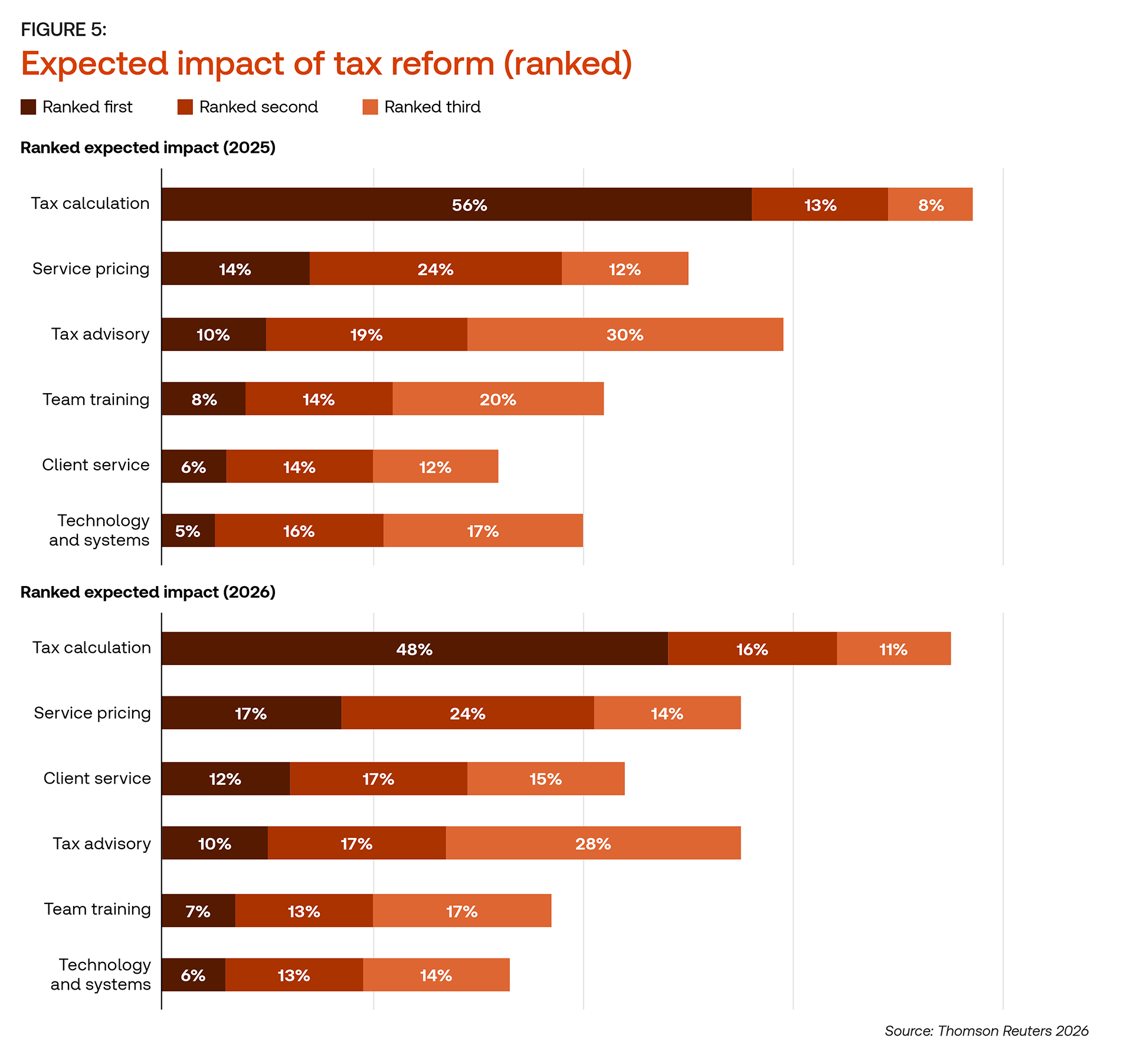
Firms still expect tax reform to affect tax calculations the most, followed by changes in service pricing and the type of advisory services that clients will likely demand. However, most firms expect reforms to have only a negligible effect on training practices, client service, and the technology required to meet client demand.
At the same time, however, the vast majority of respondents (85.2%) also expressed interest in obtaining new forms of technology, particularly scenario-modeling software, which would also require extra training. Interestingly, this is a contradiction worth noting, if only because it touches on two of the most important aspects of tax-reform preparation, technology and training.
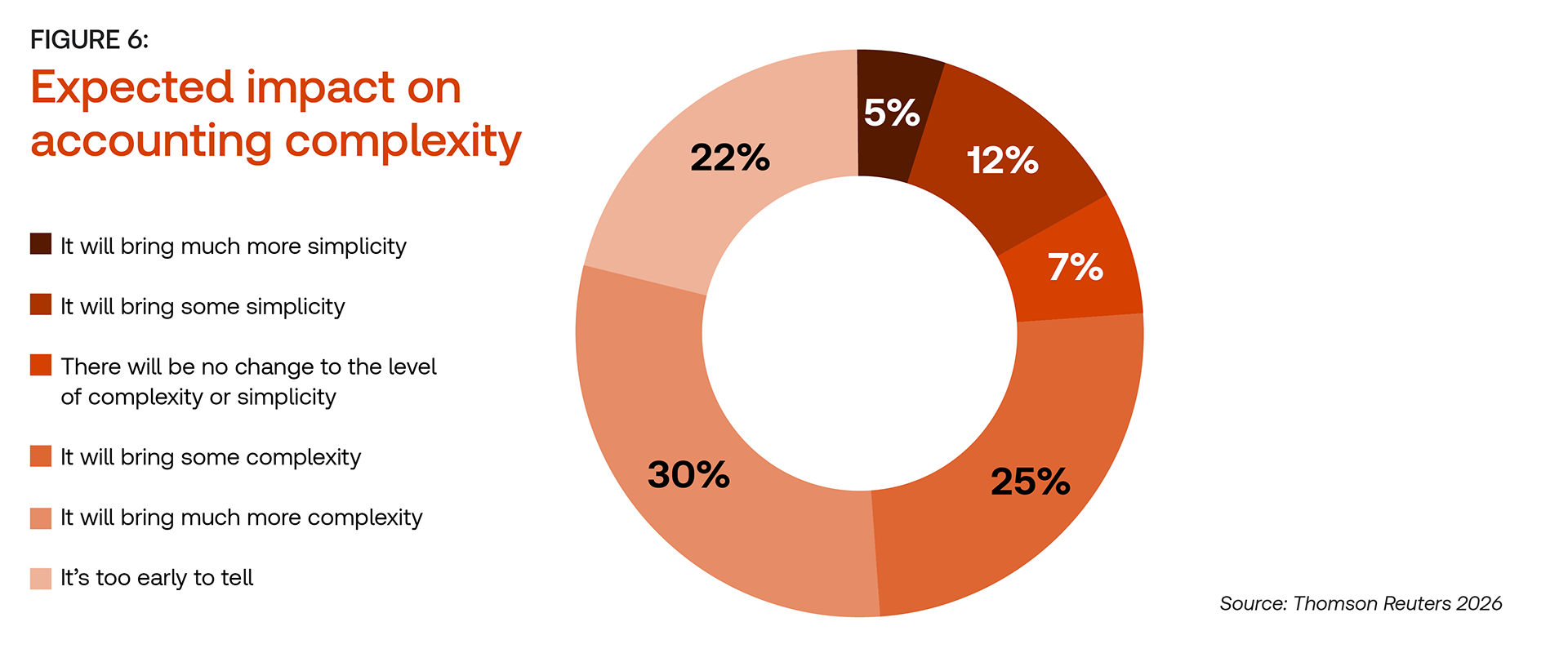
Even though the stated purpose of Brazil’s tax reform is to simplify and streamline the taxation process, few tax professionals believe the reforms will simplify their jobs. Indeed, only 17% of surveyed professionals thought tax reform would lead to simplification, whereas 55% thought more complexity was in their future. In fact, with the largest portion (30%) of that majority saying reform would bring much more complexity, both for themselves and their clients.
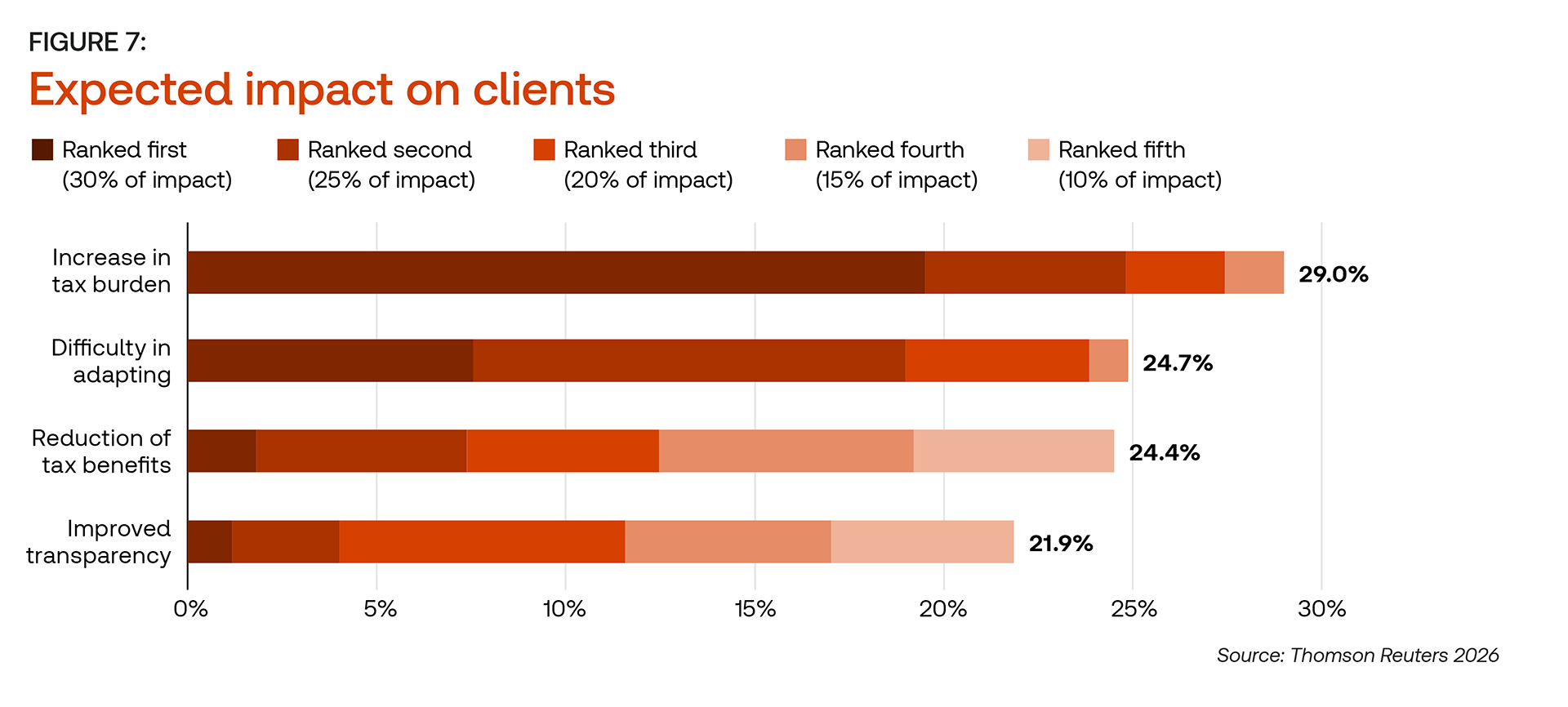
According to the tax professionals surveyed, the most significant impact of tax reform for their clients will be an increase in their tax burden, even though the Brazilian government claims the reforms are revenue-neutral overall. In practice, however, the overall impact on individual companies will depend on the business sector in which they operate, the complexity and structure of their supply chain, and their credit status.
For example, the dual-VAT system replaces the previous system of layered, cascading taxes, which should benefit large manufacturers with extensive supply chains as well as exporters. On the other hand, service-oriented companies may see a tax increase, however because labor costs do not accumulate VAT credits, that may be able to offset CBS/IBS obligations. And companies that sell goods considered harmful to public health or the environment may also see a tax increase, since the IS tax is targeted directly at them.
For corporate entities, however, the most significant initial costs are likely to come from the internal changes necessary to comply with the new system. These include updating enterprise resource planning (ERP) systems and tax engines, as well as the costs incurred by having to operate two parallel systems (old and new) through 2032. Many other costs involving pricing, contracts, credit controls, and other administrative minutiae are also inevitable.
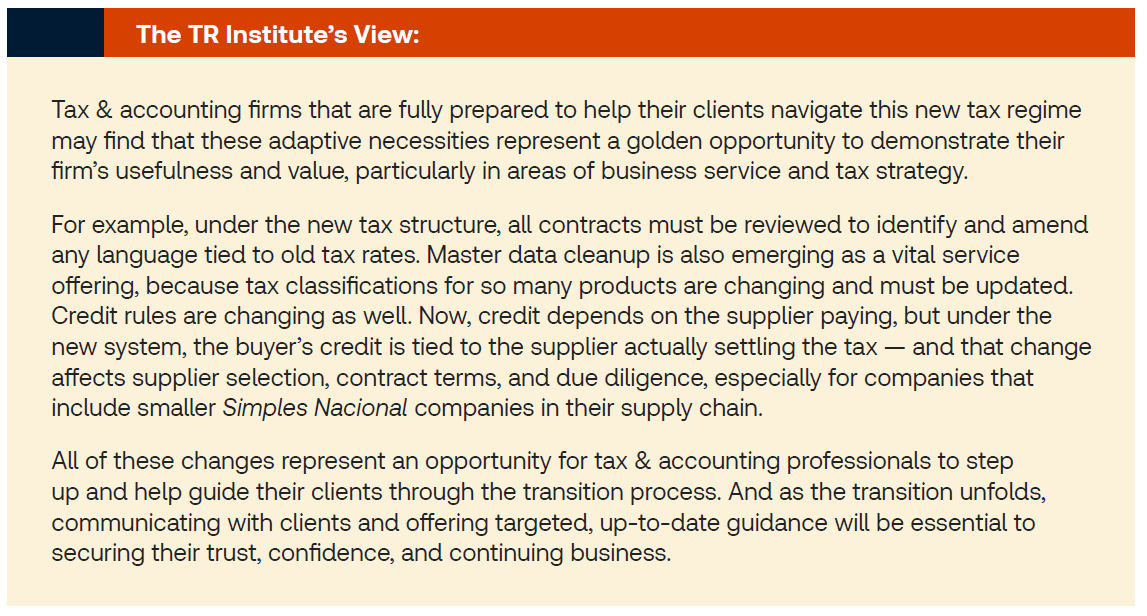
Expected impact on client demand and cash flow
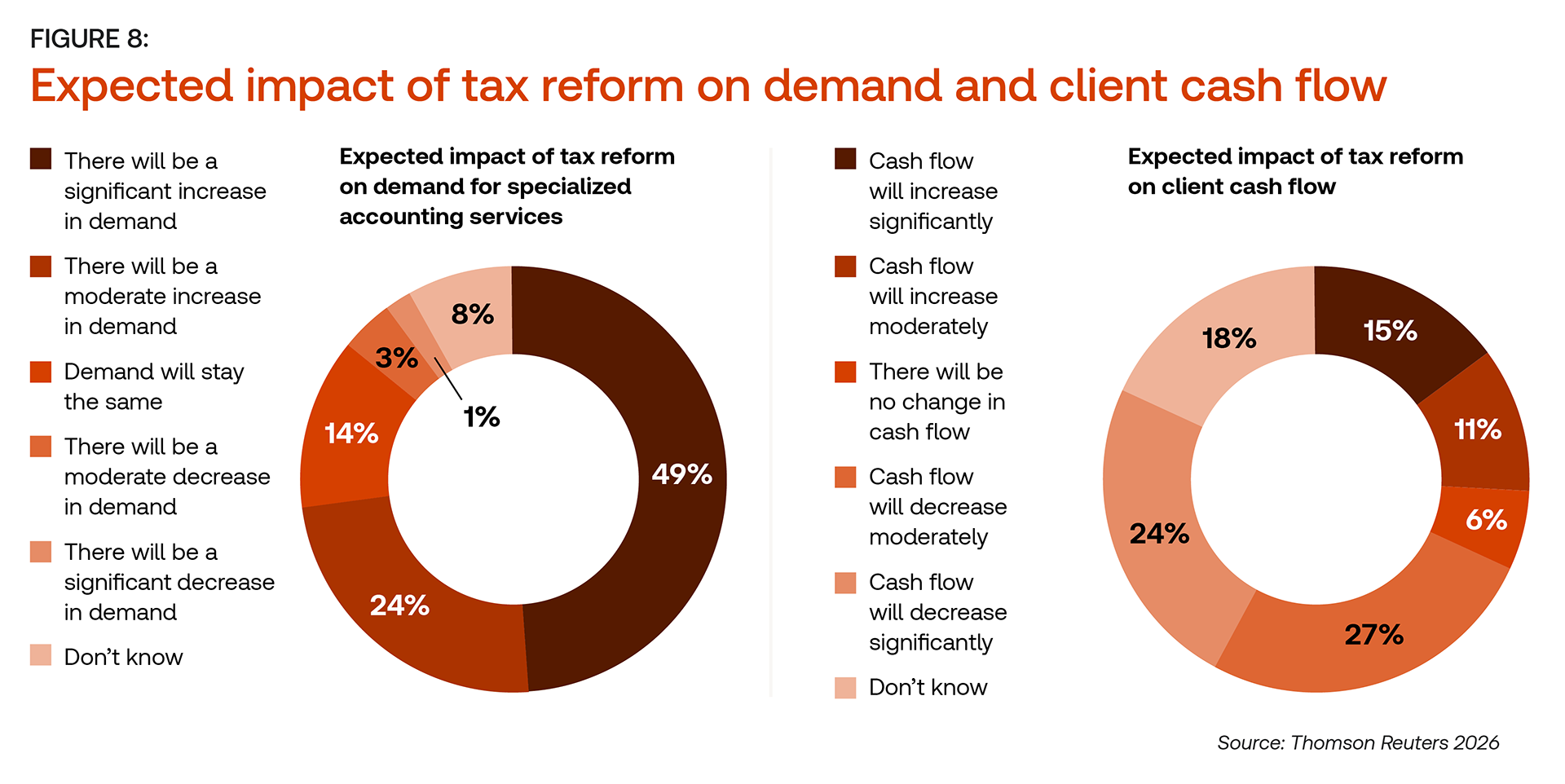
Even though preparations are lacking in some areas, that doesn’t mean tax & accounting firms in Brazil don’t recognize the opportunity these reforms represent. Indeed, almost three-quarters (73%) of tax professionals surveyed said they believed demand for specialized accounting services would increase as a result of tax reform, with 49% saying that the increase would be significant.
However, expectations are that client cash flow will likely decrease or stay the same. Only 26% of respondents thought tax reform would increase their clients’ cash flow, whereas more than half (51%) thought client cash flow would take a moderate to significant hit.
One reason tax professionals expect the reform to put pressure on corporate cash flow is because the CBS/IBS split-payment mechanism will automatically separate the tax portion of a customer’s payment at settlement. Companies will therefore lose the temporary use of tax revenue they could previously hold until the payment deadline, this represents a loss of a tax float that Brazilian companies used in the past to finance short-term working capital.
As mentioned before, however, the actual impact of tax reform on individual business will very much depend on the nature and structure of the business itself. Similarly, the impact on clients will vary from company to company, based upon the sector in which the client operates and the various rules that apply to those sectors.
How firms are assessing impact on pricing
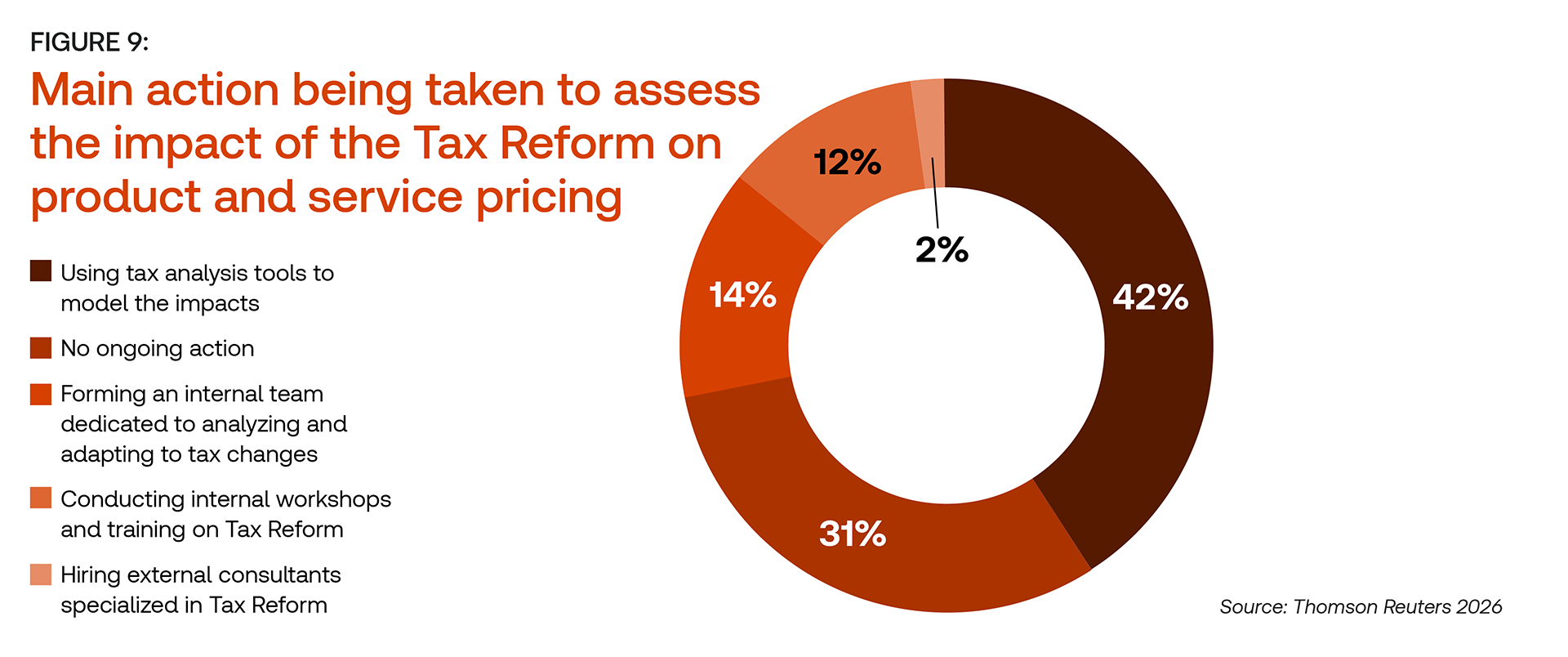
Undoubtedly, the Brazilian tax reform will impact how tax firm price their products and services for clients — and this is a question that many firms are addressing with a variety of approaches, such as using tax-analysis tools to model the tax reform’s impacts, or (to a lesser degree) forming a dedicated internal team to study the matter and formulate an adaptation plan or holding internal workshops and training.
The role of tech tools
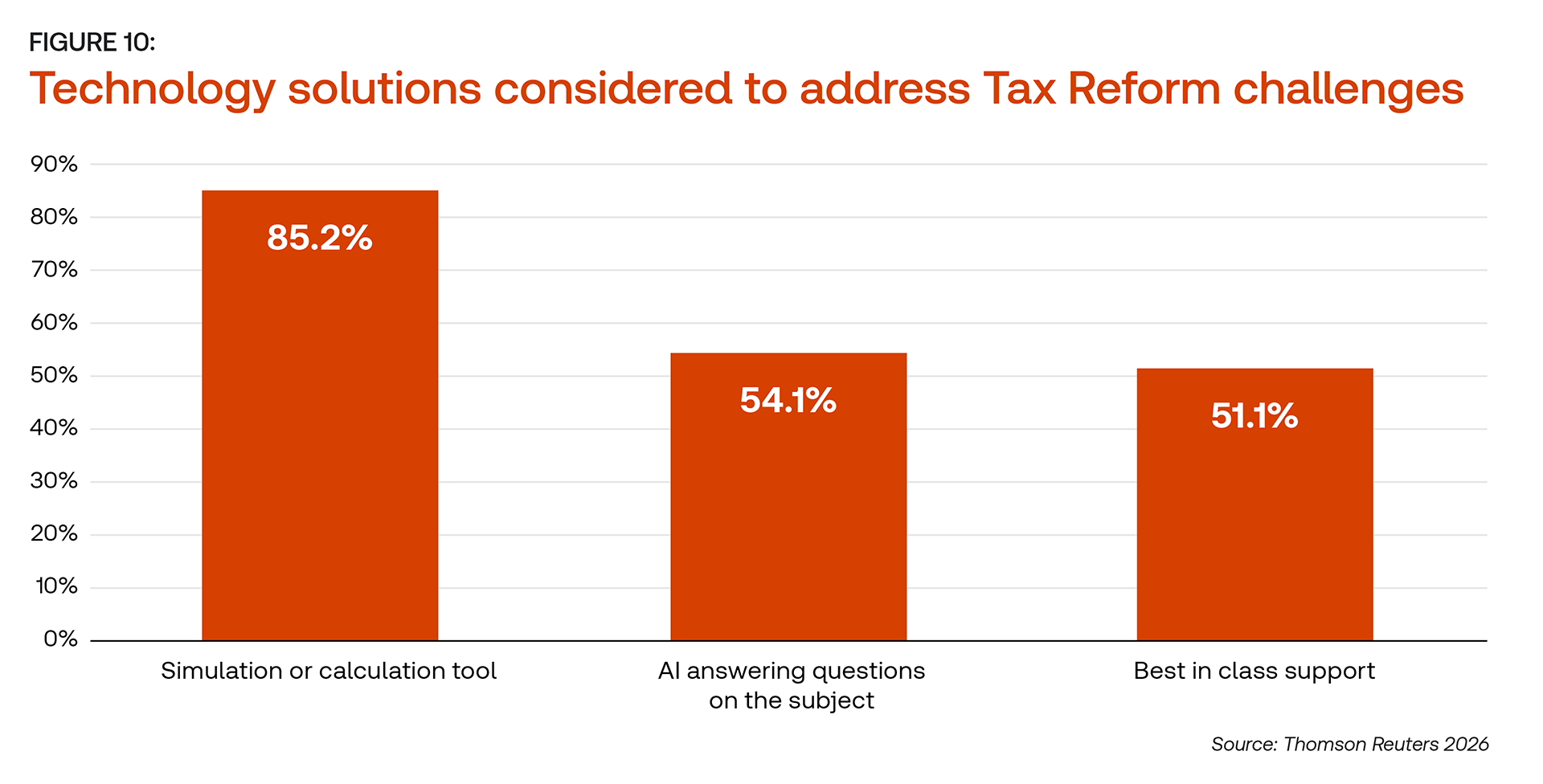
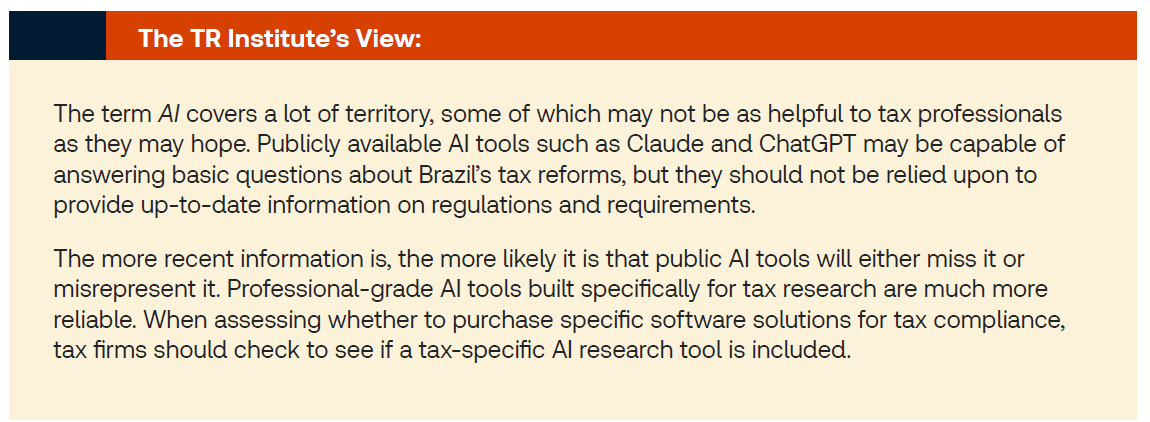
Aside from internal discussions, technology is also likely to play an important role in how firms analyze and develop strategies to address the changes to come. Indeed, large portions of respondents say that it would be helpful to have access to software tools that can simulate different tax scenarios and model calculations, or to use AI to answer questions, and many say their firm’s efforts could be improved by best in class support, which could mean enlisting advice from outside consultants who are experts at technological analysis.
Transitional success: Needs, priorities & investment
Transitional success strategies
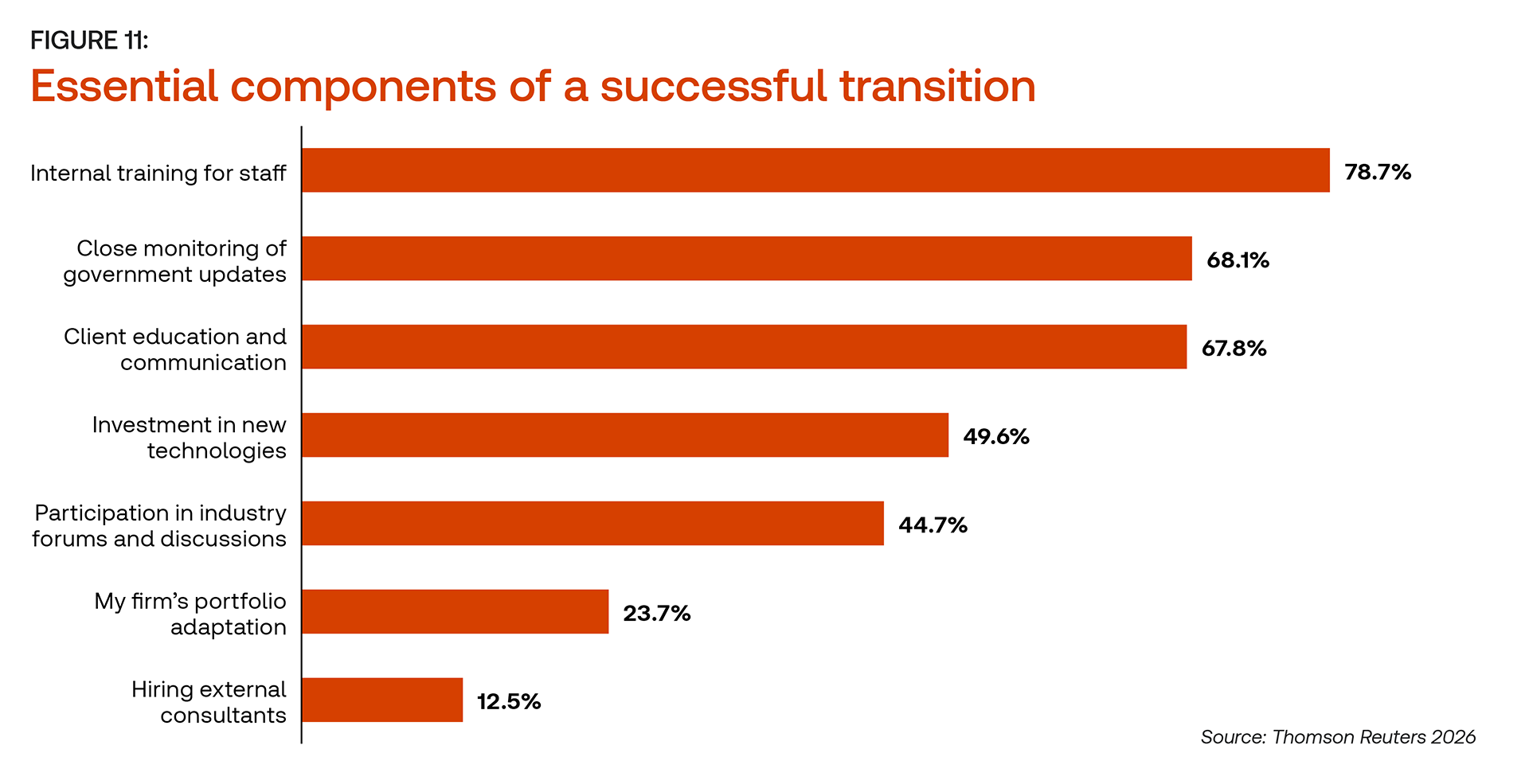
Although many firms are still in the process of developing a concrete action plan to address tax-reform issues, most respondents say they are nevertheless aware of what’s needed for a successful transition.
At the top of the priority list is internal staff training, which more than three-quarters of respondents cited as an essential component of transitional success. Large majorities also recognize the importance of closely monitoring government updates, and view client education and communication as essential to positive outcomes.
Interestingly, a much smaller portion (12.5%) say they think hiring external consultants is necessary, an indication perhaps that tax professionals are confident their firms have the ability to navigate their own way through the coming changes without leaning on outside expertise.
Most useful tech tools
One reason technology solutions will be so integral to Brazil’s new tax regime is that the reforms themselves will institutionalize high degrees of automation and create an almost entirely digital tax environment.
E-invoicing, automated tax-splitting (CBS/IBS), automatic tax credits, digital IDs, API integration, and other digital compliance mechanisms will be a part of everyday life for companies operating in Brazil going forward. Firms that manage and analyze their corporate clients’ data are going to need extensive knowledge of these systems, as well as the skills to apply the software solutions necessary to meet client demand and keep pace with rule changes over the next eight years.
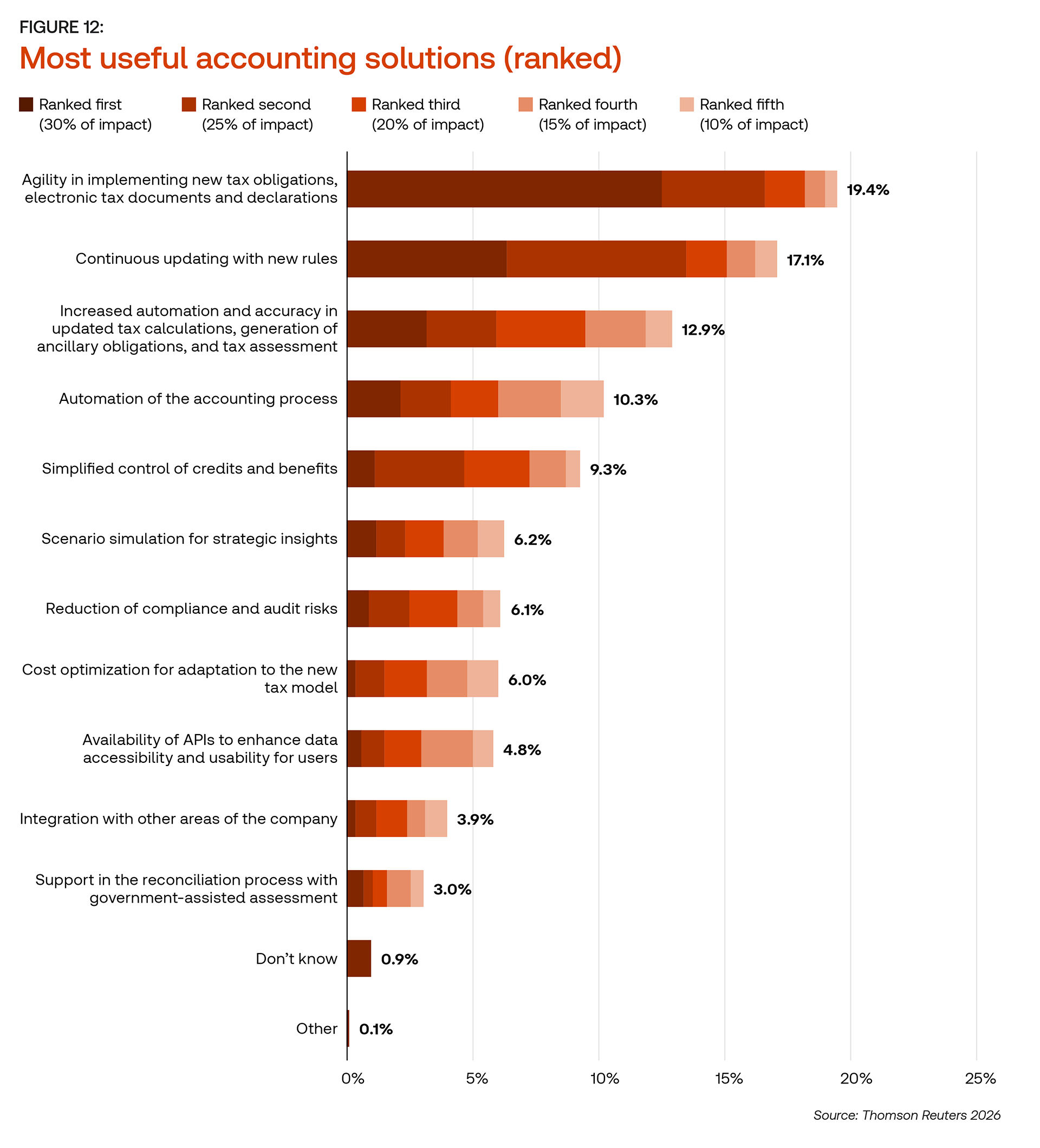
The most useful accounting solutions, according to survey respondents, are those that give firms the agility to manage and implement new tax obligations, including electronic documents, e-invoicing, and customs declarations. Software that continuously tracks and updates new tax rules is another must-have, respondents say, followed by automated solutions that instantly update tax calculations, assessments, and other administrative obligations.
In general, better, faster, more dynamic data-management is the theme of this year’s responses. Automated accounting processes, simplified credit control, and using scenario modeling software to gain strategic insights — all are capabilities that respondents say they want, even if their firms have yet to develop a plan and budget for acquiring them.
Investment intentions
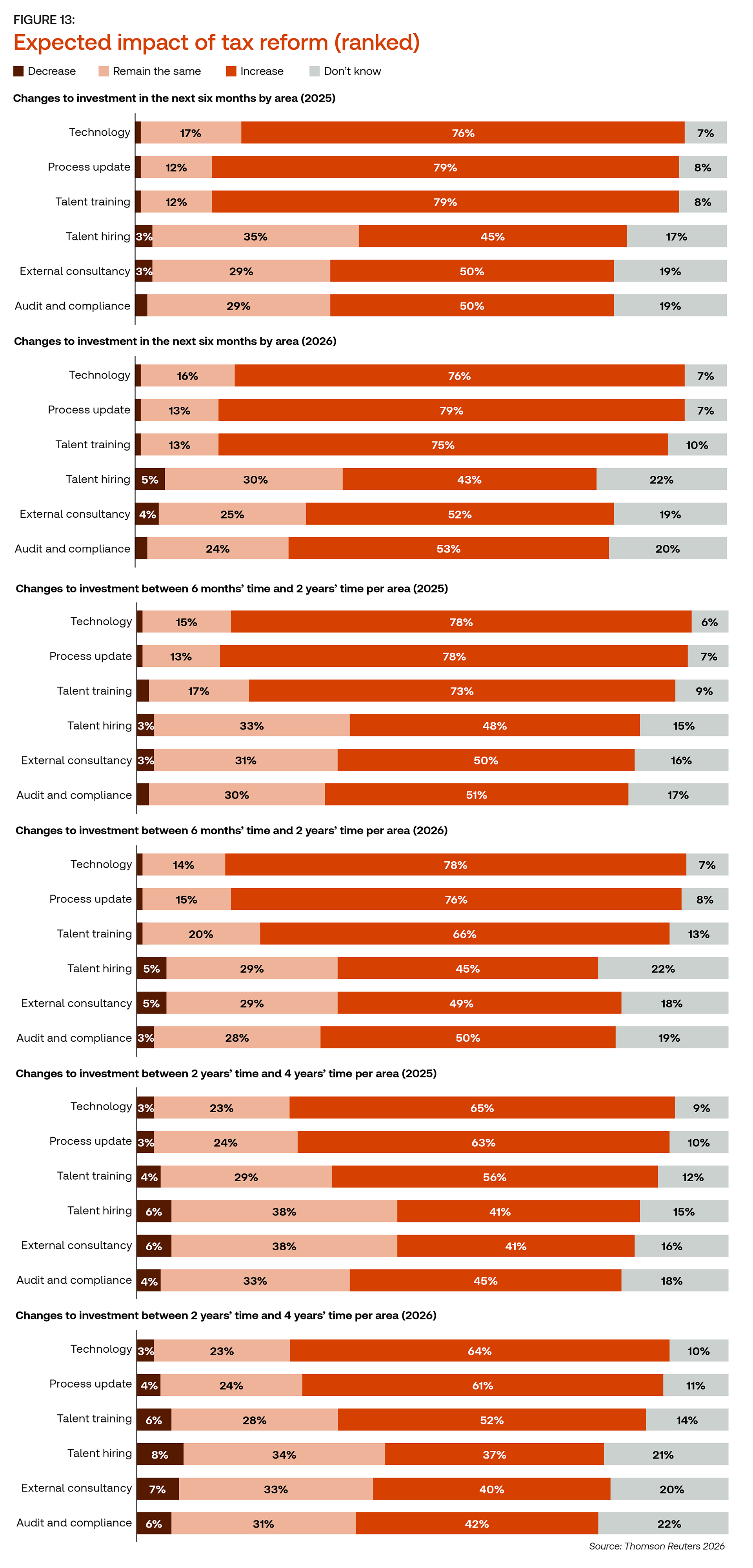
Fortunately, firms have not wavered in their commitment to invest in the areas necessary to prepare for changes introduced by tax reform, the survey shows. Whether the time frame is six months or four years from now, expected budget commitments to meet anticipated demand have not changed much since our previous survey.
Indeed, intentions to invest in technology, process improvement, talent training and hiring, and compliance solutions remain consistent. The only outlier (if you can call it that) is a slight drop in expected investment in training this year, perhaps because some firms have already invested in training and may not feel the need to spend as much on it in the future.
Conclusion
Although Brazil’s tax reforms will be phased in over the next eight years, that timeline is not as generous as it sounds. Each year of the transition will introduce new rules and challenges, and the ongoing requirement to track tax obligations under both the old and new rules will present tax professionals and internal corporate tax teams with years of shifting compliance targets.
For tax & accounting firms, however, Brazil’s tax reforms offer an extraordinary opportunity to demonstrate their value to clients. Firms not only need to train their own professionals on the new regime’s requirements, but they must also update their ERP systems, tax engines, and compliance software. They also must incorporate new reporting protocols, revise their billing systems, and plan for the financial impact of reforms on their individual businesses.
In other words, reform-specific advisory services and guidance will soon be in high demand, so tax & accounting firms need to be prepared.
Reform-specific advisory services and guidance will soon be in high demand, so tax & accounting firms need to be prepared.
Most tax professionals are aware of this opportunity, yet too many of their firms are behind the curve in terms of planning, budgeting, and execution of their adaptation strategy, if they even have one. The business opportunity is there for the taking, and firms that prepare early will have a significant advantage over those that don’t. Indeed, those who wait too long to act may find themselves scrambling to keep pace with their better-prepared competitors.
The tax sector has an important role to play in ensuring that Brazil’s transition to a dual-VAT system is a practical and financial success. At all levels, the coordination of tax personnel, technology, leadership, and guidance will require increasingly high levels of engagement with the process — a level that the majority of tax & accounting professionals in Brazil have yet to reach, by their own admission.
If preparing for the implications of tax reform at every level isn’t a priority now, it certainly should be. The clock is ticking.
Methodology
The data for this report was gathered from an online survey of tax & accounting professionals in Brazil about their awareness, expectations, and readiness for the upcoming tax reform. A total of 577 industry professionals responded to the survey through July and August 2026. Most respondents work full-time in firms with 10 or fewer people, but larger firms were represented as well.
Follow us on social
Topics
Have questions?

Featured Event
The 34th Annual Chief Marketing & Business Development Officer Forum
