
A new report from the Thomson Reuters Institute and IE University Law School shows continental Europe’s legal industry is expecting slight growth, as corporate client expectations are changing, and AI is having an impact.
Executive Summary
European legal markets come into the midpoint of the 2020s in a position of potential growth and an overall positive outlook. In order to achieve their maximum growth potential, however, law firms will need to be more focused on market positioning and client satisfaction than on the overall client spend they receive.
European buyers of legal services largely anticipate growing their legal spend over the next few years, with that growth more concentrated in some specific practice areas such as regulatory law. With European firms generally taking an expansive view towards appealing to a wide variety of clients with a combination of strategies, many lawyers feel positive about their respective firms’ ability to maintain profitability over the next two to three years.
Not surprisingly, this general positive economic outlook also varies slightly depending on country and jurisdiction. Spain and France emerge as the strongest overall markets for potential growth, while Italy anticipates a more muted economic outlook and Northern Europe represents a mix of these viewpoints. (Northern Europe, for the purposes of this report, consists of the Nordic countries of Denmark, Finland, Norway, and Sweden, as well as the Benelux countries of Belgium, Luxembourg, and the Netherlands, and Poland.)
In this year’s iteration of the annual State of European Legal Markets Report from the Thomson Reuters Institute (TRI) we look to shed light on what is happening in the region through the insight gathered from surveys and interviews with corporate legal buyers and law firm lawyers across Europe.
The main question remains one of scale. With more legal buyers anticipating they’ll increase their legal spend rather than shrink it, this represents positive potential growth for European law firms, as long as they can stay in line with shifting client expectations.
And as our survey showed, the main question remains one of scale. With more legal buyers anticipating they’ll increase their legal spend rather than shrink it, this represents positive potential growth for European law firms, as long as they can stay in line with shifting client expectations.
Indeed, according to a number of clients we’ve surveyed, legal excellence remains essential, but is not the only factor differentiating firms in clients’ eyes. Corporate general counsel (GCs) see their departments as strategic business partners and expect their outside counsel to provide advice that connects legal judgment with commercial outcomes.
Those law firms that can charge premium fees do so through expert advice, successful results, commercial impact, transparency, and client-centric support. When firms miss the mark, the issue is usually not price but rather a lack of communication, weak business understanding, or poor delivery.
AI is an impacting force
AI is the strongest force reshaping this conversation, driven by clients viewing AI usage as the strongest differentiator among firms in the near future. With this in mind, European law firms themselves are looking at AI as a way to excel in the global marketplace. Indeed, they are largely successful in doing so thus far. A larger proportion of European survey respondents say they are seeing significant AI benefits, compared to the global average. As a result, a higher percentage of European lawyers claim to not only understand their firm’s or practice area’s AI strategy but expect to monetize that strategy within their own practice area.
Yet, the question remains how firms plan to convert this optimism into practice. There remains a gap of 27 percentage points between those respondents who can identify their practice area’s AI strategy and those who say they’re confident they can monetize it. Already, however, many lawyers are working to close this gap by working with their clients. European firms remain generally ahead of the global average in the proportion of law firm lawyers that have had conversations with their clients around AI.
Given all this, European law firm leaders have reason for optimism, but also clear areas in which their firms can strive for greater potential on the global stage.
Key takeaways
- Favorable outlook, uneven applications — Across Europe, 67% of legal buyers expect outside legal spend to remain flat or increase over the next 12 months, but 27% expect a decrease. With a net spend anticipation of +8, Europe trails the global average. Expected spend is concentrated in areas such as regulatory work, which signals a healthy market with sharper competition for growth.
- Firms are competing on many fronts at once — Nearly half of European stand-out lawyers (47%) say their firm’s market positioning is driven by a combination of factors rather than a single focus. That gives firms several routes to market, but it can also mask the absence of a clear strategic compass. And more concerning, lawyers at the same firm sometimes describe their firm’s positioning differently.
- Value is being reshaped around business impact — Legal expertise remains the leading driver of law firm value, but GCs are weighing the wider client experience. When firms miss the mark, price is rarely the cause: just 4% of GCs cite cost or billing issues as their main source of dissatisfaction, while communication failures, weak business understanding and poor delivery lead the list. Meanwhile, nearly two-thirds of stand-out lawyers have already discussed value-based billing or alternative fees with clients.
- Clients see AI as the differentiator, but lawyers aren’t talking about it — Just more than half of European GCs (51%) say AI implementation will be the biggest way law firms set themselves apart over the next five years, more than 20 percentage points ahead of any other factor. Yet only 20% of stand-out lawyers have had substantive AI conversations with most or all of their clients.
- AI plans are in place, but proof of value is not — European practice areas are ahead of their global peers on AI planning, with 82% of respondents saying their practice area has a clear plan. However, only 55% say it has a strategy for monetizing AI, and so far the clearest benefit is efficiency: 52% report a significant positive impact there, more than triple any other benefit.

Market context: Strategy and client spend
Taken as a whole, the European legal market has enjoyed steady growth over the past year. And legal buyers say they are moderately positive about their overall legal spend, with Spain in particular a source of optimism. Indeed, many lawyers feel bullish about their firms’ ability to maintain a positive economic outlook in the short-term, with most lawyers across the continent expecting their firms to maintain profitability over the next two to three years.
However, some firms do risk falling behind. Expected net spend from European legal buyers trails that of both the global average and legal buyers in the United States, capping the total opportunity available to European firms. A higher proportion of European legal buyers, particularly in Northern Europe, also expect to potentially decrease their legal spend, meaning the future will hold more distinct winners and losers. Spend also varies wildly among practice areas, with growth in regulatory or M&A work far outpacing that in the intellectual property or banking & finance practice areas.
As AI influences more client conversations, European law firms also report that corporate buyers are increasingly initiating these conversations around value-based billing and alternative fee arrangements (AFAs). The standard billable hour method of charging clients may not be fully extinct, but law firms are now beginning to vary how they price their work with large clients in order to capitalize on a shifting market.
An uphill trajectory
Today’s European firms are signaling resilience, not retrenchment. We asked corporate legal buyers whether they are planning on increasing, decreasing, or holding steady their outside legal spend in the coming 12 months across a number of different practice areas. Taken together, these figures present a metric called net spend anticipation (NSA), which is essentially the difference between the portion of legal buyers that say they are planning on increasing their spend, minus the portion that say they are decreasing it.
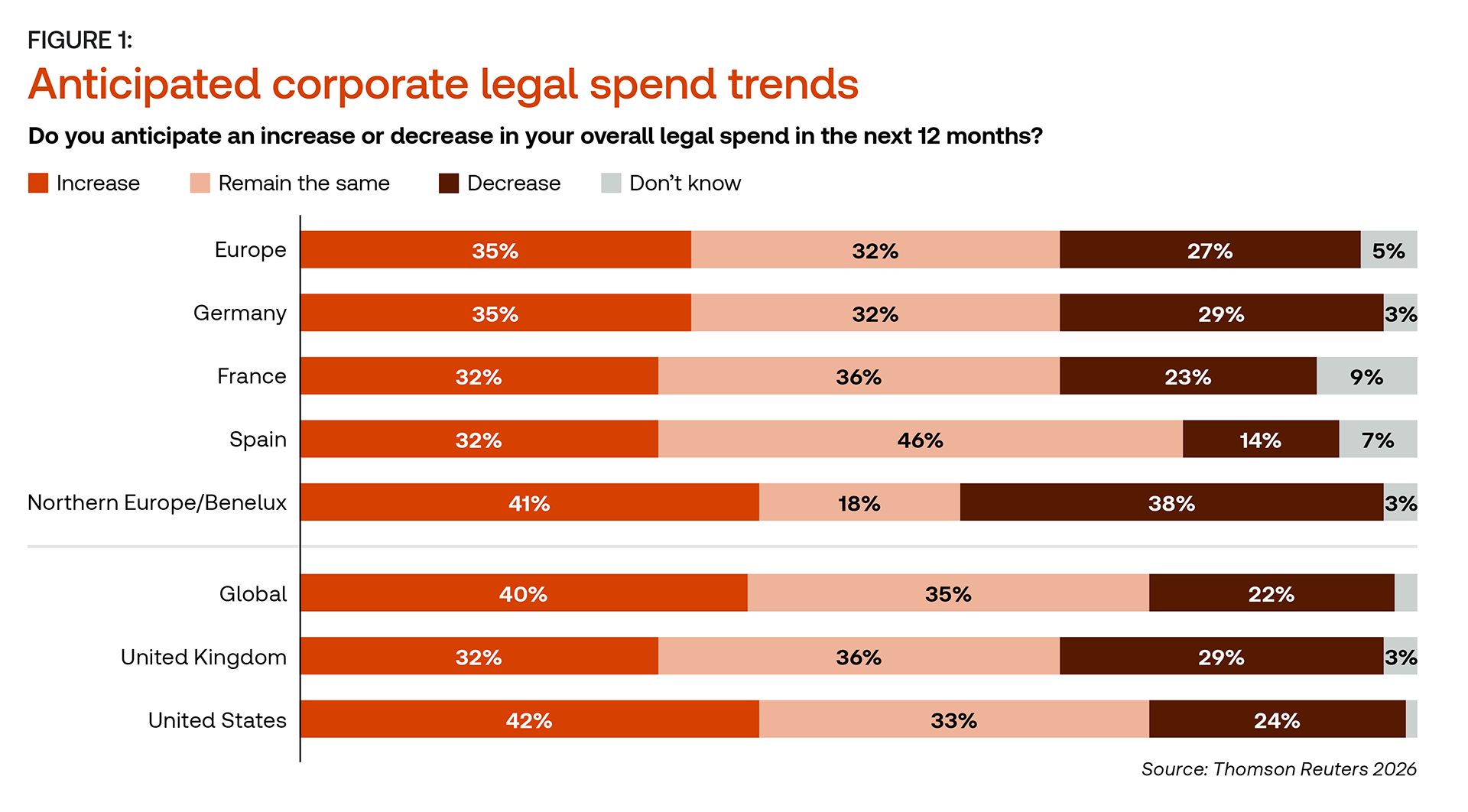
For the rest of 2026 into 2027, the results from legal buyers point to favorable conditions. Across Europe, more than two-thirds of legal buyers say they expect their legal spend to be flat (32%) or higher (35%) over the next 12 months, while only 27% say they anticipate a decrease. The NSA for continental Europe as a whole stands at +8.
This level of spend is not uniform among Europe’s major markets, however. Spain notably holds the highest net spend anticipation at +18, given that only 14% of the country’s legal buyers anticipate a decrease in overall spend. On the other end of the spectrum, Northern European legal buyers are more stratified: 41% say they expect to increase legal spend, but 38% say they expect to decrease it, leaving a NSA of +3.
Overall, this represents a slightly positive, albeit volatile development for law firms trying to plan their overall capacity. Demand is expanding certainly; and overall, more buyers plan to expand their spend. However, fewer buyers than expected are planning to remain in the middle and maintain year-over-year spend. Indeed, roughly one-in-four European buyers across most markets still plan to cut overall spend, indicating that an overall positive outlook will not carry every firm forward equally.
Notably, the European markets also trail behind the global average, in which legal spend from buyers is increasing more rapidly. The average net spend anticipation globally sits at +18, the same figure as Spain’s Europe-leading mark. European firms who work primarily within the continent, therefore, may see their growth potential capped when compared with global competitors whose primary clients are continuing to raise their overall legal spend.
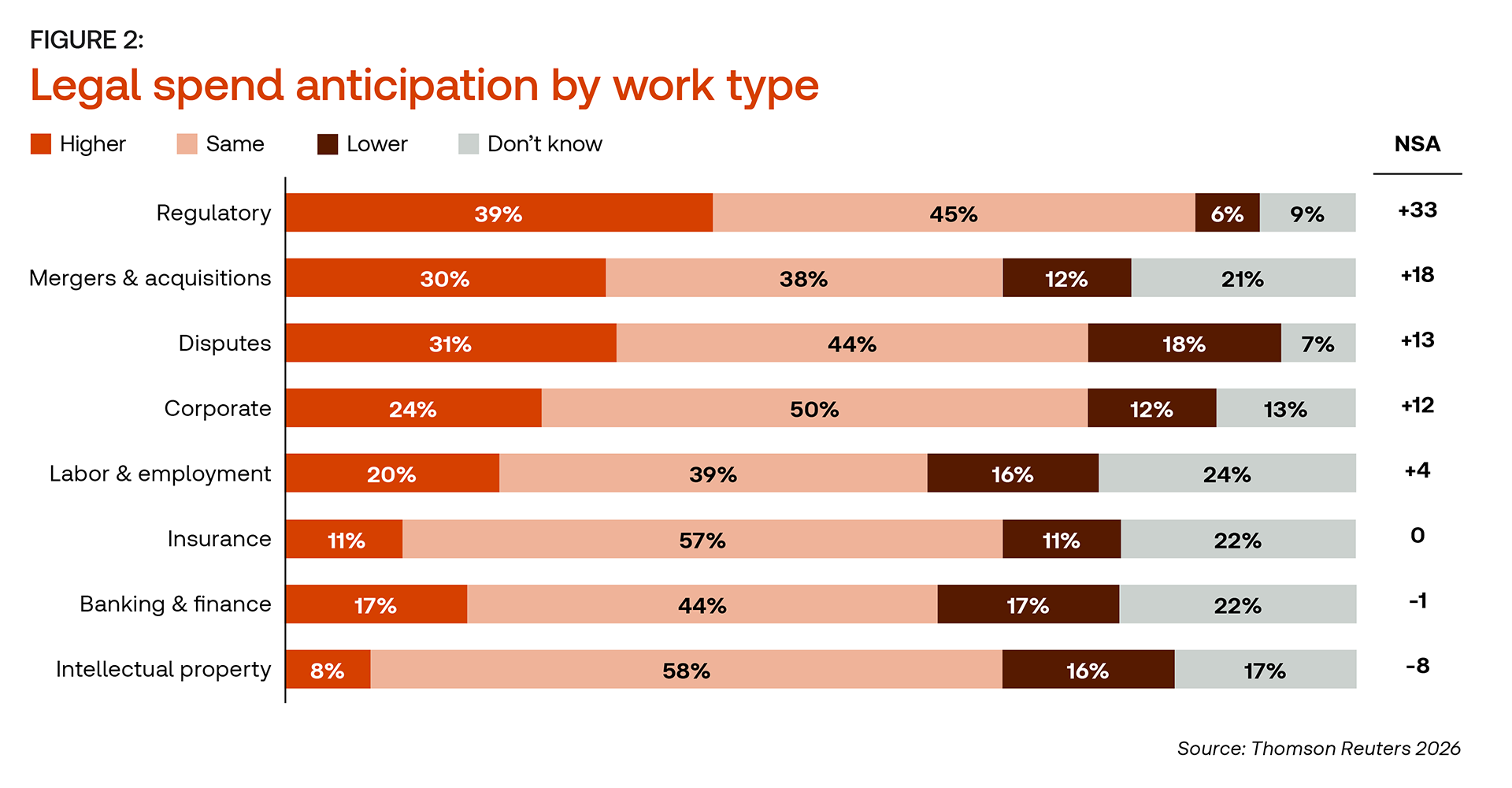
Further, not all practice areas are benefiting from the same overall positive outlook, either. Clients say they anticipate their spend on regulatory to heavily increase over the next 12 months, with a NSA of +33. This figure is nearly twice the NSA of the next highest category, likely reflecting clients’ expectations that they will need regulatory work done in preparation for the EU AI Act, as well as ESG reporting velocity and broader rule tightening. Elsewhere, transaction practice areas of M&A and general corporate practices also register high levels of spend optimism, as does the disputes category.
Only one practice area can be said to be in decline, as intellectual property work registered an NSA of -8. Even this figure may be misleading however — three-quarters of legal buyers in IP either say they are not planning on changing their spend or don’t know whether their spend will change. The -8 NSA figure represents the remainder, those split between decreasing spend (16%) and increasing spend (8%).
Smooth road ahead — for some
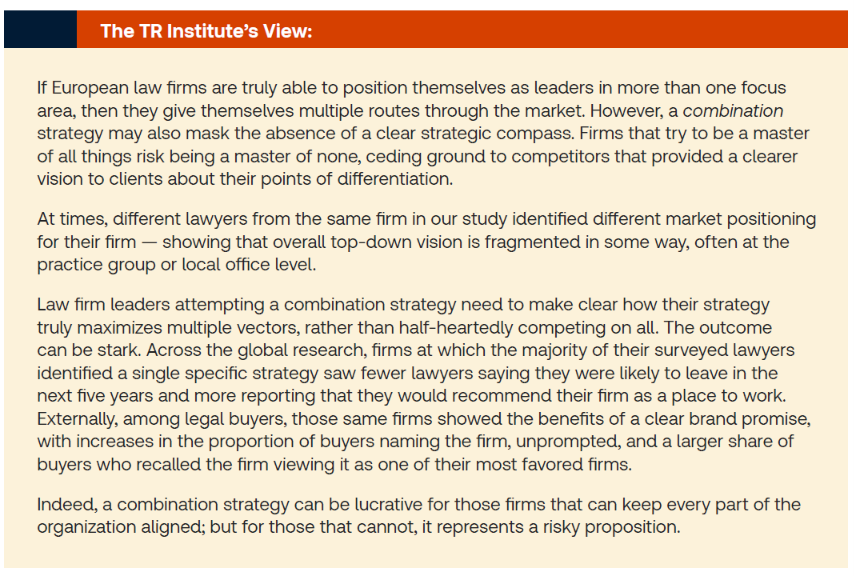
To capitalize on that spend, European law firms are setting different courses — sometimes more than one at the same time. TRI surveyed a number of stand-out law firm attorneys as nominated by their clients, and among the questions, they were asked to best categorize their firm’s go-to-market strategy. Notably, nearly half of respondents say their firm’s market positioning was driven by a combination of factors, reflecting the country- and practice-level variation in European demand.
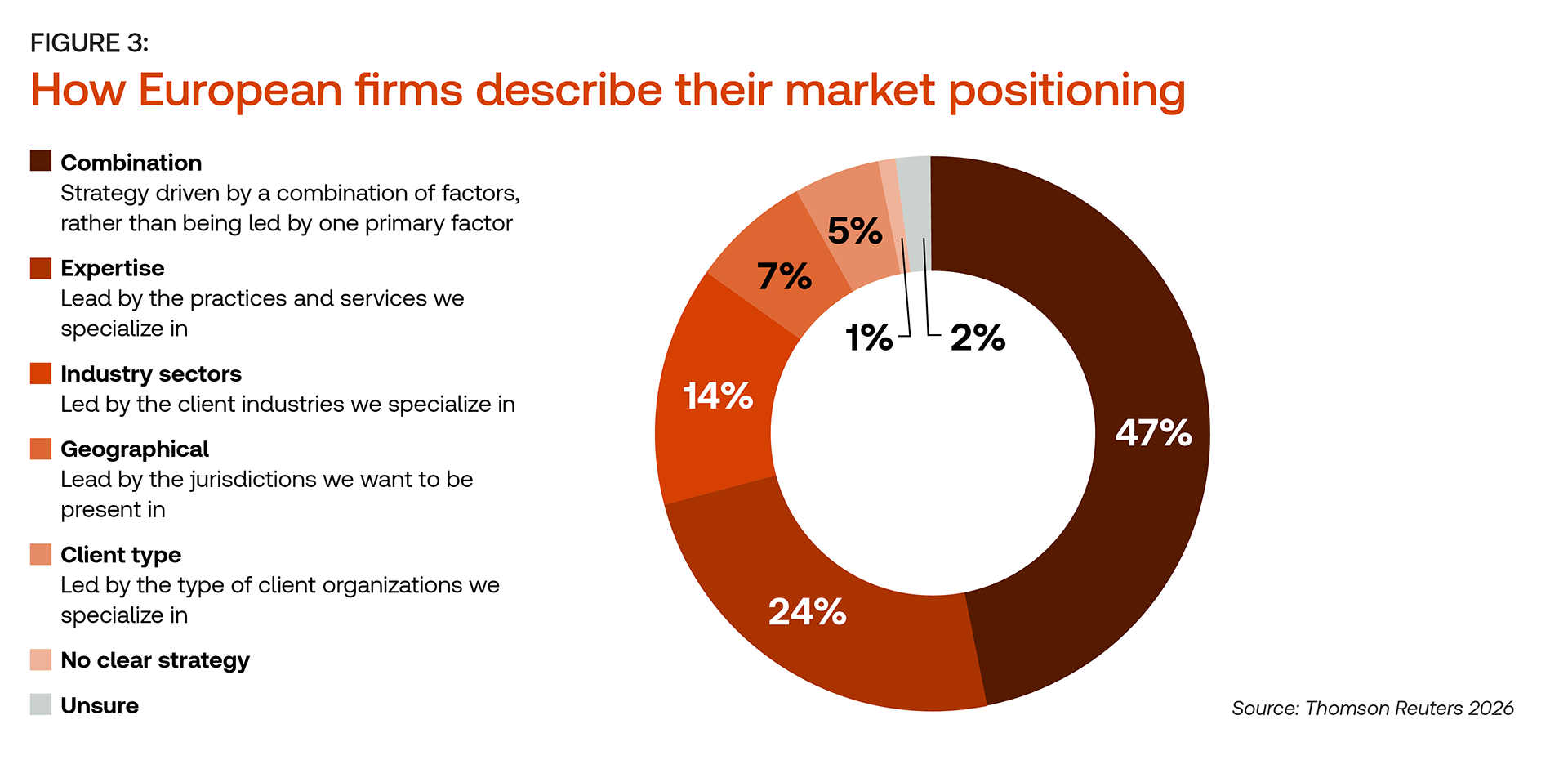
In situations in which firms do commit, practice depth wins: expertise (24%) is chosen nearly twice as often as an industry-specific focus (14%), while geography and client-type-led strategies are more rare. However, this also may reflect the possibility that this sample of client-nominated respondents is disproportionately led by more large and midsize law firms rather than more locally focused small and solo attorney firms.
Also, these figures are roughly equal to global averages, within one percentage point for each type of strategy. Clearly in Europe and elsewhere, many of today’s firms are looking to compete for business on multiple fronts in order to capture the widest array of potential clients possible.
Given the expected level of clients’ spend, it’s not surprising that many of Europe’s top law firm attorneys feel bullish about their firms’ long-term outlook. The surveyed stand-out lawyers were asked whether they agree with the statement: “I am confident in my firm’s ability to maintain its current profitability over the next two to three years.” Among European respondents, the answer was a resounding yes.
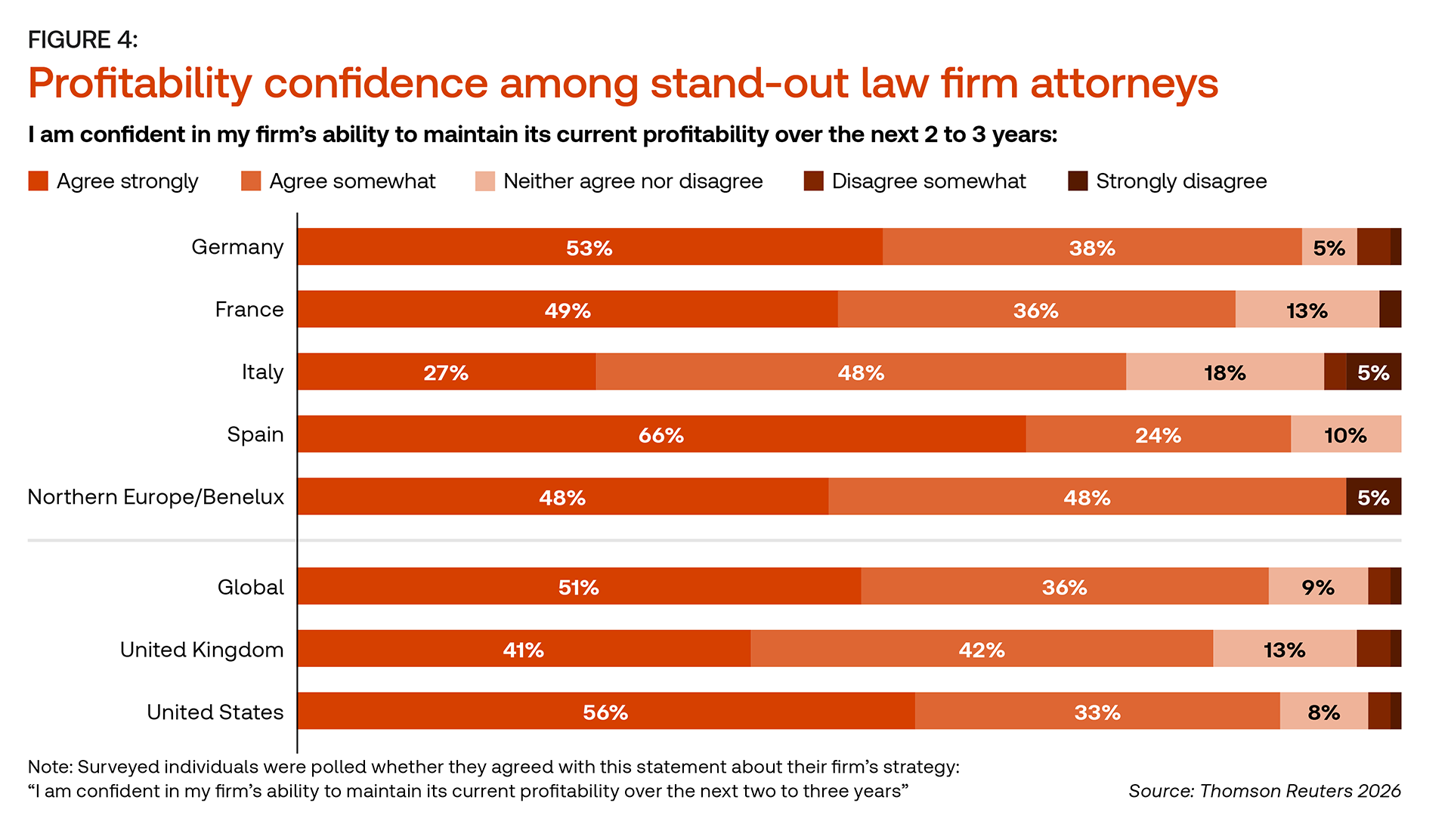
About half of surveyed lawyers strongly agree that their firm will maintain profitability over the next two to three years, directly in line with the global sample. Lawyers within the European Union say they feel more strongly about maintaining profitability than those in the United Kingdom (where 41% say they strongly agree), for example, although both trail slightly behind the expected profitability of US lawyers.
As to be expected given the country’s lead in terms of NSA, Spanish lawyers are more bullish on their firms’ profitability than others on the continent. Indeed, not a single Spanish lawyer surveyed disagreed that their firm would maintain profitability over the next two to three years. Italian lawyers, however, are taking a slightly more cautious approach: Only 27% say they strongly agreed that their firm would maintain profitability, while 7% disagreed either somewhat or strongly that their firm would maintain profitability.
Of course, this should be read as general sentiment, not necessarily a projection of overall strength of profitability. Lawyers expect their firms to largely be profitable everywhere; but the question of the scale of that profitability remains to be seen. Italy’s softer tone, for example, represents less overall confidence in broad-based profitability, although some firms will undoubtedly grow profits in the years to come.
Even as European legal buyers say they plan to maintain or increase outside legal spend, they are also beginning to steer those engagements toward different billing structures.
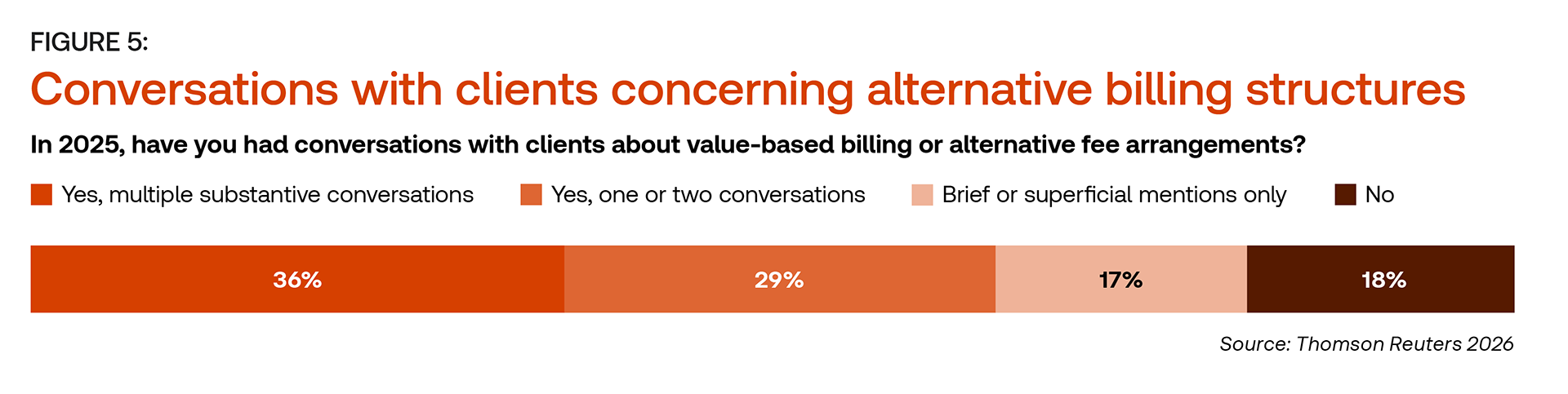
Nearly two-thirds of stand-out lawyers surveyed say they have had client conversations about value-based billing or AFAs with clients in the past year, indicating that some clients are eager to move away from the standard billable hour model in heavy use all over the world. More than one-third (36%) of stand-out lawyers describe those conversations as multiple, substantive discussions, rather than one-off mentions.
Clearly, clients are not pulling back on legal services; rather, they’re renegotiating how they pay for them. AI promises more efficient work product, and while clients are not yet pressing firms to pass through the full value of those AI-enabled gains, they are probing for an arrangement that reflects mutually-beneficial value.
Remaking value in 2026
With all of this said, for European legal buyers, their spend is far from the only consideration around law firm selection. The idea of what value firms can bring to an engagement is rapidly expanding as clients begin to ask more of their outside counsel. Indeed, the corporate legal department of 2026 is increasingly being tasked with tying their goals to overall business objectives and better serving corporate customers. In turn, departments are then asking their law firms for help in more business and strategy matters than ever before.
The result is that while excellent legal advice is still highly valued, many clients now view it as one portion of an overall package that categorizes a successful engagement. The firms that are truly succeeding on client satisfaction — and the firms that then are able to command premium pricing — are those that are able to weave their business acumen into legal advice.
Responding to new client expectations
In recent years, corporate GCs have made a concerted effort to align their department’s strategic objectives with that of the larger business. No longer wishing their function to be the Department of No, GCs have increasingly aimed to enable business processes and become more efficient in their operations, not only saving costs but even serving to generate revenue for the overall business.
GCs feel they have largely been successful in these efforts: 79% of European GCs believe their department is a significant contributor to overall organizational objectives, while only 4% say their department contributes little or not at all. Clearly, corporate legal departments see themselves as strategic partners helping to steer the business, not merely as transactional legal advisers.
This strategic priority is reflected in what GCs view as their biggest wins and biggest constraints within the past year. They want to be more involved in organizational projects and digital transformation efforts and feel they have been largely successful in doing so. However, they have run into staffing and budgetary constraints when trying to expand those efforts even further.
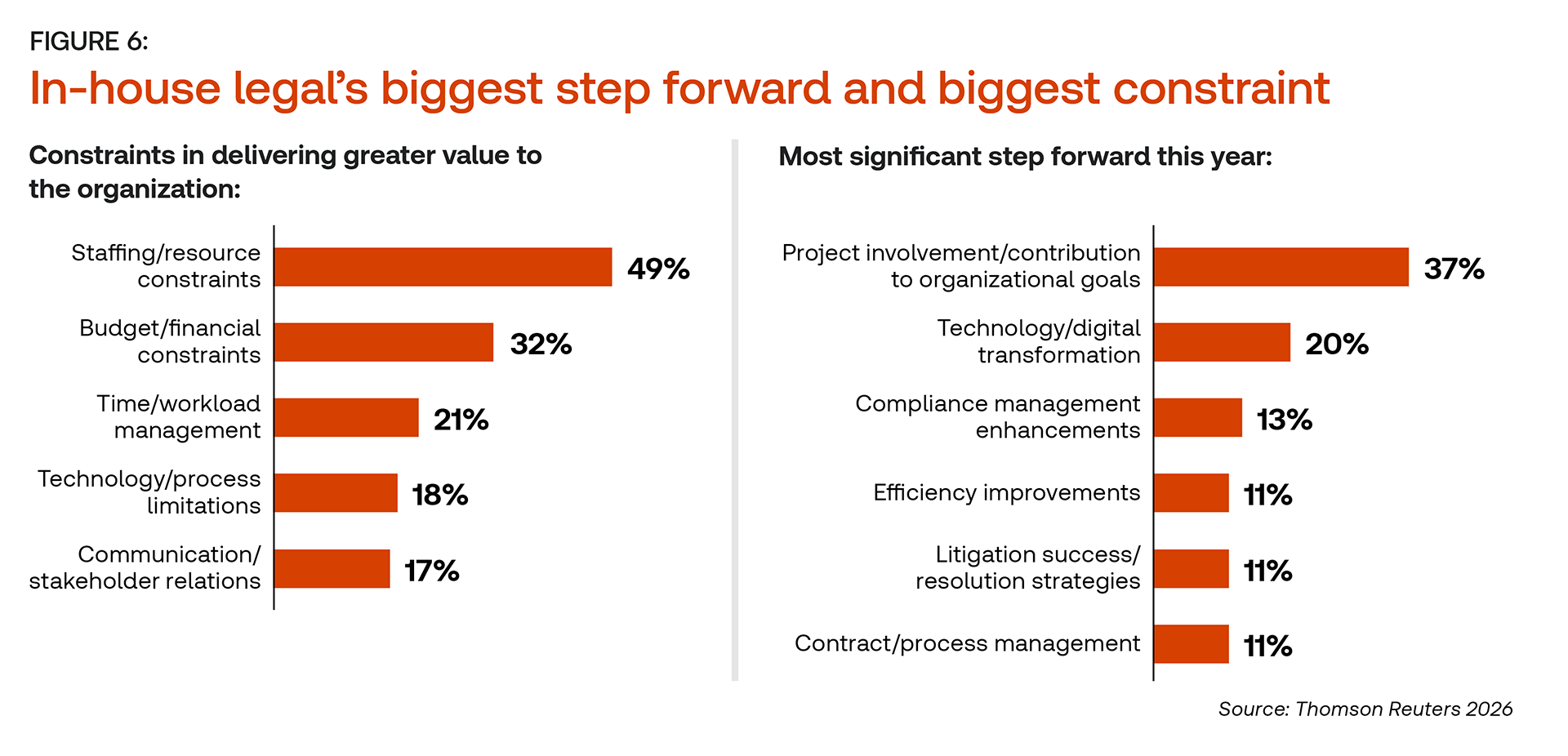
Outside law firms can help clients navigate that gap. In the absence of internal capabilities to address business needs, legal buyers are tapping outside counsel for a wider array of corporate activities. Legal expertise remains the leading driver of law firm value, as expected, but when European GCs are asked what drives their favorable perception of a given firm, an interesting trend emerges.
Examining the top-level drivers of law firm favorability, service as a primary driver has slightly dropped year-on-year as other factors have risen. Relationship, in particular, has risen over that same time span, to now more than one-third of GCs saying this. Breaking this down further into more specific sub-themes, global coverage and good working relationship are two areas that have seen increased GC focus over the past year.
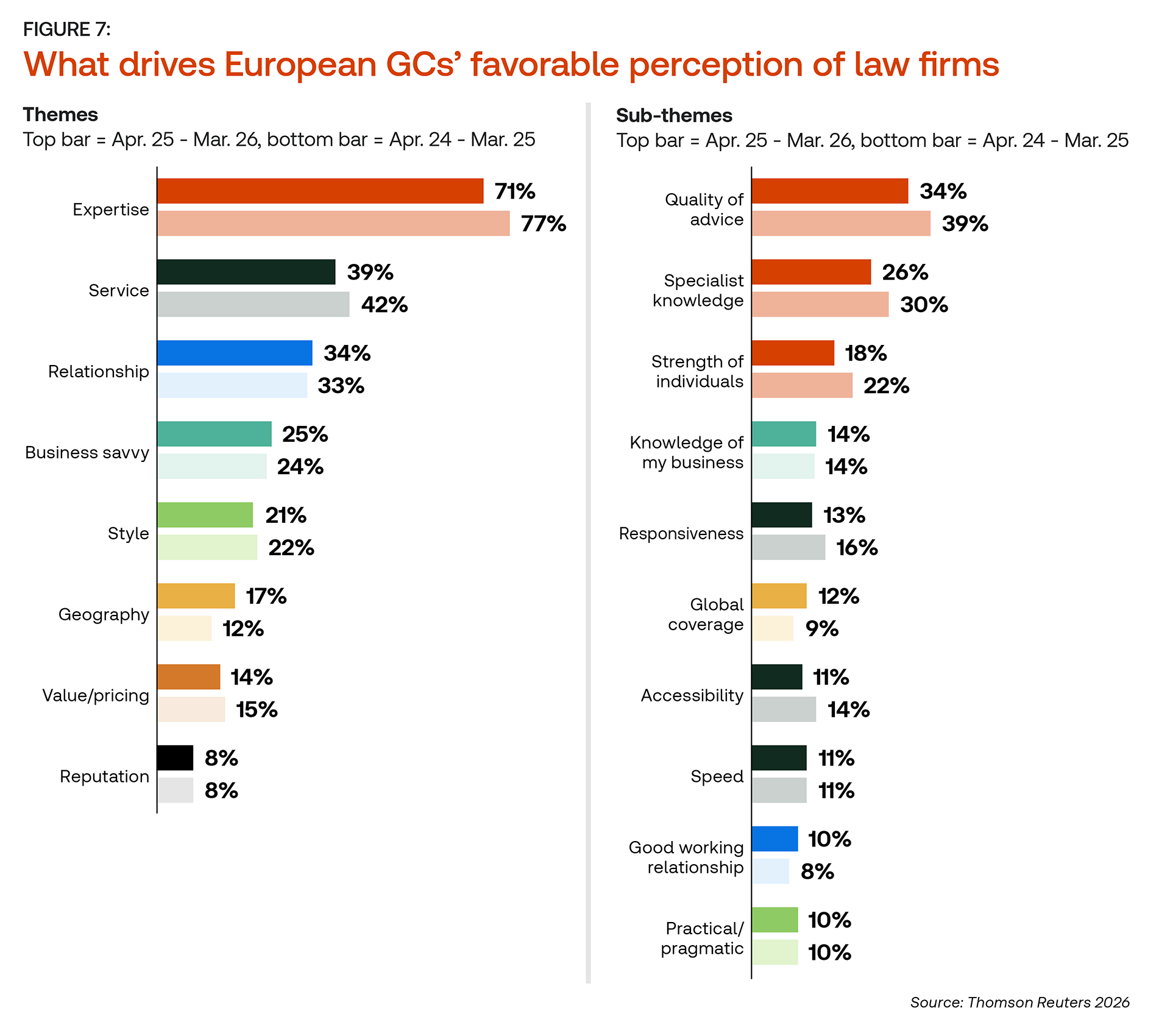
This is landscape of European legal value today: legal knowledge, commercial impact, and people skills. It is within these categories that law firms can set themselves apart from competitors — or if ignored, lead clients to believe that they missed the mark.
Capitalizing on change
To capitalize on these emerging expectations, firms need to understand what clients believe justifies premium value in a particular engagement. Expert legal advisory services and a successful outcome remain the top responses, but right behind are commercial impact (value proposition and pricing strategy) and relationship-centered work (transaction support/transparency and client-centric legal support/expertise). Process-led qualities — such as response speed, communication, and collaboration — barely register on the results. The message is clear: Clients pay premiums for human judgment and the right commercial fit, not for tools or efficiency.
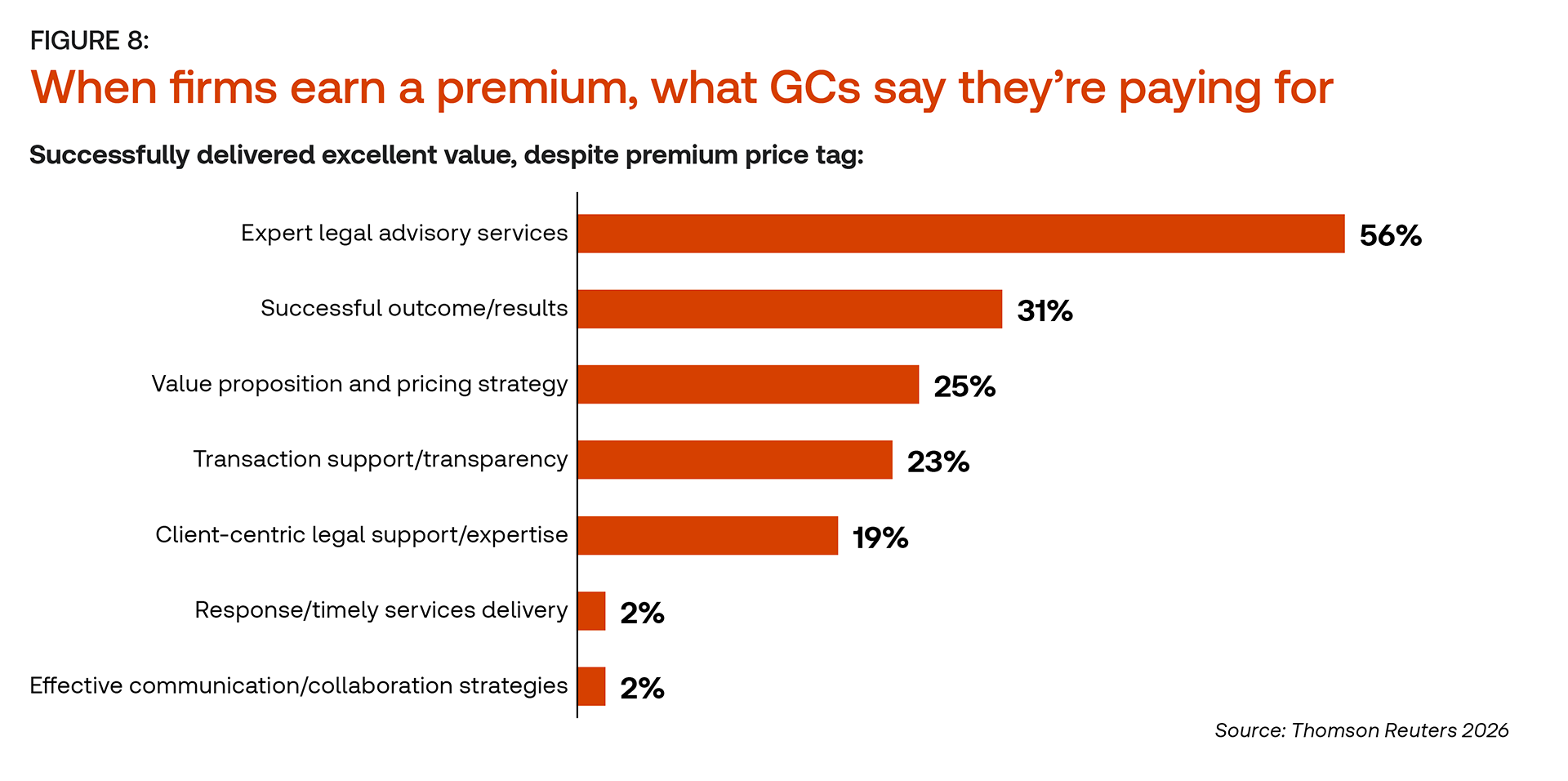

Similarly, when asked to give concrete examples of ways in which firms have missed the mark in terms of value, GCs provided a wide variety of answers. The most common concerns, however, are the mirror image of the primary drivers of value: communication breakdowns, weak commercial understanding, and poor delivery. Interestingly, cost and billing concerns are notably low (with just 4% citing those), suggesting that price is rarely the trigger. This means that firms lose ground on how they work, not what they charge.

For the law firm of the future to succeed, it will take not only legal knowledge, but a successful communication strategy. Law firm leadership should be focused on arming their lawyers with the best legal knowledge as well as the primary communication and commercial strategies that would best allow them to respond to the evolving nature of client needs.
When asked what would help them have conversations with clients about emerging areas of interest, such as value-based billing or AI, stand-out lawyers say they are looking for information above all else. The top four responses all cluster around access to better data and market intelligence to share with clients, deeper knowledge of client perspectives and constraints, better understanding of the competitive landscape, and anonymized examples from other clients.
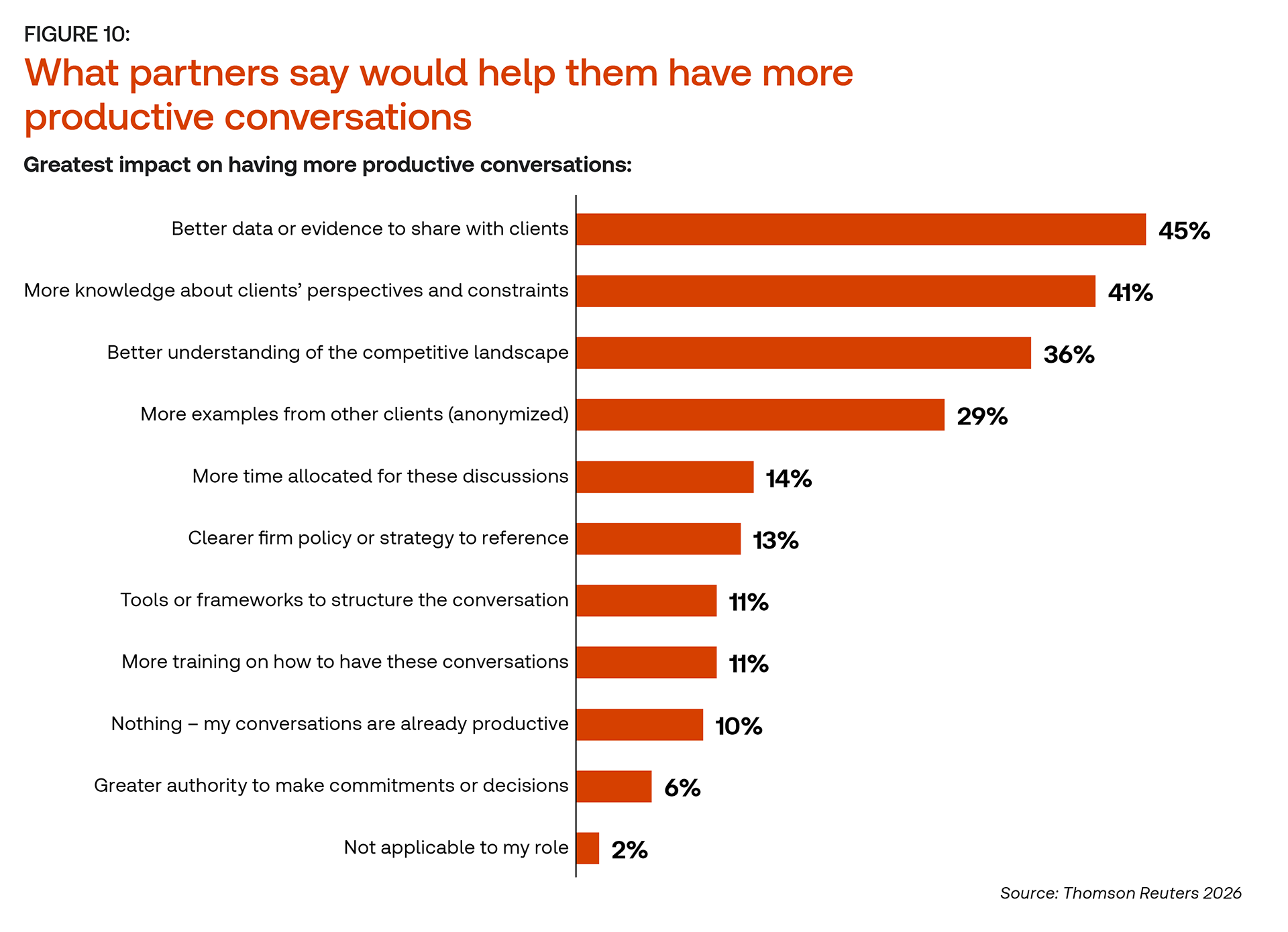
Luckily for firms, these asks are practical requests and within firms’ own control. Firms can meet these requests by building data assets, sharing client insights across lawyers and teams, and curating anonymized case studies. AI tools themselves can also turbo-charge these tasks, making them accessible even at firms without dedicated technology or knowledge management teams.
In short, partners aren’t asking to be retrained; they are asking to be better equipped with evidence. Just as their clients are turning towards more business-centric and data-driven decision-making, so too do top attorneys need to come armed with more information to succeed.
Navigating the AI gap
European law firm leaders by and large have embraced this shift, introducing AI to bolster a number of daily legal tasks and instituting forward-looking AI-driven strategies to capitalize on AI outputs. However, while lawyers recognize those strategies, they also remain less confident about AI’s ultimate impact on their own practice areas. Lawyers see the potential for a positive impact on overall efficiency, of course; however, many have yet to see a tangible impact on their quality of work, work-life balance, or level of client satisfaction.
A map means nothing unless it is followed. To realize the true value of AI, law firms need to turn their strategy into movement by connecting adoption to partners’ business development and client satisfaction capabilities.
From strategy to execution
Although GenAI was only introduced to the public sphere in late-2022 with the release of ChatGPT, GenAI has not only quickly captured the attention of tech-interested lawyers, but managing partners and C-Suite executives as well. Half of surveyed European lawyers say they are using GenAI for legal work, and most say their firms have adopted AI strategies to guide firm-wide usage.
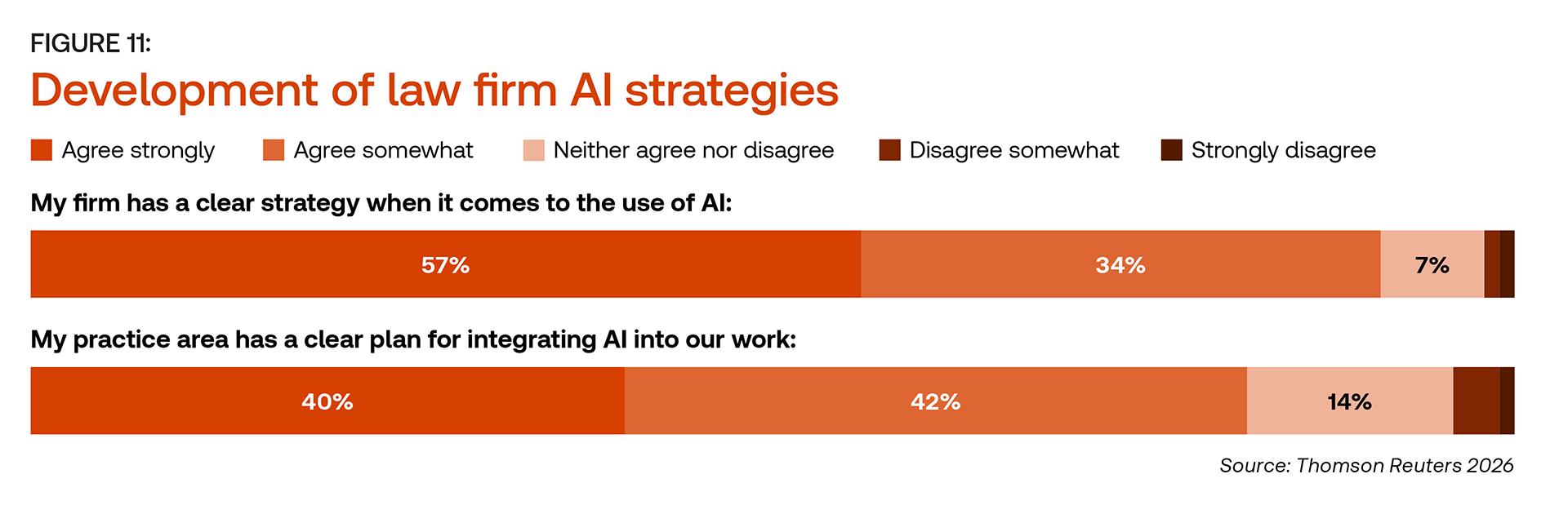
A large portion (91%) of surveyed stand-out lawyers agree that their firm has a clear AI strategy, and more than half strongly agree. Outright disagreement is negligible at around 2%. That’s a striking alignment for a technology barely on the agenda 36 months ago. A similar percentage (82%) believe their individual practice area has a clear plan for AI — a notable increase of 13 percentage points over the global figure who said the same.
Clearly, AI has moved from experimental to board-level priority across the European legal market, becoming a central part of firms’ strategic planning. However, there is one area in which lawyers see an emerging issue: actually monetizing these strategies.
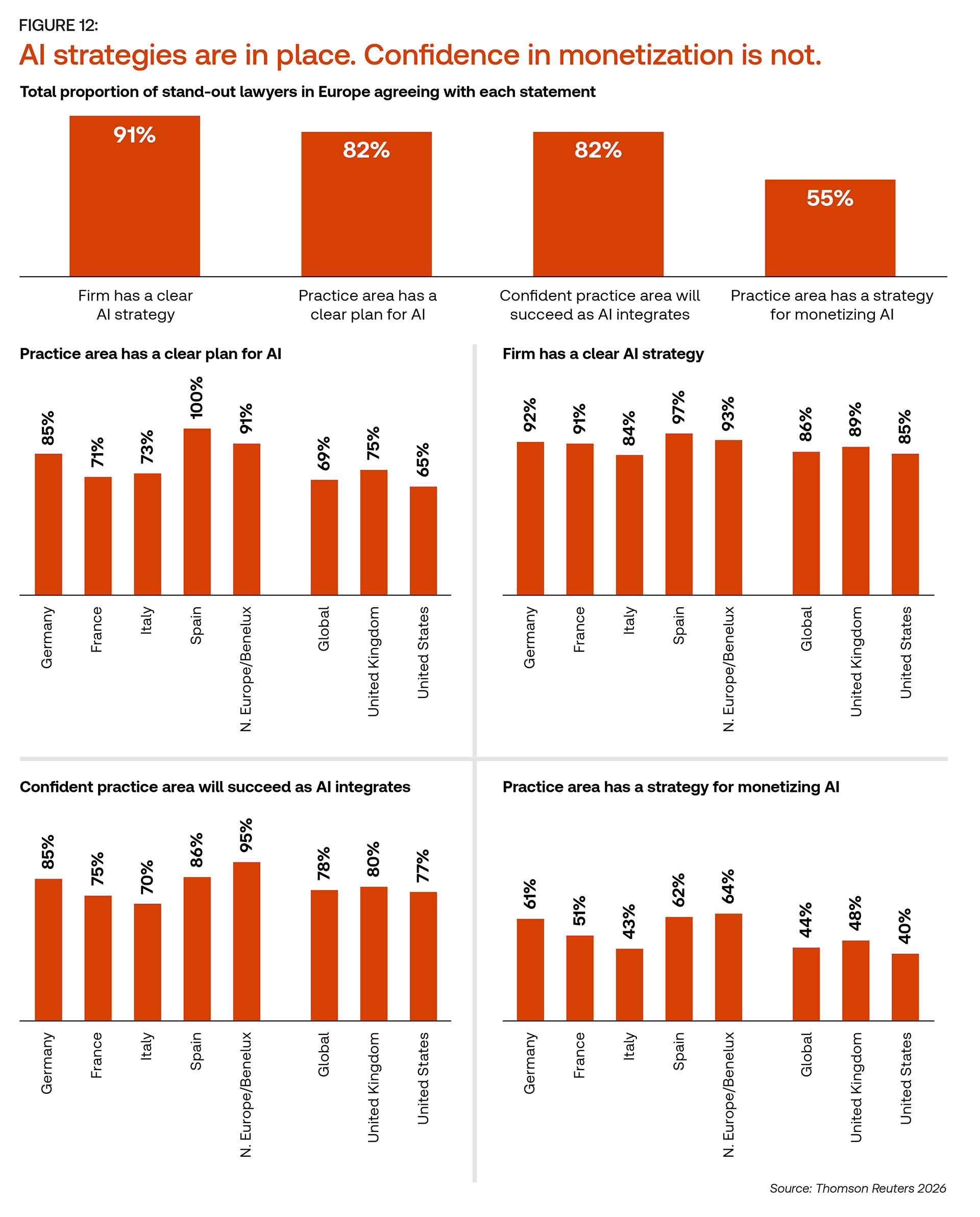
Unlike the overwhelming majority that say their practice area has an AI strategy, only 55% are confident their practice area has a plan for monetization. That’s nearly a 30-percentage-point gap to the planning indicators above it. Clearly, firms have drawn the map faster than they trust their practice areas to be able to realize it. Strategy is not the problem, but confidence in execution is.
There is reason for optimism, however. This lack of confidence is a global issue, and in some ways, European lawyers are actually tracking ahead of their worldwide counterparts. Just as more European lawyers believe in their specific practice area’s plan around AI, so too does a higher proportion than the global average say their practice area has a strategy for monetizing AI. That 55% figure tracks 11 percentage points higher the global average, and higher than either the UK (48%) or US (40%) in terms of overall confidence in a monetization plan. Some countries are also more bullish than others on their AI strategy and ability to execute it; Spain and Northern Europe, for instance, are overall more AI-positive among all strategy and execution measures than are Italy or France.
And the clock might be ticking on this. Both firms and their clients will expect to see real results from their AI investments sooner rather than later, if not already. The real signal for the success of AI strategies will be in budget, hiring, and tooling decisions that will be made over the next 12 months, and how those decisions can help solve legal and business problems.
Finding AI’s deeper value
When stand-out lawyers were asked how they are actually using GenAI in their day-to-day workflow, usage is currently concentrated in repeatable, lower-stakes tasks. A majority of GenAI users say they access it at least weekly for legal research, communications, document drafting, and administrative tasks — all high-volume work in which the AI outputs are easy to check.
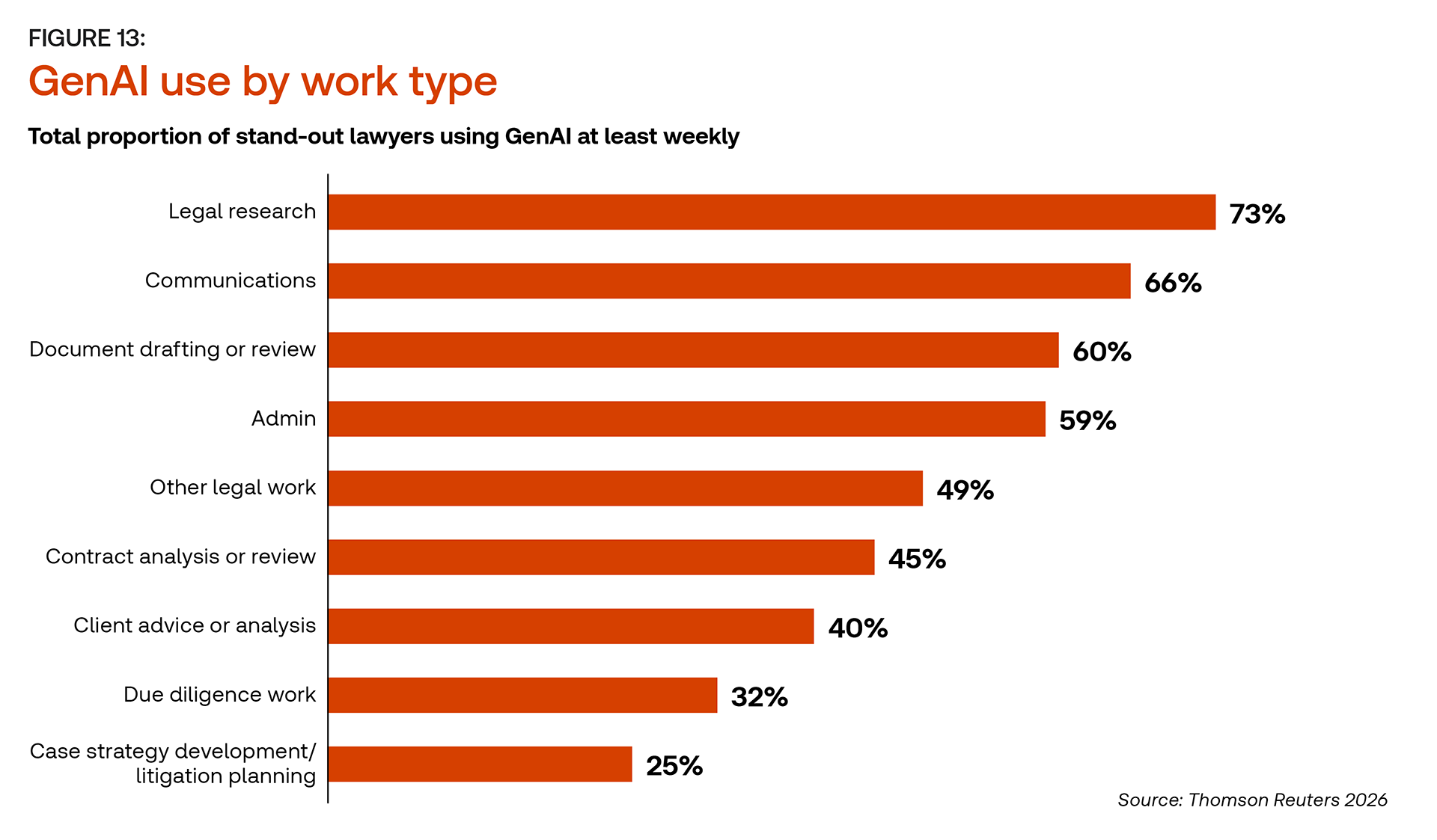
Strategic and advisory uses remain rare. About one-third of respondents say they use GenAI weekly for due diligence, and one-quarter for case strategy or litigation planning. Even the portion using AI weekly for client advice or analysis is less than half of regular AI users. This implies that European law firm lawyers are embracing AI for efficiency-focused tasks, but adoption falls off sharply once judgment is central to the task. GenAI is speeding up routine work, but it has yet to break into the strategic core of legal practice.
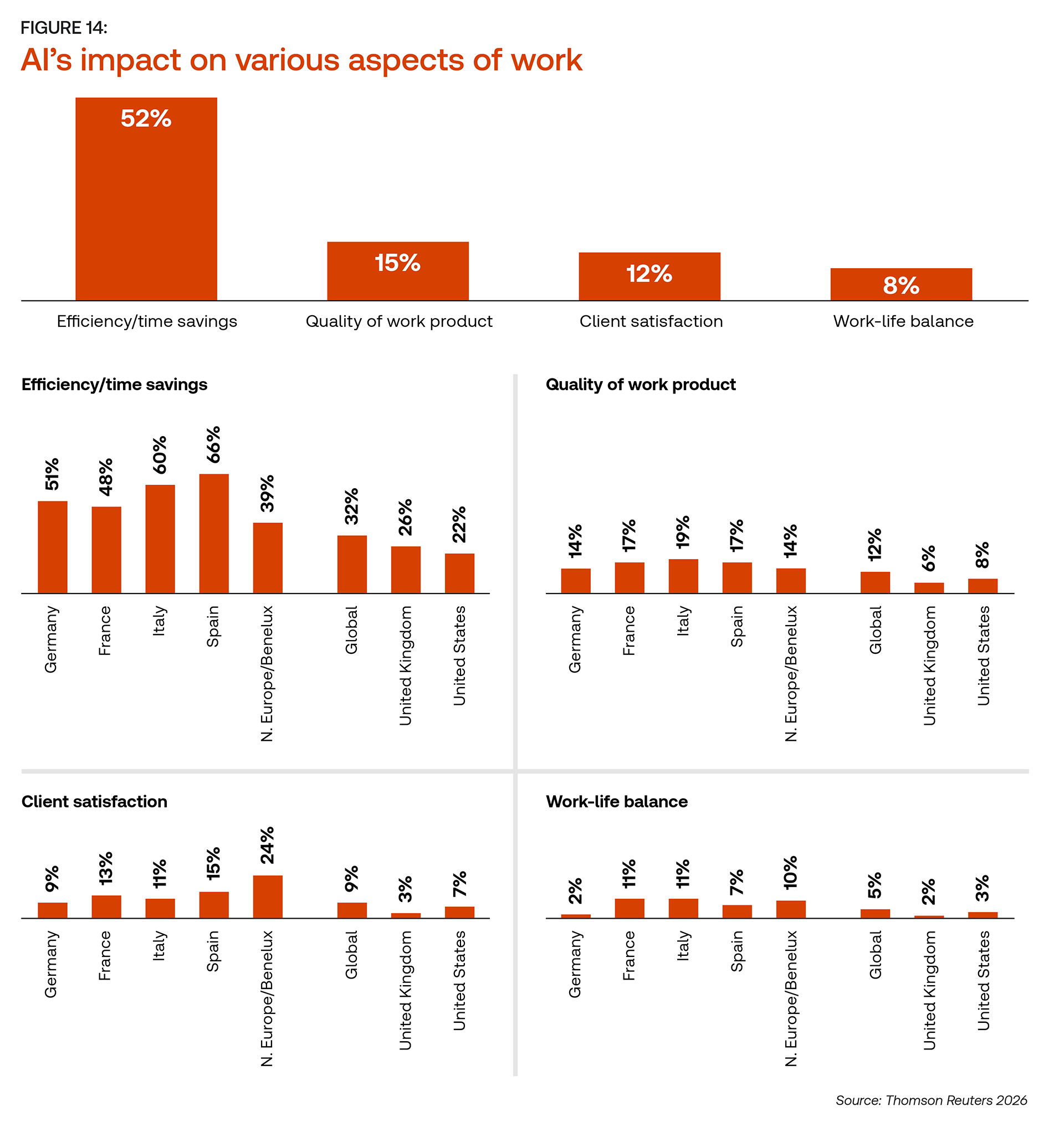
Given these use cases, it is perhaps unsurprising that efficiency and time savings is the primary area where respondents say they see AI making a positive impact on their work. More than half (52%) of firm lawyers report a significant positive impact on efficiency, more than triple the next-largest category. That means AI is delivering on its narrowest promise, speed, but the broader claims — better work, happier clients, and happier lawyers — remain largely unproven.
Charting a new path
One of the other dangers of viewing AI primarily as an efficiency tool comes from how legal buyers perceive firm differentiation. According to the Thomson Reuters Institute’s 2026 AI in Professional Services Report, corporate legal departments have a higher percentage of lawyers both adopting AI and feeling positively towards AI’s impact on the legal profession when compared to those in law firms. Largely, corporate lawyers’ focus has been on internal efficiencies, just as it has with law firms; but slowly corporate lawyers are beginning to turn their attention outwards towards AI’s impact on outside counsel.
Not surprisingly, legal buyers are beginning to ask more questions of their outside law firms, especially around those firms’ AI posture. These questions are being asked informally, but also through more formal engagement means, such as outside counsel guidelines, requests for proposal, pricing demands, and more. And increasingly, GCs report AI usage is one of the primary ways they see law firms differentiating themselves from one another in the future.
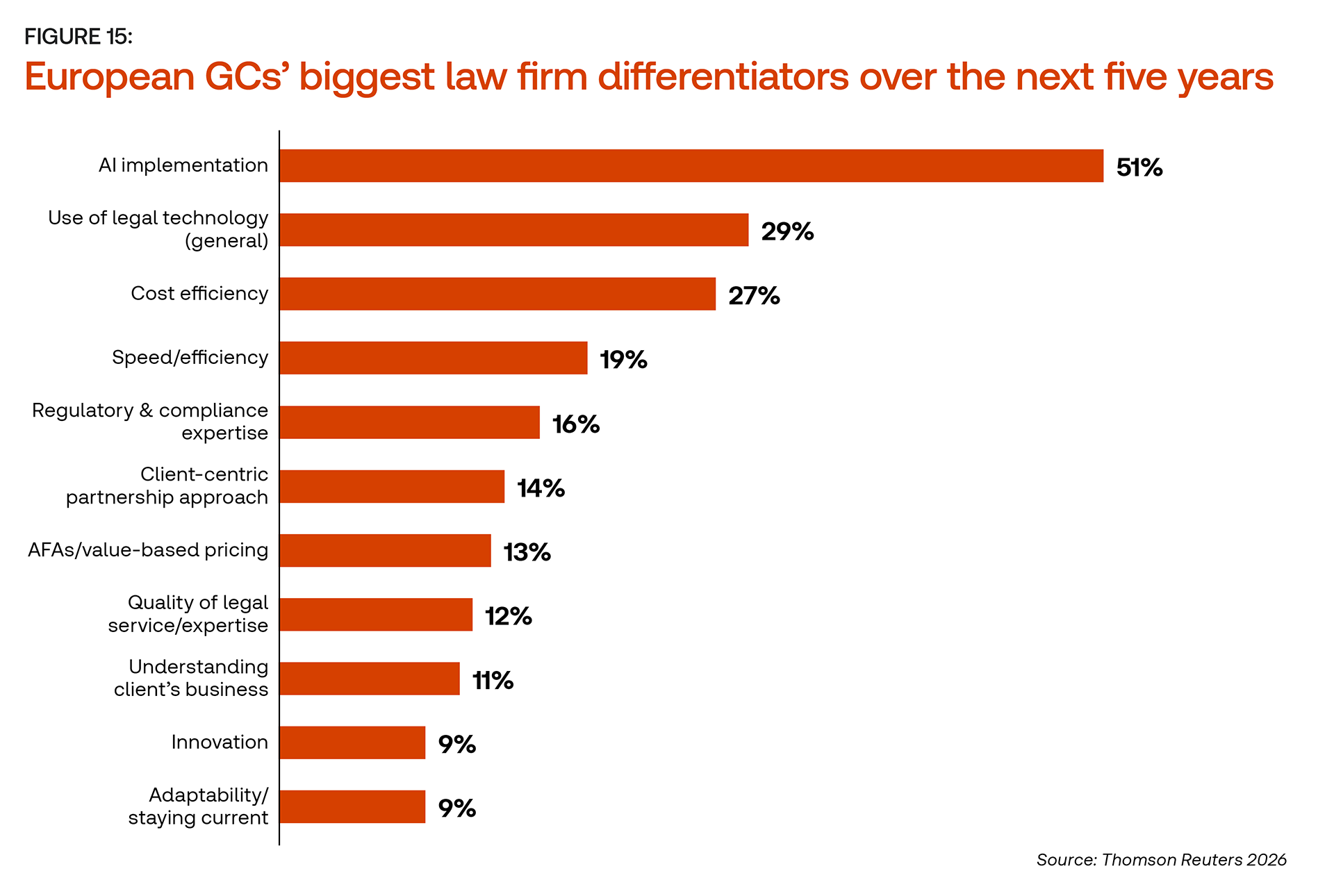
In fact, just more than half of European GCs mentioned AI as a great opportunity for firms to differentiate themselves over the next five years, more than 20 percentage points above any other category. Further, efficiency is reflected in each of the next three largest categories — use of legal technology, cost efficiency, and speed — while traditional service indicators lag behind.
Clients are signaling clearly where they see firm differentiation is coming from, and it isn’t the aspects upon which firms have historically competed. As noted earlier, this does not mean that the value of legal judgment is changing — it should be considered table stakes, the bar to clear to even have a conversation around an engagement. Firms simply are setting themselves apart by conducting their work in different ways.
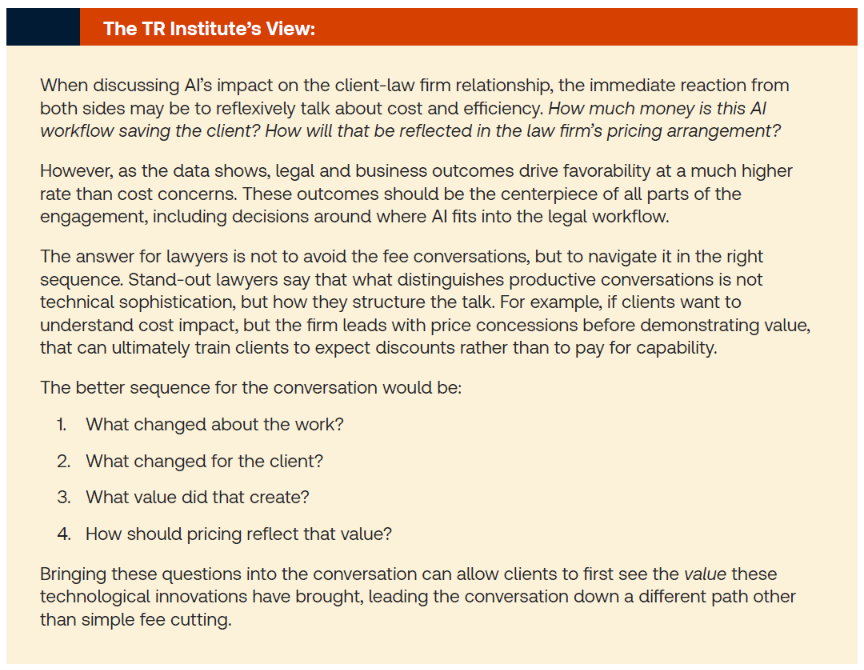
It is intriguing then, that although clients are pointing squarely to AI and technology as a differentiator, attorneys seem reluctant to bring up these new ways of working in their client conversations.
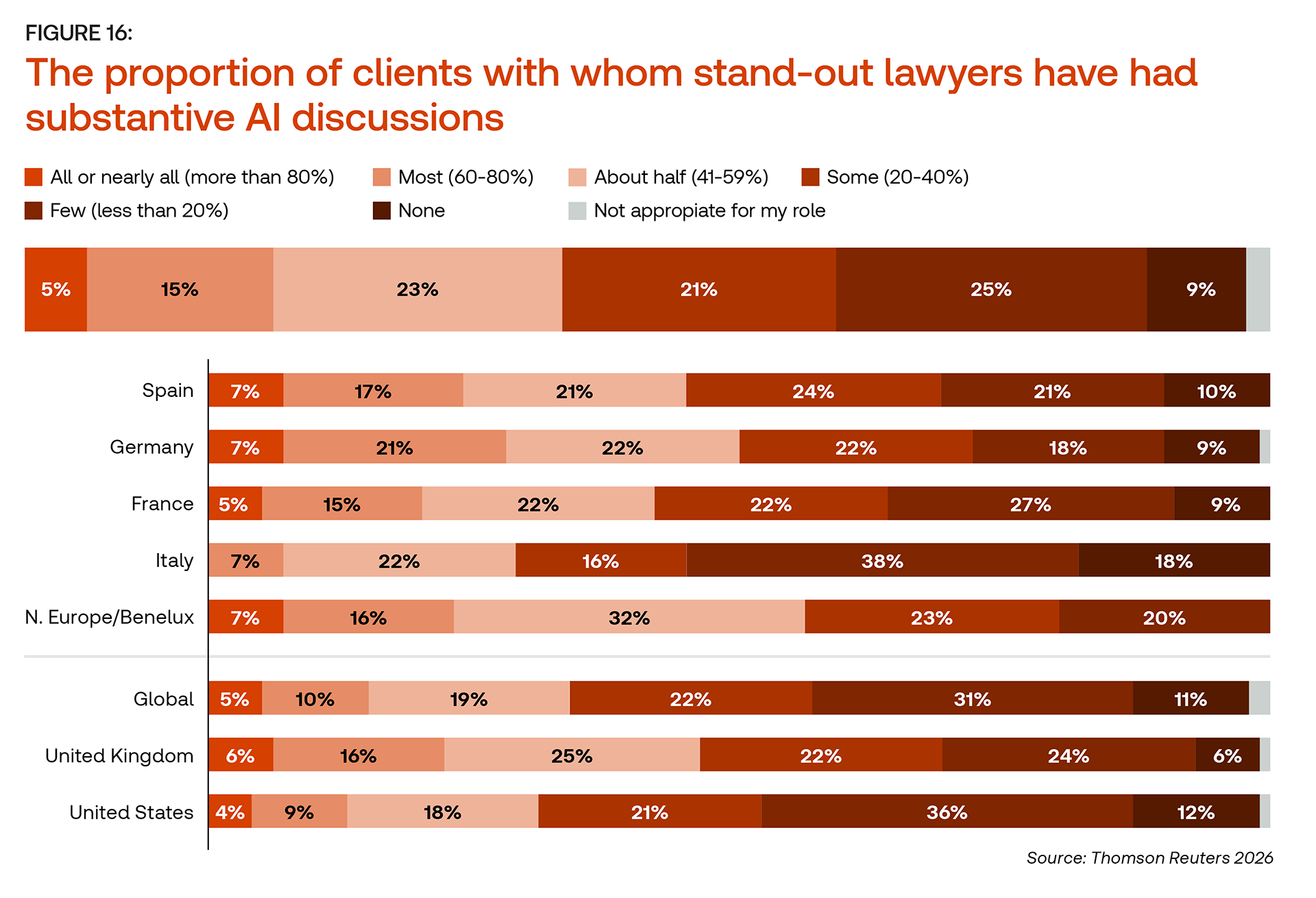
Despite client expectations that AI is shifting things quickly, a striking share of European stand-out lawyers report no or only minimal substantive client conversations about AI. Indeed, only 20% of respondents say they have discussed AI with most or all of their clients, while 34% have had such conversations with few or none of their clients.
Engagement varies sharply by market, and it largely tracks the confidence that lawyers have in their firm and their practice area’s overall AI strategy. Germany, Northern Europe, and Spain lead, with roughly 1 in 4 lawyers having these conversations with most clients.
Clearly, law firm lawyers will need to become more proficient in explaining the value of AI to clients and how both sides can mutually benefit from its introduction into legal workflows.
The next horizon
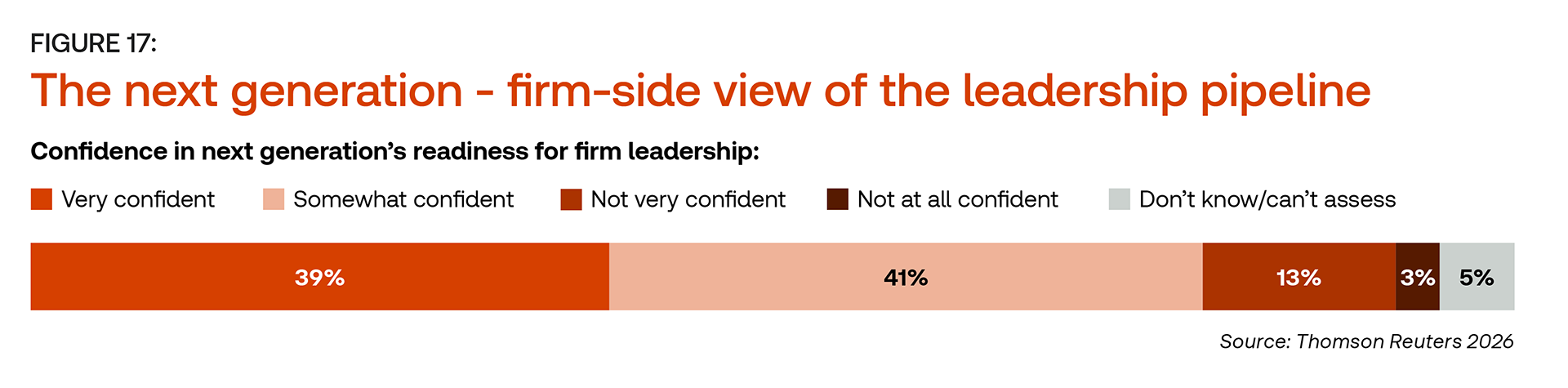
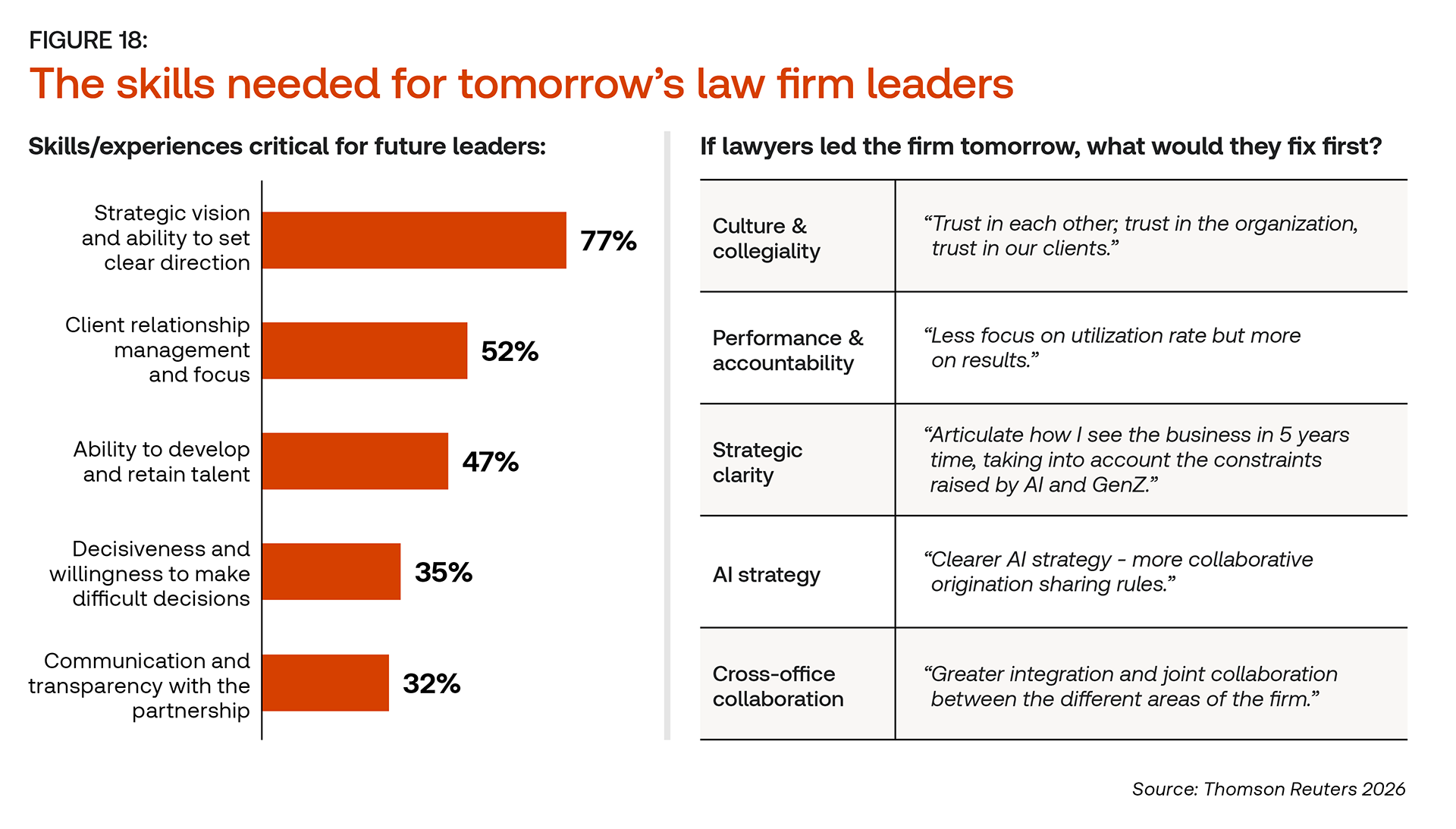
European law firms have reasons to expect continued success as they move into the last part of this decade, but the course will still require discipline. On balance, legal buyers see spend continuing on a steady upward trend, and law firm leaders see their legal and business expertise as a vital part of their service offerings, even as the business landscape shifts.
Today’s law firm leaders are confident that not only will they be able to traverse the immediate market shifts of today, but that future leadership is prepared to navigate the emergent legal industry of tomorrow.
However, even in favorable waters, unforeseen storms will arise. Client expectations are already shifting, as an increased focus on commerciality and business acumen will compel different terms of engagement than ever before. A more crowded and complex marketplace — one that includes alternative legal service providers (ALSPs) and more corporate legal in-house work — will force law firms to more sharply define their market differentiators. And the ever-increasing power of AI and technology-enabled legal services will force lawyers to package and deliver their services in aggressive ways that demonstrate their firm’s value.
In this new paradigm, what will win is the same thing that has always won in the legal industry: a dedication to client service, a culture that allows lawyerly acumen to shine, and a commitment to keeping up with the trends that allows a firm to stay ahead of its competitors. Stand-out lawyers that we surveyed recognize that these areas of focus aren’t new, they simply look different than they did 10 or 20 years ago.
Indeed, the legal industry may be changing, but the drive to succeed has not. The firms that thrive will be those that keep a clear vision and continue to provide clients with the services they desire.
Methodology
This report draws on proprietary Thomson Reuters Institute (TRI) research conducted among both corporate legal buyers and law firm lawyers across Europe.
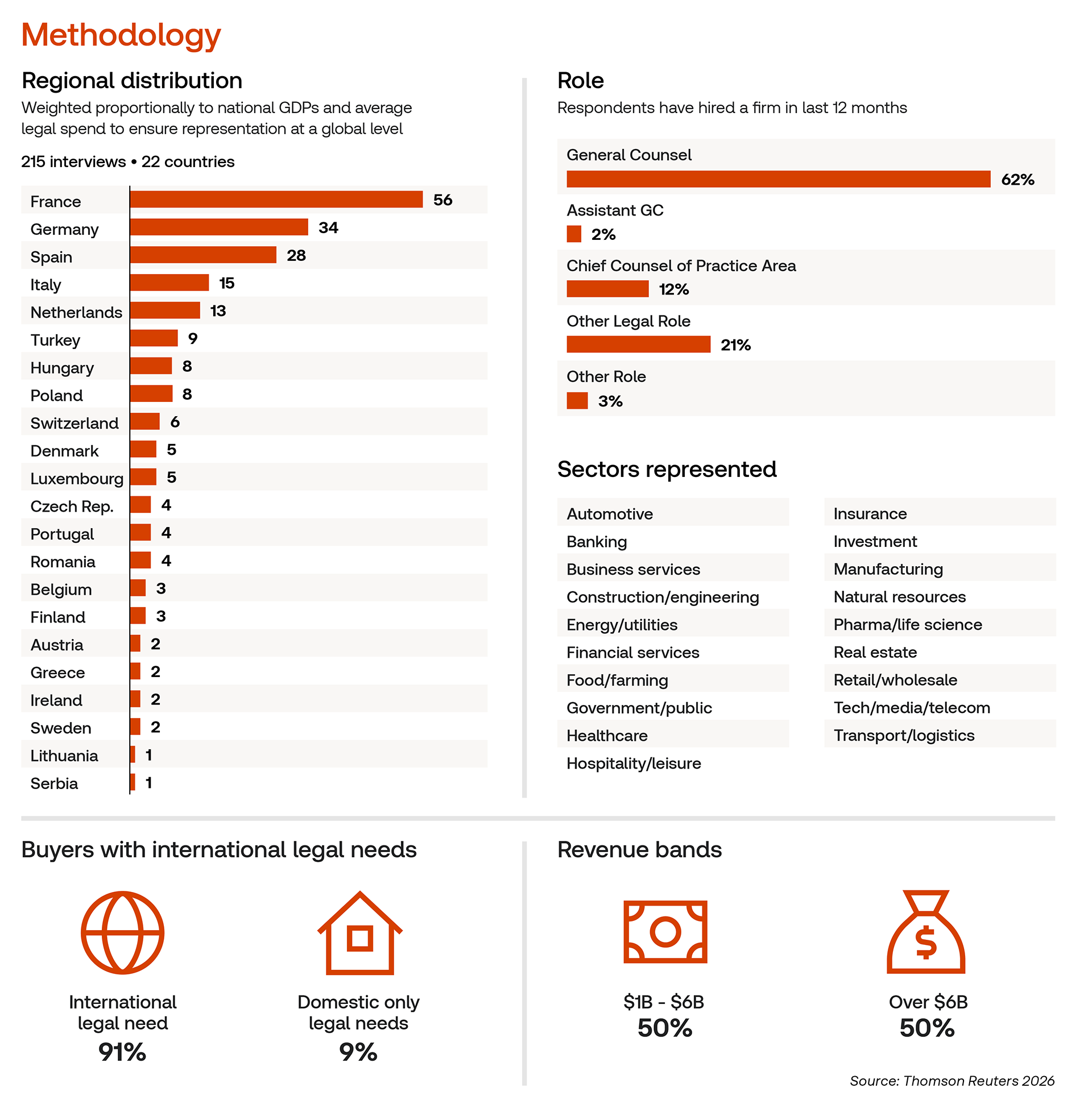
The corporate legal buyer research is based on 215 interviews with general counsel at large organizations across 22 countries. All respondents had hired a law firm within the previous 12 months. The sample was weighted proportionally to national GDP and average legal spend to ensure appropriate representation at the regional level.
Respondents represented organizations with substantial legal needs: 91% reported international legal needs, while 9% reported domestic-only legal needs. The sample was evenly split by company revenue, with half of respondents from organizations with annual revenue of $1 billion to $6 billion; and half from organizations with annual revenue above $6 billion.
The law firm perspective is drawn from TRI’s Stellar Performance 2026 research, which gathered insights from 347 interviews across 27 European countries. Respondents were client-nominated stand-out lawyers and partners working across a broad range of practice areas, including litigation and disputes, corporate/M&A, labor and employment, intellectual property, banking and finance, regulatory and administrative law, technology, telecom and outsourcing, projects and energy, competition/antitrust, real estate, construction, capital markets, tax, insurance, private equity and investment management, environment, restructuring and insolvency, crime, maritime and shipping, and advertising and marketing.
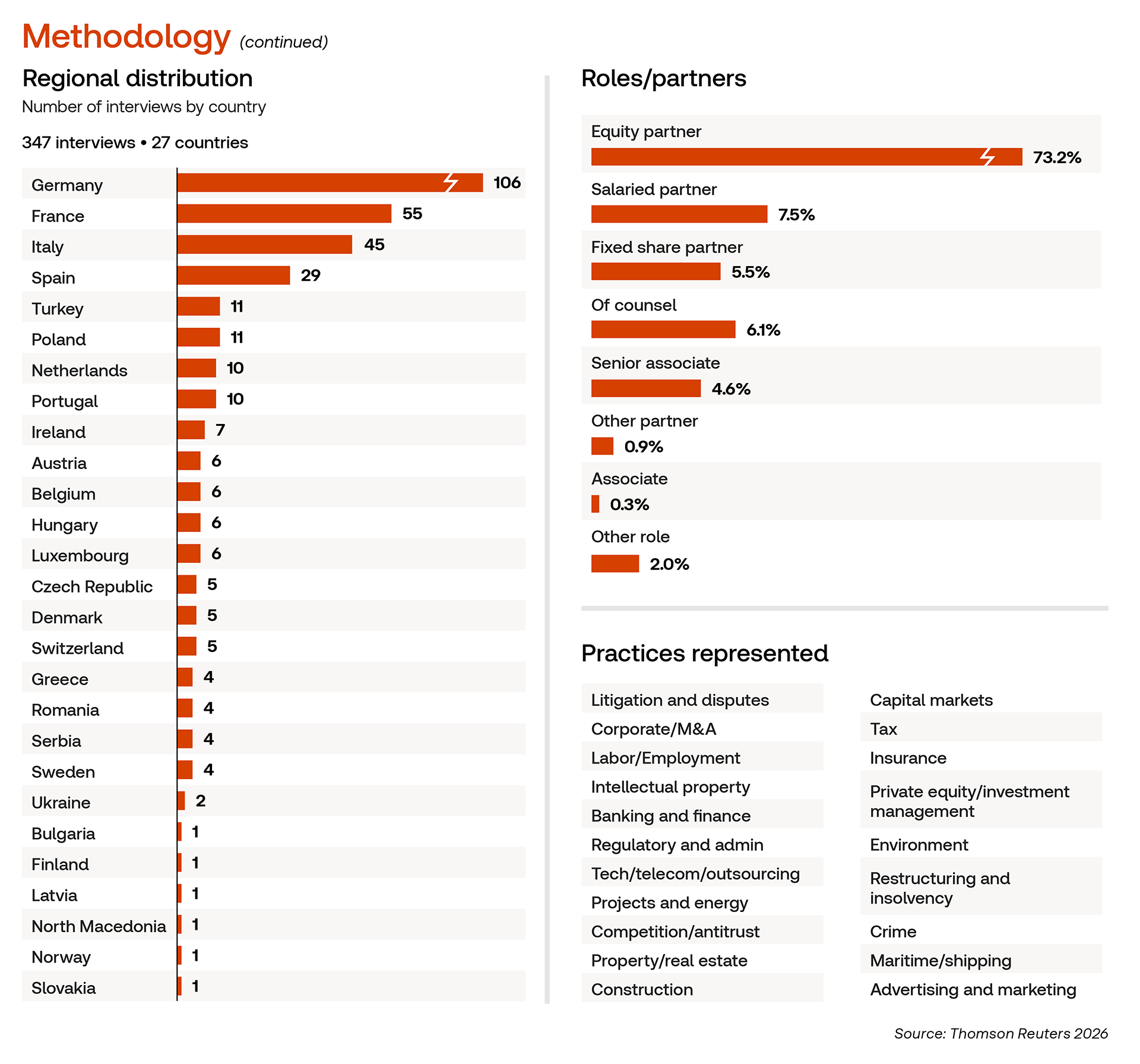
Together, these datasets provide a dual view of the European legal market, reflecting the expectations, pressures and priorities of corporate legal buyers, and the strategic, operational and technological responses of leading law firm lawyers.
Credits
Thomson Reuters
Thomson Reuters (TSX/Nasdaq: TRI) informs the way forward by bringing together the trusted content and technology that people and organizations need to make the right decisions. The company serves professionals across legal, tax, audit, accounting, compliance, government, and media. Its products combine highly specialized software and insights to empower professionals with the data, intelligence, and solutions needed to make informed decisions, and to help institutions in their pursuit of justice, truth, and transparency. Reuters, part of Thomson Reuters, is a world-leading provider of trusted journalism and news.
For more information on Thomson Reuters, visit tr.com and for the latest world news, reuters.com.
Thomson Reuters Institute
The Thomson Reuters Institute brings together people from across the legal, corporate, tax & accounting and government communities to ignite conversation and debate, make sense of the latest events and trends and provide essential guidance on the opportunities and challenges facing their world today. As the dedicated thought leadership arm of Thomson Reuters, our content spans articles and commentaries, industry-leading reports and data sets, informed analyses, interviews with industry leaders, videos, podcasts, and world-class events that deliver keen insight into a dynamic business landscape.
Visit thomsonreuters.com/institute for more details.
IE University
IE Law School is a global institution specializing in innovative and multidisciplinary legal education. With an international outlook and a practical approach, it prepares professionals to lead transformation across the legal sector and create a positive impact on society.
For more information, visit ie.edu/law-school.
Connect with the Thomson Reuters Institute
Topics
Have questions?

Featured Event
The 26th Annual Law Firm COO & CFO Forum