A new white paper based on compelling research reveals a concerning decline in the preparedness of new lawyers entering courtrooms, and proposes a multi-faceted approach involving supervised practice, modernized bar admissions, experiential learning, and AI training to ensure future legal professionals are practice-ready
Key takeaways:
-
-
-
New lawyers lack courtroom preparedness — Judges and experienced attorneys observe a significant decline in litigation, communication, and client advocacy skills among lawyers in their first five years of practice, with many new attorneys needing additional training before appearing in court.
-
Reduced learning opportunities with several factors at the root cause — The readiness gap stems from law schools’ focus on theory over practical skills, reduced learning opportunities due to remote proceedings, and a traditional bar exam that doesn’t adequately assess real-world practice readiness.
-
A blueprint for improvements — The white paper advocates for solutions like mandatory supervised postgraduate practice, modernized bar admissions (including alternative pathways to legal careers), increased experiential learning in law school, and leveraging AI to enhance skills development and mentorship.
-
-
America’s courts are sounding an alarm: Too many new lawyers are entering the courtroom unprepared. To examine this critical situation, the Thomson Reuters Institute has published a new white paper, The unprepared lawyer: How America’s legal education is failing the courts and what must change, which is based on a research initiative from the Committee on Legal Education and Admissions Reform (CLEAR). The committee’s research draws on input from more than 4,000 judges and more than 4,000 practicing attorneys from all over the United States.
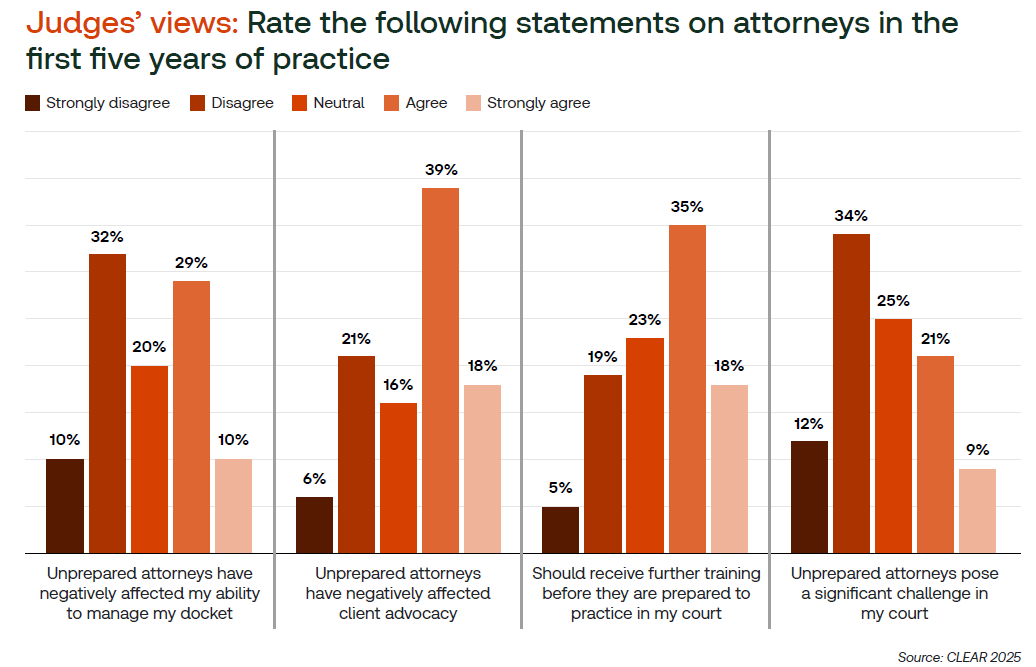
The findings are stark. Judges report declining litigation and communication skills among attorneys in their first five years as a lawyer. Nearly 60% of judges say client advocacy is being harmed, and more than half say they believe new lawyers should not appear in court without additional training.
What is driving the readiness gap? Law schools excel at teaching students research and analysis skills, but the schools’ practical preparation lags. Courtroom advocacy, procedural fluency, and professional communication clearly are not getting enough emphasis, the research shows.
Also, remote proceedings and fewer live trials have reduced opportunities for new lawyers to learn by observing, and many of those lawyers say the traditional bar exam does not measure real practice readiness — even as newly updated bar exam that’s focused more on foundational skills will be in use by next summer.
A pathway to change
Distilling this research, the white paper offers a blueprint for change, much of it suggested by the judges involved. For example, many judges suggest that new lawyers have supervised postgraduate practice so no new lawyer practices alone on day one. Also, some urge modernizing bar admissions and offering alternative pathways that evaluate real competencies such as supervised practice, curated portfolios, and staged testing.
Other suggestions include making experiential learning mandatory in law school through clinic externships simulations and practical drafting, as well as harnessing AI to improve skills development, feedback, and mentorship while keeping humans in the loop.
Despite the seriousness of the situation, there is some encouraging news. Evidence shows that initiatives such as supervised practice, mentorships, clinics, externships and on-the-job training do improve the skills needed by new lawyers. Judges and lawyers overwhelmingly credit these experiences with building competence, judgment, and professionalism among newer lawyers.
The legal profession has a choice: Act now to reverse the erosion in courtroom performance and rebuild public trust or allow the problem to deepen. This white paper shows a path forward by aligning education, licensure, and technology to produce lawyers who are not just bar-ready but practice-ready. The nation’s courts, clients, and communities depend on it.
You can download the new white paper “The unprepared lawyer: How America’s legal education is failing the courts and what must change” by filling out the form below: