
General counsel can enable their organizations to pursue strategic value by building commercial awareness across their teams, embedding legal in business decisions early, and finding safer paths to "yes"
Key takeaways:
-
-
-
Commercial awareness is a group goal — This must be a team capability and not just the GC’s responsibility.
-
Being “in the room” is critical — As standard practice, being present when decisions are made — like in the boardroom — helps position the legal function as a strategic partner rather than an emergency contact.
-
The keys to enabling the business — Strategic enablement means understanding business objectives and finding solutions to make them happen.
-
-
A Chief Legal Officer at a software company had a revealing interview question for the internal candidates who were seeking a senior role: “What’s your favorite product that we make, and what value does it give our customers?”
Many struggled. Some couldn’t answer on the spot. Others sounded like they were merely reciting the company website. Those who succeeded spoke easily and authentically about customer value, showing that they thought about the business regularly, not just when legal issues arose.
The message was clear: In order to enable the business, you need to know it as well as the business knows itself.
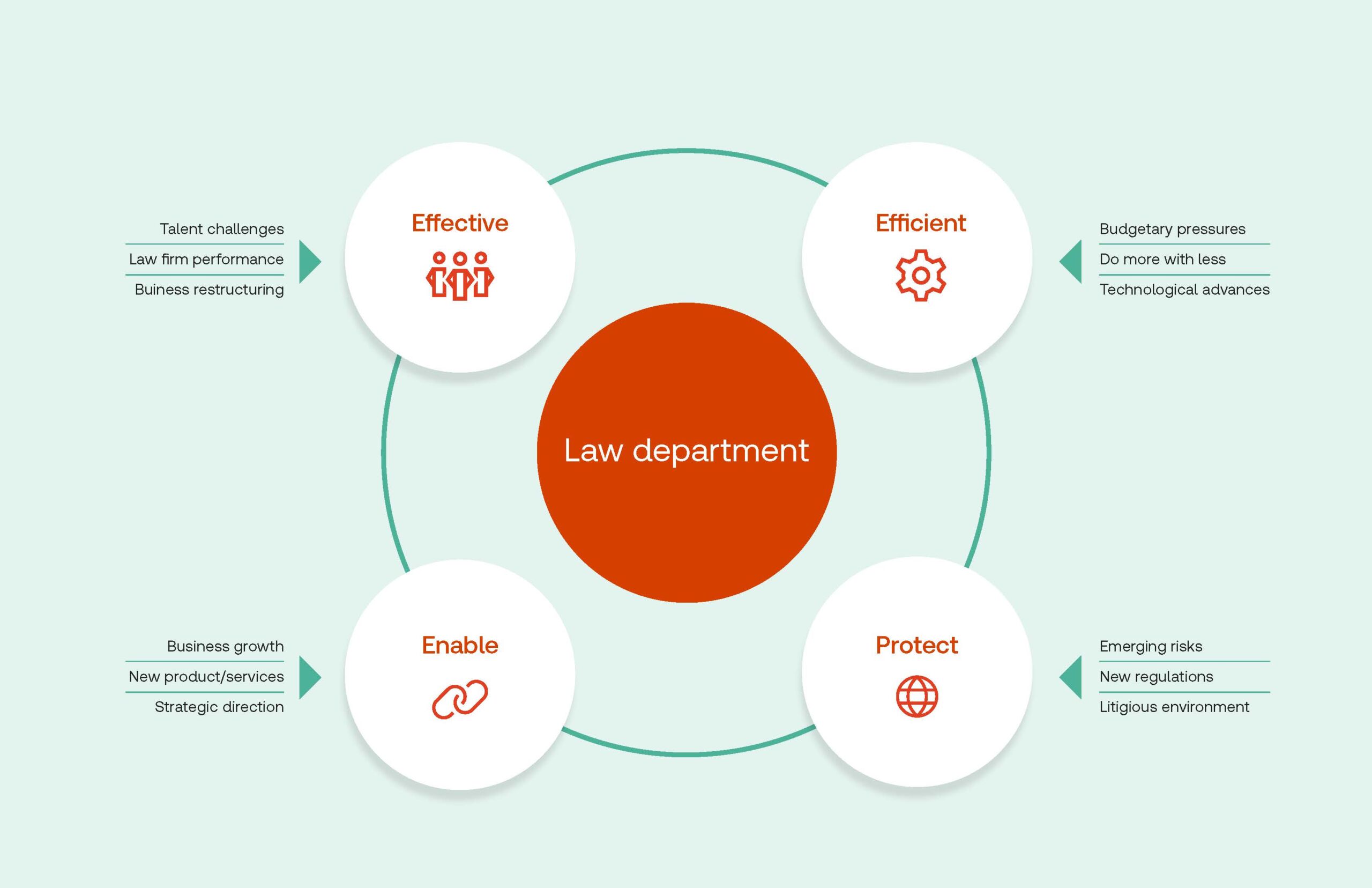
In this second part of our series on the “Four Spinning Plates” model, which frames the General Counsels’ evolving responsibilities as:
-
-
- delivering effective advice
- operating efficiently
- protecting the business, and
- enabling strategic ambitions.
-
This article focuses on the Enable plate.
Building commercial muscle across the entire team
The above story about the CLO’s interviews reveals the uncomfortable truth that lawyers can be proficient in their legal skills yet disconnected from the business they serve. They know contract law but not what makes customers choose their company’s products or services. They understand regulatory compliance but not the competitive dynamics that are shaping strategic decisions within the company. And this gap doesn’t just limit individual careers; it prevents legal departments from becoming true strategic enablers.
Commercial awareness isn’t just the GC’s responsibility — every team member needs to understand the company’s products, its customers, strategic objectives, and values. Everyone should be able to articulate not just what the company does, but why it matters to customers and how it creates competitive advantage.
For many corporate legal departments, this cultural shift requires deliberate efforts to help lawyers understand the commercial context of their work, create opportunities for them to engage directly with business functions, and make commercial acumen a clear expectation for career advancement.
One GC shifted their team members from a stay in your lane mentality to one in which they saw themselves strategic advisors. The GC did this by redefining excellence as not just providing technically sound legal advice but also offering a point of view about how the business develops and grows. Now, lawyers are welcomed at every meeting, whether or not there’s a legal issue on the agenda. Legal team members strive to know the business as well as anyone and identify issues proactively
Being in the room as standard, not emergency contact
There’s a difference between being called in when there’s a crisis and being present as strategy develops. When the legal team only appears during emergencies, relationships remain transactional. However, when legal has a regular presence in strategic discussions, it builds trust as business partners can see how legal thinking sharpens strategy, identifies opportunities others may miss, and helps the organization make better-informed decisions. Then, engagement becomes organic as leaders naturally seek out legal input because the relationship already exists.
One GC described their department as focused on enhancing commercial performance, not just mitigating risk. This means developing a refined understanding of competing risks alongside opportunities and making strategic bets informed by business goals rather than by defaulting to the most conservative position.
Many GCs aspire to have a seat at the table but aren’t yet invited into strategic planning. However, there are ways to start building that level of involvement, including initiating cross functional meetings, asking to observe other department meetings, and leading technology and process improvements that showcase legal’s forward thinking.
Of course, better integration into the overall business creates its own challenges — as the in-house legal team becomes more approachable and visible, requests will increase and demand must be managed. As one GC put it, “the reward for good work is more work.” That’s why the most effective GCs must find the balance across all four plates by being accessible enough to be valuable and structured enough to be sustainable.
From Department of No to Department of How
Being a strategic enabler doesn’t mean saying Yes to everything. It means legal’s voice is sought out by business leaders and thus, carries weight. Rather than automatically saying No and explaining the risks of a business initiative, effective GCs ask Why? and then make an effort to understand objectives and find safer paths to yes that balance risk with ambition.
When regulatory changes created opportunities for an energy company to build pipeline infrastructure, the company’s GC ensured leadership understood all facets of the durability of those regulatory changes before committing billions of dollars. Regulatory shifts were likely to be contested, which meant that permits granted today could be overturned years later, leaving the company with unusable infrastructure and lost investment. By helping the business think through these scenarios, the legal department enabled an informed strategic decision, rather than a reactive one.
This mindset shows up in everyday legal work too. A GC at a fast-moving technology company described their focus as: “Helping evolve our contracts to keep up with the strategies or keep up with what the company is doing.” Rather than treating every new business model as requiring completely new contractual frameworks, the legal team modifies existing approaches to accommodate new risks without becoming “too intrusive on the business” or creating “weeks and weeks of negotiating.” This agility demonstrates how seemingly routine legal work — such as contract negotiation — has significant business impact when approached with a commercial lens.
Moving forward: Strategic enablement as ongoing practice
As complexity and change intensify, the GC’s role as strategic enabler is crucial. To jumpstart this process, GCs should assess their department in key areas, asking:
-
-
- How does senior leadership view legal? As a strategic partner, a necessary gatekeeper, or an emergency contact?
- How integrated is your department into business operations? Are representatives from the in-house legal team present as strategy develops, or are they called in to review decisions already made?
- How well is your team building commercial muscle? Can everyone on your team succinctly describe what your business does, who its customers are, where the company is headed, and what its values are?
-
GCs who can build commercial muscle across their teams, maintain consistent presence in business decisions, and approach challenges with a mindset of enabling solutions will become indispensable strategic leaders that help their organizations thrive.
You can learn more about how the Thomson Reuters Institute’s Value Alignment toolkit allows you to assess your legal department’s strategic positioning, here