Jun 24, 2026 | Leadership
The most expensive thing in AI is the work nobody can see
Trust is not a feature to bolt on after the model works. It is an investment, and the companies that prioritized it early are the ones best positioned for what comes next.
The panel I sat on in Aspen had a title most companies would never volunteer for: “The Death of the AI Pilot.” The roundtable Thomson Reuters hosted a few hours later was called “The Cost of Being Wrong.” That is not the language of a market still in love with its own demos. It is the language of a market that has started counting.
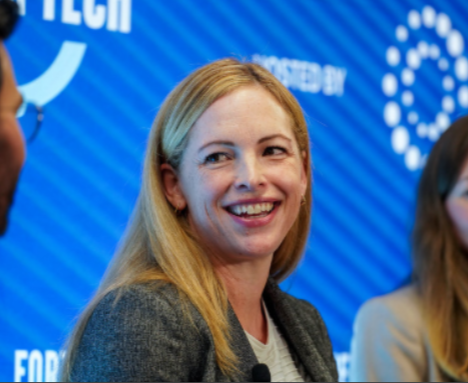
Earlier this month, I watched that shift play out on two stages. First, at Snowflake Summit, I talked about the data foundation powering enterprise AI. Then, at Fortune Brainstorm Tech, I sat with tech-forward leaders from Salesforce, Amgen, Optum, SentinelOne, TrustGuard, and May Mobility, debating where these systems break when the stakes are real.
Different rooms, different framings. Same conversation.
The AI market is starting to agree trust is what separates AI that demos well from AI that survives contact with production. Traceable, governed, explainable: the words are everywhere. Trust has become the thing we all nod along to.
But we keep talking about it as a feature. Something you bolt on once the model works. A checkpoint before launch.
And there was one thing few people were willing to say out loud:
Trust is not a feature. It is a bill. And much of the industry is about to discover it never paid for it.
The tax nobody put on the slide
The part that often goes unsaid in the keynotes is that the governed data foundation that makes an AI system defensible takes years to build, costs real money, and produces almost nothing you can put on stage while you are building it. There is no demo for “we governed every layer underneath, so the same question never returns two different answers.” Nobody throws a launch event for a semantic layer.
So many companies did not build one. The last few years rewarded the opposite instinct, the one the consumer internet was built on: ship it, watch what breaks, patch it in the next release. Fail fast.
That reflex produced extraordinary products. It is also precisely the wrong reflex to carry into law, tax, audit, and compliance, where the first failure is not a lesson. It is a brief filed with a citation that does not exist, in front of a judge.
At Snowflake Summit, my colleague Laura Safdie captured it well: you cannot bring AI to a profession you do not understand or transform a workflow you have never done.
For a consumer chatbot, a model that is fluent without being informed may be a tolerable trade. For the lawyer defending an antitrust case, the tax professional signing a multinational filing, or the compliance officer clearing a transaction, “mostly right” is not a trade-off. It is malpractice. And “the AI did it” has never worked as a defense in a courtroom.
The companies sprinting into agentic AI on top of fragmented data and governance bolted on at the end are not necessarily moving faster than everyone else. They are running up a debt that comes due the first time someone asks them to explain an output and they cannot.
The quiet work is about to pay off
In Aspen, in a room full of hands-on technology leaders, one idea kept coming through clearly: the quiet work is about to pay off.
The model is almost never the thing that breaks first in production. Ownership breaks first. Auditability breaks first. When nobody has defined who owns the output or what happens when it is wrong, the model turns out to be the easy part.
Everyone has access to good models now. The layer underneath is the hard part, and it cannot be acquired in a quarter.
At Thomson Reuters, we made that investment before it was fashionable. The work may be unglamorous, but the results are exactly what enterprise AI now requires: a governed semantic model that turned five conflicting answers from five teams into a single source of truth; complex financial analysis that used to take weeks, now completed in seconds; data refresh cycles reduced from roughly a day to near real time; and AI agents that can explore data, surface patterns, and generate analysis because the foundation underneath them is trusted enough to reason on.
Just as important, every AI capability is assessed across regulatory, privacy, security, ethics, and performance risk before it ships. ISO 42001 certification is treated as a continuous discipline, not a press release. And our trusted data estate across tens of thousands of governed tables is why we could show up as a customer with proof, not just intent.
That is the quiet work. And it is the reason we can put AI into the highest-stakes professional work there is and stand behind the answer because it is traceable and auditable.
The next phase rewards a different kind of company
One line from a fellow panelist, Elena Kvochko of TrustGuard, stuck with me: you do not let AI grade its own work. As agents take on more, the volume of output to verify grows faster than any human team can check by hand, which means oversight must be engineered into the system, not promised in a policy after the fact.
That is the real shift underway: from AI that helps with a task to AI that completes an entire workflow inside an environment it can be trusted to operate in. Give it an objective, and it can plan, research, validate, and coordinate across the whole thing, not just answer a question.
The agent who can navigate proprietary knowledge, permissions, and genuine accountability is worth far more than the that writes a confident paragraph.
Enterprises do not run on models. They run on trusted systems. And the layer where work actually gets completed is where trust and accountability live.
So here is the prediction the demos are hiding: the next two years will not be won by whoever has the most impressive model. They will be won by whoever quietly paid the bill: traceability, security, governance, and explainability.
We paid that bill early, on purpose, because the highest-stakes professional work demands it. That is not where the work ends. It is where trusted AI begins.