Dec 18, 2025 | Inside Thomson Reuters
A Thomson Reuters Career Journey: From Site Reliability to AI Research
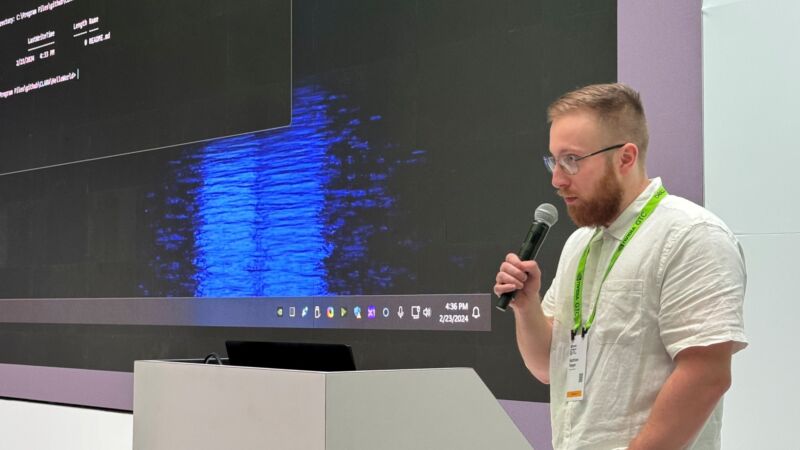
Matthew Yaeger, Research Engineer
The path to a dream role isn’t always linear—sometimes it takes curiosity, initiative, and the right internal opportunities to make a career pivot possible. For one Thomson Reuters engineer, the journey from Site Reliability Engineering (SRE) to AI research began with a LinkedIn post, a competition win, and a willingness to take a chance on something new.
We sat down with Matthew, a Research Engineer on our Document Understanding team in TR Labs, to discuss his career transition, the power of Thomson Reuters Gig program (short-term projects to gain experience and develop new skills), and what makes this an exciting time to build AI systems at Thomson Reuters.
What made you interested in transitioning from Site Reliability Engineer to AI/ML research?
I’d been working as a Site Reliability Engineer in Service Management since joining Thomson Reuters in 2022, but I was increasingly passionate about machine learning. That passion led me to build a GenAI application that won an NVIDIA global competition. To me, that was tangible proof that I could create valuable AI applications, and it gave me the confidence to pursue ML work more seriously.
When I saw a Research Engineer opening in TR Labs posted by a colleague on LinkedIn, I knew I had to reach out. It was my first internal application at Thomson Reuters, and that connection led me to a hiring director who introduced me to the Document Understanding team. The alignment between my background and the team’s focus felt perfect.
Can you tell us about the Document Understanding team and the work you’re doing?
I’m most excited about the work happening on my team with Document Understanding. We’ve built a platform that takes any document type—PDFs, Word, Excel, images—and transforms them into structured data that downstream AI systems can actually use. What’s remarkable is the scale we’ve achieved: we went from processing zero documents in March to over 150,000 documents per day by September, supporting products like CoCounsel and Westlaw.
The broader context that makes this exciting is how it helps establish our positioning in the professional-grade AI tool landscape. While the industry focuses on building better LLMs, our real competitive advantage is our world-class legal content. Document Understanding is a critical piece of infrastructure that makes that content accessible and useful for AI applications. We’re essentially building the pipes that let Thomson Reuters’ unique content flow into the AI systems our customers rely on.
How did the gig program help facilitate your transition?
The gig program proved invaluable. It allowed me to split time between my Site Reliability Engineer role and the new Research Engineer position for three months. The gig structure provided a low-risk evaluation period for both sides: I could prove my capabilities in a real-world setting while maintaining stability in my current role, and the team could assess whether I’d be a good fit before committing to a full transition.
Ramping up on an unfamiliar codebase was the main challenge, but it gave me the chance to prove I could adapt quickly and contribute. Shortly after completing the Gig, I received an official offer for the Research Engineer role as part of TR Labs.
Beyond the immediate benefit to me, Gigs enable the cross-pollination of skills and ideas throughout the organization. I brought my Site Reliability Engineer perspectives on reliability and scalability to a research-focused organization, while learning cutting-edge ML engineering practices.
What role did mentorship play in your career pivot?
My former manager was instrumental as a mentor; he was genuinely supportive of my growth, even though it meant eventually losing me from his team. That mentorship made the transition possible. The key enabler was having management support on both sides.
What worked particularly well was being direct with the new team, beginning on my first day. I asked straightforward questions like “What does success look like in this role?” to both my new manager and technical lead. That simple question created alignment and a feedback loop where everyone was invested in helping me succeed because we’d clearly defined what success meant. It removed ambiguity and let me focus my efforts on what actually mattered.
How do you see AI technology evolving at Thomson Reuters?
I see our evolution in AI fundamentally about building on our content advantage. The Large Language Model space is commoditizing rapidly—the performance gap between proprietary and open-source models is narrowing. What won’t commoditize is Thomson Reuters’ authoritative legal content and domain expertise.
My role is building the infrastructure that bridges our content with AI systems. Document Understanding uses sophisticated machine learning models for Optical Character Recognition (OCR), layout understanding, and document structure analysis to convert our vast repository of legal materials into formats that modern AI systems can access. It’s about ensuring that when our customers interact with our products, they’re getting the benefit of decades of legal expertise, not just a generic LLM response.
What makes TR Labs unique as a place to pursue AI research?
TR Labs balances research with real-world implementation in a rare way. We’re not just publishing papers—we’re building systems that process hundreds of thousands of documents daily and directly impact products, used by thousands of professionals every day.
The organization is also growing rapidly, which creates opportunities. Document Understanding, for example, is a greenfield project that didn’t exist earlier this year. Having the chance to build something from scratch, at scale, with cutting-edge technology, while knowing it will have immediate business impact—that’s a unique challenge and opportunity.
What advice would you give to others considering a similar career transition?
My biggest advice would be to learn by doing. Build side projects, contribute to open-source work, or find ways to incorporate ML into your current role. For me, winning an NVIDIA global competition with my app was what opened doors; it was tangible proof that I could create valuable AI applications.
Be proactive about internal opportunities. Reach out to people doing work that interests you, apply for Gigs, and when you get those opportunities, ask direct questions about what success looks like. Create feedback loops early so you’re working toward clear, aligned goals. The Gig program exists for exactly this kind of career transition.
Thank you, Matthew, for sharing your career story! Are you interested in joining TR Labs or exploring AI roles at Thomson Reuters? Check out our careers site to view open roles on our TR Labs and Product Engineering teams, including AI Engineers, Research Engineers, and Applied Research Scientists.