
Tax, audit & accounting firms need to leverage smarter pricing strategies that can help them bridge the gap between perceived value and profitability in their clients’ minds, a new report shows
Key takeaways:
-
-
-
Most tax professionals feel their rates are competitive, but few are confident that those rates reflect the true value of their expertise.
-
Subscription and bundled pricing models lead to greater pricing confidence and more successful price increases.
-
Regular benchmarking, reviews, and transparent client communication are underused but essential methods for aligning pricing with value and market trends.
-
-
The manner in which tax, audit & accounting firms price their services is often a complex mixture of accounting, strategy, and intuition. Many firms set their rates based on tradition or perceived market standards. Yet, according to a new report on pricing from the Thomson Reuters Institute, Steps for increased confidence in pricing, there’s a notable lack of confidence that these fees truly capture the value of the expertise provided.
Jump to ↓
Steps for increased confidence in pricing
Indeed, this pricing confidence gap could be a missed opportunity for firms to improve profitability and enhance their client relationships.
Despite healthy demand, the report found that almost two-thirds of respondents surveyed say their firm saw its revenues rise last year, but less than half experienced an increase in profits. While the vast majority of tax professionals believe their rates are competitive, less than 1-in-5 say they feel certain their pricing reflects the real value they deliver. This suggests that firms may be undervaluing their professionals’ expertise and leaving revenue on the table.
Evolving price models
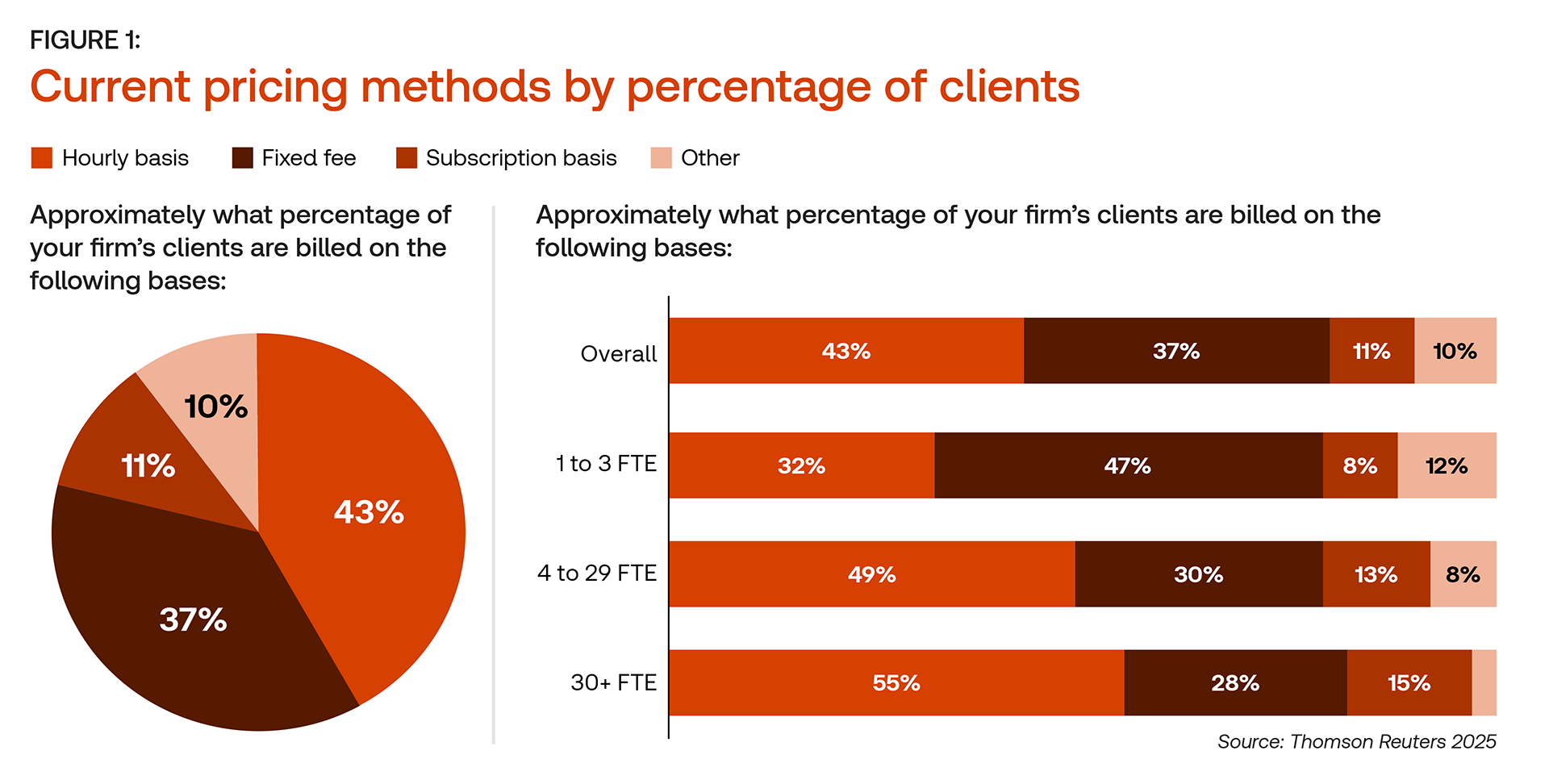
One significant insight from the report is that alternative pricing models can help close this confidence gap. Hourly billing still dominates, accounting for less than half of client arrangements, but models like subscriptions and bundling are gaining traction, the report shows. Subscription pricing, which ties fees directly to ongoing value and offers clients clear expectations and predictable budgets, is clearly associated with higher pricing confidence.
In fact, almost one-third of respondents from firms using subscriptions for most clients say they have high confidence in their pricing, compared to a much smaller percentage of respondents from firms relying on hourly or fixed fees. Although subscription billing has grown by almost four-fold in the past year, it remains significantly underutilized.
Bundled services are also proving effective, as the report explains. By packaging offerings into tiered levels based on client needs and complexity, firms can more easily communicate the value of their services. Most respondents from firms offering bundled packages say this has enabled them to raise prices, thanks to improved confidence that their fees align with the value delivered.
Beyond pricing models, the report highlights the importance of market intelligence and data-driven decision-making. Less than one-third of respondents say their firm regularly benchmarks its rates against competitors, often relying instead on informal data sources like websites or trade publications. The report makes the case that robust benchmarking and accurate data give tax, audit & accounting firms the confidence to set fees that are both competitive and justifiable.
Another missed opportunity is the frequency of pricing reviews, according to the report. Most firms review rates annually, but only a small percentage do so quarterly. More frequent reviews allow for quicker adjustments in response to rising costs, regulatory changes, or shifts in service offerings. Even simple mid-year check-ins or pricing health checks against key metrics can prevent margin erosion and ensure firms’ pricing strategies stay relevant.
Communication is key
The report also cites how critical client communication and transparency is to effective pricing, noting at less than 1-in-10 respondents say their firm surveys clients about pricing satisfaction, meaning most are missing out on valuable feedback. Regular discussions with clients can help explain pricing structures, provide updates on tax law changes, and ensure that the services offered are aligned with client needs and goals. Demonstrating return on investment (ROI) and value — something that less than 1-in-5 respondents say their firm currently does — also helps clients see fees as a worthwhile investment, not just a cost.
As the report makes clear, the path to more profitable and value-driven pricing for tax, audit & accounting firms involves more than just being competitive enough. By adopting flexible pricing models, leveraging better data, conducting regular pricing reviews, and communicating more openly with clients, firms can move closer to a pricing strategy that truly reflects the value of their professionals’ expertise and strengthens client relationships.
The ultimate result will be not just improved confidence for the firm’s tax professional, but also greater profitability and long-term success for the firm itself.
You can download
a full copy of the Thomson Reuters Institute’s tax, audit & accounting firm pricing report, “Steps-for-increased-confidence-in-pricing” by filling out the form below: